

In a major policy concession that has reshaped the national discourse on educational accessibility, the Federal Government of Nigeria has officially announced the suspension of its highly controversial proposal to review and upwardly adjust the registration fees for terminal high school examinations.
The decision, which targets the upcoming 2027 iterations of the West African Senior School Certificate Examination and the National Examinations Council Senior School Certificate Examination, marks a dramatic pivot by state authorities following intense, widespread resistance from parents, civil society organizations, and prominent political leaders across the country. The policy reversal represents a significant moment of institutional de-escalation, coming amid a tense socio-economic climate characterized by severe inflationary pressures and a rising cost of living for average Nigerian households.
The administrative halt was formally communicated through an official directive issued by the Federal Ministry of Education in Abuja. According to the state repository, authorities have completely withdrawn an earlier regulatory letter dated June 18, 2026, which had originally outlined and authorized the uniform upward revision of the baseline examination registration costs. Independent findings indicate that the initial directive would have effectively raised the mandatory registration fees for both critical secondary school examinations from the previous benchmark of 27,500 Naira to a staggering 50,000 Naira per candidate. This proposed change would have constituted an immediate 82 percent financial increase for families nationwide, a metric that instantly triggered sharp denunciation from across the country’s political divide.
In defending its original stance, the Federal Ministry of Education, through its Director of Press and Public Relations, Folasade Boriowo, explained that the planned fee review had been heavily informed by the skyrocketing operational costs required to orchestrate credible national examinations. The government noted that registration fees had remained stagnant for several consecutive years despite an exponential increase in the cost of crucial services, including specialized transportation logistics, nationwide security deployments for examination materials, high-volume printing of secure test scripts, state-of-the-art technological implementation, and comprehensive quality assurance measures.
However, the ministry conceded that in alignment with the administration’s broader commitment to transparent, inclusive, and socially responsive governance, the Minister of Education, Dr. Maruf Tunji Alausa, directed that the entire proposal be immediately put on hold to pave the way for a much broader, evidence-based consultative process with all relevant education sector stakeholders.
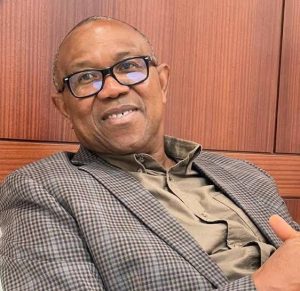
Reacting swiftly to the development, the presidential candidate of the Nigerian Democratic Congress, Peter Obi, issued a highly articulated, public statement via his official communication channels to welcome the suspension, characterizing the government’s sudden retreat as a definitive victory for the collective will of the Nigerian populace. While expressing a profound sense of civic relief that the financial adjustment had been temporarily shelved, the former governor of Anambra State strongly admonished the administration, arguing that a policy of such severe financial implication should never have been conceived or introduced in the first place given the deep macroeconomic vulnerabilities currently plaguing the citizenry.
Peter Obi maintained that education must fundamentally be protected as an unalienable human right and a foundational public good, rather than being treated by federal planners as an alternative channel for generating internal government revenues. The opposition leader emphasized that the introduction of steep financial barriers at the basic and secondary tiers of learning risks structurally excluding millions of vulnerable children from the formal school system. He warned that at a period when Nigeria is actively grappling with a severe deficit in youth literacy, with over 15 million children estimated to be out of the formal school framework, the state’s primary focus should be geared entirely toward expanding access and subsidizing learning, rather than erecting complex financial obstacles that actively discourage school enrollment among lower-income demographics.
The corporate and political pushback against the fee hike had steadily built momentum prior to the ministry’s concession, with various national figures and student unions warning of a looming crisis in secondary school completion rates if the 50,000 Naira threshold was implemented. Prominent education advocates and parental associations had pointed out that for households with multiple school-aged children, the combined cost of registration under the proposed rate would have been completely mathematically impossible to fulfill, effectively forcing a generation of youth out of terminal examinations.
By acknowledging these grassroots realities, Peter Obi observed that true political leadership is fundamentally measured not only by the capacity to enact bold, sweeping executive decisions, but also by possessing the rare institutional humility required to completely reverse state policies when they are demonstrably proven to inflict unnecessary hardship and structural pain upon the populace.
Following the formal suspension, the Federal Ministry of Education has indicated that it will launch an expansive, multi-sectoral engagement strategy before any future determinations regarding examination financing are revisited. Under the explicit direction of Dr. Tunji Alausa, the ministry plans to convene extensive roundtables involving terminal examination bodies, various state ministries of education, private school proprietors, public school administrators, organized labor groups, and registered parents’ associations.
This collaborative approach is intended to design a fair, structurally sustainable, and highly transparent financing model that balances the operational integrity of national examination bodies with the realistic financial capacity of the Nigerian public.
As the country looks forward to the resolution of these stakeholder consultations, the successful suspension of the examination fee hike stands as a powerful testament to the potency of organized civic advocacy and public dialogue. For millions of Nigerian families currently navigating a demanding economic landscape, the decision provides a critical, timely breathing room, ensuring that the academic aspirations of their children remain within reachable horizons. The discourse surrounding the 2027 examination cycle highlights a critical national consensus: that safeguarding equitable access to basic education remains an essential prerequisite for unlocking the country’s long-term democratic stability and human capital potential.