

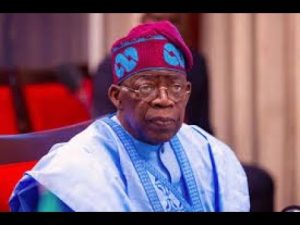
Three years into an administration defined by sweeping institutional shifts, fiscal adjustments, and profound social re-engineering, President Bola Ahmed Tinubu addressed the nation with a message that balanced administrative accountability with an appeal to national solidarity. Marking his third year in office, the President’s address served as both a retrospective analysis of the aggressive fiscal maneuvers implemented since May 2023 and a forward-looking roadmap for structural expansion.
At the heart of the executive brief was an explicit acknowledgment of the socioeconomic vulnerabilities exposed by recent reforms. Far from treating these pressures as mere statistics, the President contextualized them as the inevitable labor pains of a nation transitioning away from decades of unsustainable fiscal policy. By framing the current administration’s trajectory as a choice between structural collapse and systemic renewal, the address sought to reinforce public confidence during a complex period of economic stabilization.
Confronting the Legacies of Fiscal Distortion
To understand the rationale behind the administration’s policy trajectory, one must examine the macroeconomic landscape of 2023. Upon assuming office, the executive branch inherited a fiscal framework burdened by systemic imbalances, chief among them being the dual crises of the petrol subsidy regime and a heavily manipulated foreign exchange apparatus.
The Subsidy Burden
For years, the petrol subsidy functioned as a massive drain on the federation account. At its peak, the regime cost the Nigerian treasury approximately N18.4 billion daily, culminating in an annual expenditure exceeding N4 trillion in 2022 alone. This structural arrangement consistently diverted capital away from non-negotiable developmental pillars such as healthcare, public education, modern transport logistics, and civil infrastructure.
Currency Fragmentation
Simultaneously, the existence of multiple exchange rate windows and volatile forex arbitrage created deep market distortions. Over a three-year period, rent-seeking behavior and speculative trading drained more than N8 trillion from the formal economy. This fractured financial ecosystem stifled foreign direct investment, artificially inflated the cost of doing business, and eroded international confidence in domestic monetary institutions.
|----------------------------------------------------------------------|
|                 PRE-REFORM FISCAL DRAIN (ESTIMATES)                   |
|-----------------------------------------------------------------------|
| Fiscal Variable                    | Estimated Loss/Expenditure       |
|------------------------------------|----------------------------------|
| Daily Petrol Subsidy Outlay        | N18.4 Billion                    |
| Annual Subsidy Bill (2022)         | Over N4 Trillion                 |
| 3-Year Forex Arbitrage/Rent Losses | Over N8 Trillion                 |
|------------------------------------|----------------------------------|
The administration maintains that bypassing these deep-seated structural issues would have been politically expedient but economically catastrophic. Choosing long-term national recovery over short-term political comfort, the government initiated a sequence of decisive reforms aimed at preventing outright fiscal breakdown and stabilizing public balance sheets.
Tracking the Macroeconomic Rebound
While the immediate aftermath of these structural corrections led to inflationary pressures and escalated living costs, current market indicators suggest that the broader domestic economy is entering a phase of competitive stabilization. Public finances across federal, state, and local governments have seen substantial revenue boosts, expanding the fiscal capacity of sub-national entities to invest directly in localized human capital.
Nowhere is this return of investor confidence more evident than in the performance of the Nigerian capital markets. The financial sector has experienced an unprecedented surge, driven by institutional re-entry and robust corporate performances:
-
Market Capitalization: Skyrocketed from N30 trillion in 2023 to a historic high of N160 trillion.
-
The All Share Index (ASI): Advanced from a baseline of 53,000 basis points to an unprecedented benchmark of 250,000 basis points.
This dramatic upward trajectory reflects a structural realignment where domestic enterprises are declaring record profits and distributing robust dividends, signaling a resilient corporate ecosystem capable of operating efficiently under a liberalized market framework.
Infrastructure as an Engine of Productivity
The administration’s developmental strategy treats infrastructure not merely as a public amenity, but as a primary catalyst for industrial output and regional trade integration. Civil works and logistical modernizations are currently advancing at an unprecedented scale across multiple asset classes.
Arterial Highways and Maritime Corridors
Over 2,700 kilometers of critical roadways and expressways are concurrently undergoing construction, reconstruction, or extensive rehabilitation. Key legacy projects include:
-
The Lagos-Calabar Coastal Highway, designed to unlock the economic potential of the West African maritime corridor.
-
The Sokoto-Badagry Super Highway, establishing crucial north-south commercial connectivity.
-
The vital Abuja-Kaduna-Zaria-Kano Highway and the East-West Road, both central to domestic agricultural logistics and regional security.
These networks are systematically reducing transit times, lowering logistical overheads for haulage operators, and generating tens of thousands of direct and indirect jobs across rural and urban communities.
Energy Security and Oil Sector Re-entry
In the upstream and downstream energy sectors, institutional reforms have broke a multi-year investment drought, drawing billions of dollars in fresh capital commitments from international oil companies (IOCs).
The capital-intensive $5 billion NLNG Train 7 project is rapidly nearing completion, a milestone that will significantly upscale liquefied natural gas production capacity, boost sovereign export revenues, and guarantee consistent dollar dividends. Concurrently, the operationalization of large-scale domestic merchant refineries and decentralized modular facilities is fundamentally shifting Nigeria’s energy profile. By processing crude locally, the nation is steadily curtailing its historical reliance on imported refined petroleum products, preserving foreign reserves, and solidifying internal energy security.
                             ┌────────────────────────┐
                             │  IOC Capital Inflow    │
                             └───────────┬────────────┘
                                         ▼
                             ┌────────────────────────┐
                             │ Reforms & Deregulation │
                             └───────────┬────────────┘
                                         ▼
               ┌─────────────────────────┴─────────────────────────┐
               ▼                                                   ▼
┌─────────────────────────────┐                     ┌─────────────────────────────┐
│    NLNG Train 7 Project     │                     │ Operational Onshore/Modular │
│   ($5B Export Capacity)     │                     │         Refineries          │
└─────────────────────────────┘                     └─────────────────────────────┘
               │                                                   │
               ▼                                                   ▼
┌─────────────────────────────┐                     ┌─────────────────────────────┐
│   Sovereign Revenue Boost   │                     │ Forex Conservation & Energy │
│                             │                     │          Security           │
└─────────────────────────────┘                     └─────────────────────────────┘
Grid Modernization
Recognizing that no modern economy can sustain industrial growth in the absence of reliable power, the administration is directly confronting legacy debts, regulatory uncertainty, and structural bottlenecks within the electricity value chain. Current efforts are directed at clearing long-standing financial obligations to gas suppliers, expanding critical transmission infrastructure, protecting the national grid from frequent collapses, and integrating renewable energy sources into the national mix.
Social Investment, Human Capital, and Digital Transformation
To cushion the immediate impact of macroeconomic adjustments, the administration has deployed targeted interventions across education, housing, agriculture, and digital technology.
-
The Nigerian Education Loan Fund (NELFUND): In a bid to democratize access to tertiary education, NELFUND has broken financial barriers for over 1.5 million students, distributing more than N282 billion to ensure that financial vulnerability does not terminate academic ambition.
-
Renewed Hope Housing Program: This initiative, alongside the Federal Housing Authority (FHA), is actively constructing over 10,000 residential units across 14 states and the Federal Capital Territory (FCT). Beyond addressing the national housing deficit, these construction sites have acted as a massive employment engine, generating over 300,000 jobs.
-
Agricultural Corridors: By providing farmers with high-yield seeds, subsidized fertilizers, mechanized equipment, and upgraded irrigation access, the administration is working to lower food inflation from its peak levels.
Empowering the Youth and Digital Economy
Addressing the youth demographic, the President rejected the notion that the country’s younger population is an administrative problem to be managed. Instead, they are recognized as the primary engine of the nation’s future.
Significant state resources are being funneled into technical education, entrepreneurial incubators, and digital skill acquisition programs. Following deep interventions to stabilize the telecommunications sector, network operators are expanding infrastructure, restoring market confidence, and absorbing local tech talent. The objective is to build a digitally integrated economy where commerce, software development, and creative industries can thrive seamlessly.
The Security Paradigm: Reclaiming the Public Space
The administration reemphasized that national prosperity cannot exist independent of physical security. The Armed Forces and corresponding intelligence agencies have intensified tactical operations against unconventional threats, including banditry, terrorism, kidnapping syndicates, and maritime oil theft.
While acknowledging that localized challenges persist, the executive branch highlighted a measurable stabilization across critical transport arteries and agrarian communities. Ongoing institutional investments are focused on advanced aerial and electronic surveillance, real-time intelligence synchronization, and the continuous upgrading of logistics and hardware. The stated objective remains non-negotiable: to fully restore the sovereign authority of the Nigerian state and ensure that every citizen can live, travel, and invest without fear.
Conclusion: A Shared Vision for National Renewal
As Nigeria navigates this pivotal third-year milestone, the presidency’s address serves as an explicit call for national purpose and social cohesion. Acknowledging that the work ahead remains substantial and that the benefits of structural reform must penetrate deeper into the daily lives of citizens, the administration’s policy focus is shifting toward immediate relief measures. This includes expanding the deployment of Compressed Natural Gas (CNG) conversions for commercial transport to reduce transit costs, promoting electric vehicle adoption, and lowering food prices.
The message to the domestic public and the international investment community is clear: Nigeria’s current trials are a necessary crucible for long-term elevation. By leveraging its vast human capital, celebrating its cultural diversity as a core asset, and maintaining institutional discipline, the nation is positioned to emerge from these structural shifts as a fairer, more stable, and highly competitive global economy.
