
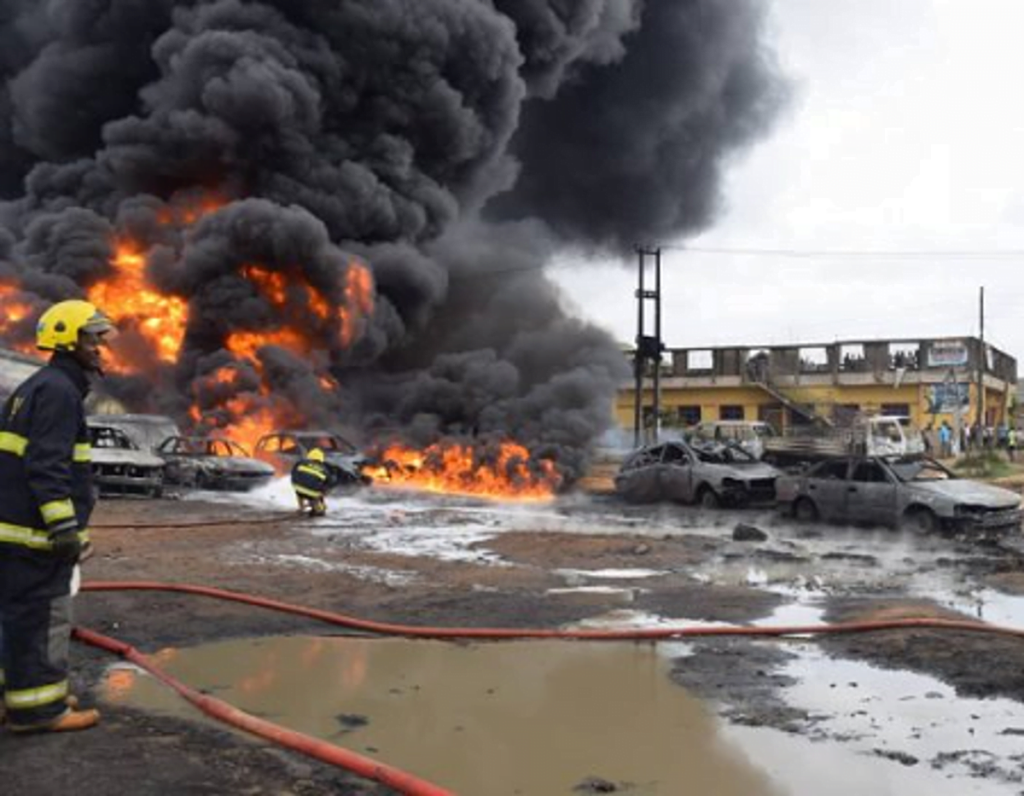
A potentially catastrophic disaster was narrowly averted in the Ejigbo axis of Lagos State on Monday, November 16, 2026, after a powerful gas explosion at an NNPC filling station triggered a fast-moving fire that spread into the premises of an adjacent school. Despite the intensity of the blast and the immediate threat posed to students, staff, and nearby residents, emergency officials confirmed that zero casualties were recorded following a rapid, coordinated intervention by the Lagos State Fire and Rescue Service.
The incident, which occurred around the busy Savannah Bus Stop Command corridor in Ejigbo, sent shockwaves through the surrounding commercial and residential neighborhood. However, decisive action by emergency crews deployed from three separate fire stations successfully contained the inferno before it could consume the entire school compound or escalate into a wider neighborhood tragedy.
Anatomy of the Incident: Blast and Rapid Spread
According to an official statement released by the Lagos State Fire and Rescue Service, the emergency began on Monday at the NNPC retail outlet located near Savannah Bus Stop Command, Ejigbo. Gas explosions at dispensing facilities carry extreme volatility, often generating intense thermal radiation and pressure waves within seconds of ignition.
In this instance, the sheer force of the explosion propelled flames rapidly beyond the immediate perimeter of the filling station, breaching the boundary of the neighboring Saint Lawrence Greater Height School.
“The intensity of the explosion caused the fire to spread rapidly to the adjoining Saint Lawrence Greater Height School, affecting parts of the school premises,” the Lagos State Fire and Rescue Service confirmed in its official briefing.
In densely populated urban centers like Lagos where commercial fuel and gas stations frequently sit wall-to-wall with schools, places of worship, and residential apartment blocks any breach of a station’s containment perimeter poses an acute danger. Because the incident occurred on a Monday, a standard academic day, the spread of flames onto school grounds immediately heightened fears of mass panic and structural damage.
Coordinated Multi-Station Firefighting Response
Recognizing the high-risk profile of a gas-fed fire encroaching upon an educational facility, the Lagos State Fire and Rescue Service activated a multi-station emergency response protocol immediately upon receiving the distress alert.
Rather than relying solely on local neighborhood capacity, the agency mobilized reinforcements across three strategic operational hubs:
-
Ejigbo Fire Station: Providing the immediate frontline response and initial perimeter containment closest to the scene.
-
Ikeja Fire Station: Deploying additional firefighting apparatus, water tenders, and tactical personnel from the state capital axis.
-
Bolade Fire Station: Reinforcing suppression lines to ensure continuous water and foam supply during critical containment phases.
Working in close coordination, firefighters from the three stations established defensive firebreaks between the burning sections of the NNPC facility and the unaffected blocks of Saint Lawrence Greater Height School. Through sustained suppression efforts, crews successfully beat back the flames, cooled adjacent structures to prevent secondary ignitions, and stopped the inferno from extending into other sections of the school or neighboring buildings.
By bringing the situation fully under control within a critical window, the emergency team prevented what could easily have escalated into one of the state’s most devastating urban fire disasters of the year.
In the aftermath of any explosion involving Liquefied Petroleum Gas (LPG) or fuel infrastructure, the primary concern for families and authorities alike is human life. Providing immense relief to parents, school administrators, and the wider Ejigbo community, the Lagos State Fire and Rescue Service officially confirmed that no casualties were recorded during the incident.
While sections of Saint Lawrence Greater Height School and the filling station sustained fire damage, the absence of fatalities or severe injuries stands as a testament to swift evacuation protocols at the scene and the aggressive containment strategy executed by responding firefighters. For parents with children enrolled at Saint Lawrence Greater Height School and residents living along the Savannah Bus Stop corridor, the confirmation of zero loss of life transformed a moment of acute terror into collective relief.
Ongoing Investigation Into the Cause of the Blast
With the flames extinguished and the immediate danger neutralized, attention has shifted toward accountability and root-cause analysis. The Lagos State Fire and Rescue Service announced that preliminary investigations are actively underway to determine what triggered the gas explosion at the NNPC outlet.
Investigators will typically examine several technical and operational factors in incidents of this nature, including:
-
Storage and Dispensing Integrity: Inspecting gas cylinders, underground or surface storage tanks, valves, and transfer hoses for mechanical failure, leaks, or pressure anomalies.
-
Safety Compliance and Standard Operating Procedures: Evaluating whether proper safety protocols were observed during gas handling, offloading, or dispensing operations at the time of the blast.
-
External Ignition Sources: Checking for electrical faults, static discharge, or nearby open flames that may have ignited leaked gas vapor.
The findings from this investigation will be vital not only for establishing responsibility for the damage to Saint Lawrence Greater Height School, but also for enforcing stricter preventive safety standards across retail gas outlets operating within Lagos State.
Beyond the immediate relief over the lack of casualties, Monday’s explosion in Ejigbo once again brings to the forefront a recurring urban safety debate in Lagos and across Nigeria: the proximity of gas plants and filling stations to schools and residential neighborhoods.
Over the years, urban planners, safety advocates, and regulatory agencies—including the Nigerian Midstream and Downstream Petroleum Regulatory Authority (NMDPRA) and state physical planning ministries—have repeatedly warned against siting high-risk petroleum and gas facilities adjacent to sensitive public institutions like schools and hospitals. Even when facilities operate under official licenses, a single lapse in equipment maintenance or human error can place hundreds of lives in immediate jeopardy within seconds.
Incidents like the Savannah Bus Stop explosion serve as a sobering reminder that regulatory enforcement cannot stop at the licensing stage. Routine unannounced safety audits, mandatory fire-suppression infrastructure at every retail station, strict buffer zones, and regular emergency evacuation drills for neighboring schools remain essential safeguards against urban disasters.
Moving Forward for the Ejigbo Community
As clean-up efforts begin at the affected sections of Saint Lawrence Greater Height School and safety inspectors comb through the NNPC facility, the Ejigbo community is left grateful for the professionalism of the Lagos State Fire and Rescue Service. By mobilizing teams from Ejigbo, Ikeja, and Bolade with speed and precision, emergency responders ensured that Monday’s headline remained a story of disaster averted rather than lives lost.
Authorities continue to urge residents and business owners across Lagos to remain vigilant around gas installations, report suspected leaks immediately, and prioritize fire safety compliance across both commercial and educational spaces.