
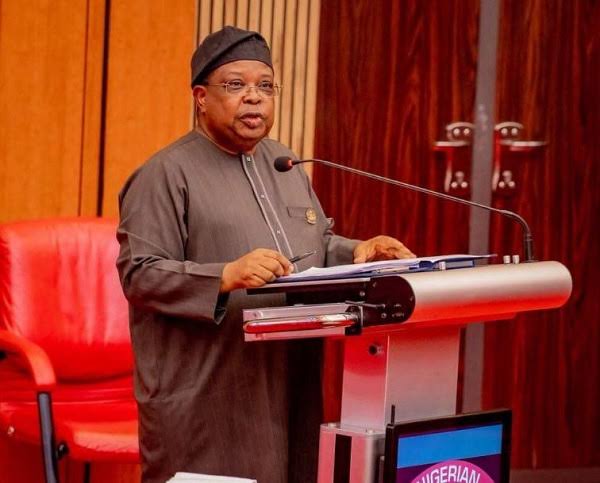
Nigeria’s Minister of Power, Joseph Tegbe, has issued a strong warning to citizens against the vandalism of electricity infrastructure across the country. Speaking at an official event on Friday, the minister emphasized that the deliberate destruction of power transmission towers poses a severe threat to both the stability of the national grid and the nation’s broader economic activities.
Mr. Tegbe delivered this message during the formal commissioning of the newly upgraded Bauchi Transmission Substation. The facility, which previously operated at a lower voltage tier of 132/33 kilovolts (kV), has now been expanded and modernized into a high-capacity 330/132/33kV substation.
Addressing attendees at the ceremony, the minister outlined the far-reaching consequences of infrastructure sabotage. He explained that damaging power installations forces the federal government to divert scarce public funds toward costly repairs rather than new development projects. Beyond the financial strain on the state, he noted that power outages caused by vandalism directly cripple local businesses, reduce productive working hours, and disrupt daily life in households across Nigeria.
“There is no justification for the destruction and damage of critical national assets,” Mr. Tegbe stated, expressing deep alarm over the escalating nature of the attacks. “We are getting to the point where people are pulling down towers and blowing up towers.”
He urged citizens to recognize that the public ultimately bears the brunt of these criminal acts. “Nothing will benefit us as a nation by destroying these assets because, at the end of the day, it is public resources that we will use to rebuild them,” he explained.
The minister painted a clear picture of how sabotage translates into everyday hardship for ordinary Nigerians. “The cost of vandalism will be felt through interrupted trade, interrupted electricity supply, disrupted working hours and the hardship it brings to families,” he warned. To curb the trend, Mr. Tegbe appealed directly to residents living near power installations, urging host communities to take collective ownership of the facilities, remain vigilant, and promptly report any suspicious intrusions or acts of sabotage to security agencies.
Boosting Grid Capacity in Bauchi
Turning his focus to the newly commissioned project, Mr. Tegbe highlighted the strategic importance of the Bauchi substation upgrade. He explained that the intervention is a core part of the government’s broader effort to reinforce the national electricity transmission network and meet the rapidly rising energy demands of Bauchi State and its neighboring regions.
With the completion of the upgrade, the substation’s transformation capacity has expanded significantly. It now boasts a capacity of 300 megavolt-amperes (MVA) at the 330/132kV level, alongside 180MVA at the 132/33kV level. According to the minister, this substantial boost in power handling capability will translate into more reliable electricity delivery for residents and businesses in Bauchi metropolis, as well as surrounding towns including Ningi, Dass, Alkaleri, and other adjoining communities.
“What we are commissioning today is the elevation of an existing transmission facility into a stronger, more capable and strategically important node within the national electricity network,” Mr. Tegbe said.
Explaining the technical necessity behind the expansion, the minister noted that the original substation had an installed capacity of just 112.5MVA. That previous setup relied on a combination of 22.5MVA, 30MVA, and 60MVA transformers, which had become overwhelmed and inadequate as the local population and commercial energy consumption grew over the years.
To resolve these bottlenecks, engineers installed two massive 150MVA transformers operating at the 330/132kV level. Additionally, the older 22.5MVA and 30MVA units were decommissioned and replaced with two modern 60MVA transformers. Beyond the heavy-duty transformers, the scope of the project encompassed the construction of a state-of-the-art control room, new 330kV line bays, extra 33kV outgoing feeders to improve local distribution, and advanced control and protection systems to safeguard the grid against technical faults.
Project Timeline and Community Impact
Earlier in the event, the Managing Director and Chief Executive Officer of the Transmission Company of Nigeria (TCN), Sule Abdulaziz, provided background details on the execution and financing of the infrastructure project. Mr. Abdulaziz revealed that the contract for the upgrade was officially awarded in January 2021 to a joint venture partnership consisting of MBH Power Limited and Shreem Electric Limited. He also noted that the multi-year project was made possible through critical funding provided by the World Bank.
Construction and installation work on the facility concluded in June 2026. Mr. Abdulaziz confirmed that the successful delivery of the project raised the substation’s capacity from its initial 112.5MVA baseline to 180MVA at the 132/33kV tier, while introducing an entirely new 300MVA capacity layer at the 330/132kV level.
Looking at the direct human impact, the TCN boss estimated that the upgraded facility will bring improved electricity access to roughly 64,800 additional people. He emphasized that the enhanced power supply will benefit a wide cross-section of users, ranging from residential households to commercial enterprises and local industries. Among the specific areas listed to experience immediate improvements in power stability are Ningi, Dass, Bauchi GRA, Yankari, Nabordo, Dabo Farm, and Gubi.
Traditional Leaders Rally Support
The commissioning ceremony also drew strong backing from traditional institutions in the region. The Emir of Bauchi, Rilwanu Sulaimanu, who was represented at the event by the Waziri of the emirate, Uba Kari, expressed gratitude to the Federal Government for prioritizing the energy needs of the state.
Echoing the power minister’s call for vigilance, the royal representative urged local residents to view the upgraded substation as a vital community asset. He called on citizens across the emirate to cooperate with authorities and report any suspicious movements or activities that could endanger the newly commissioned infrastructure.