
 The Director-General/CEO of the National Information Technology Development Agency (NITDA), Kashifu Inuwa Abdullahi, has emphasised the critical role of digital identity in building trust, expanding access and unlocking opportunities within Nigeria’s digital economy.
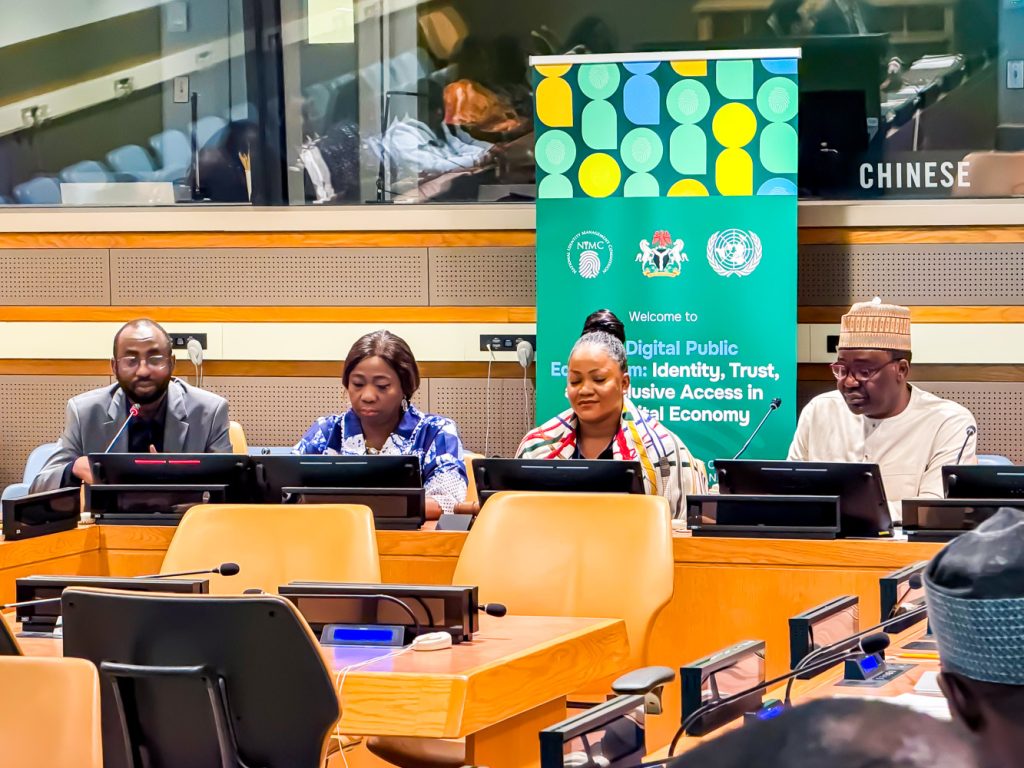
Abdullahi made the remarks during the high-level panel session, “Identity in Action and Access to the Digital Economy,” convened by the National Identity Management Commission (NIMC) at UNGA81, as part of discussions on “The Digital Public Ecosystem: Identity, Trust & Inclusive Access.”
The session brought together key stakeholders, including Sen. Ibrahim Hassan Hadejia, Deputy Chief of Staff to the President of the Federal Republic of Nigeria; Aderemi Adebowale, National Coordinator, Renewed Hope–National Home-Grown School Feeding Programme; and Olugbenga Agboola, Co-founder and Chief Executive Officer of Flutterwave. The discussion was moderated by Diwura Oladepo, Executive Director, Technology for Social Change and Development (Tech4Dev).
Speaking on how Nigeria can leverage digital identity to expand access to services and strengthen interoperable Digital Public Infrastructure (DPI), the NITDA DG stressed that digital identity should be viewed as more than a card or identification number.
“Digital identity is the trust layer of the digital economy.”
According to him, a trusted digital identity framework can provide the foundation upon which authorised innovators, businesses and government agencies can build secure and accessible digital services, rather than creating fragmented identity and verification systems independently.
He noted that such an approach could simplify customer onboarding, reduce verification costs and facilitate access to digital services across critical sectors including financial technology, healthcare, education, agriculture, insurance and government services.
Using the example of a farmer, Abdullahi illustrated how interoperable digital infrastructure could allow an individual to establish identity using the National Identification Number (NIN), verify eligibility on an agricultural platform, receive financial support through a payment system and access authorised government services through trusted data exchange—without repeatedly providing the same information to different institutions.
The NITDA DG further highlighted the need for Nigeria to move beyond the expansion of digital identity infrastructure towards ensuring that identity becomes a trusted and useful digital utility.
He emphasised that the ultimate objective is not simply to identify Nigerians, but to build a secure, trusted and interoperable digital ecosystem that enables citizens to participate meaningfully in the digital economy.
“Digital identity is not the destination; it is the doorway.”
The message underscored the importance of ensuring that digital identity translates into tangible opportunities for Nigerians, irrespective of geography, gender or economic status, while strengthening trust and security across Nigeria’s digital public ecosystem.
As Nigeria continues to advance its digital transformation agenda, the integration of identity, trust and interoperable infrastructure remains central to creating a digital economy where citizens can access services more efficiently and businesses can develop innovative solutions on trusted digital foundations.