
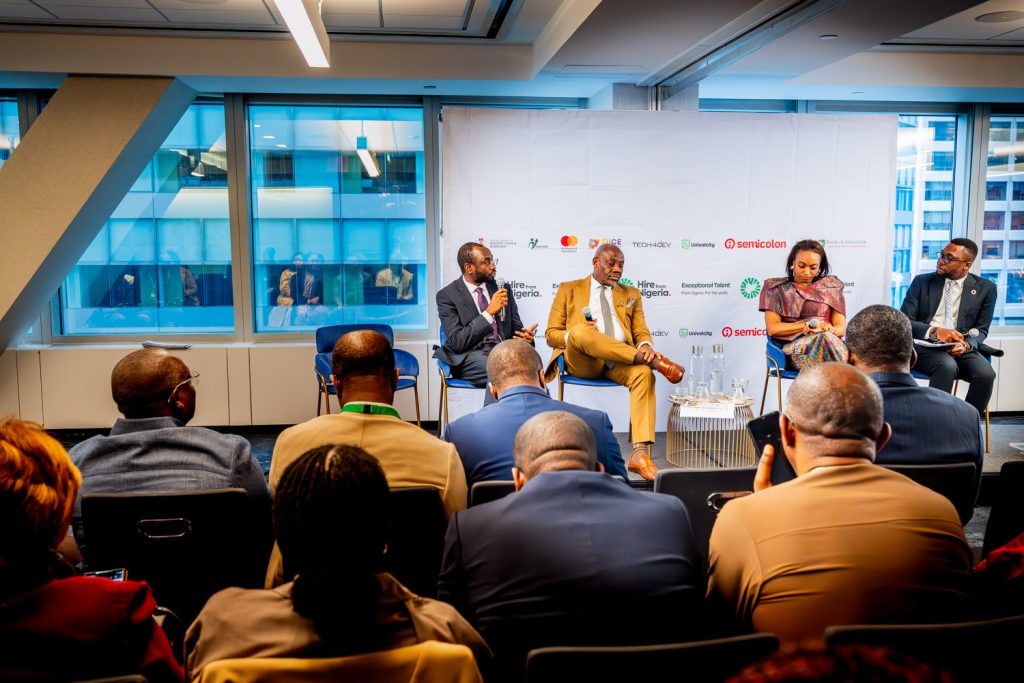
 The Director-General and Chief Executive Officer of the National Information Technology Development Agency (NITDA), Kashifu Inuwa Abdullahi, has called for a strategic shift from traditional outsourcing to Artificial Intelligence (AI)-enabled digital services as Nigeria seeks to strengthen its position in the global digital economy.
Abdullahi made the call during the “Hire from Nigeria” session organised by the Nigeria Economic and Trade Advancement Programme (NATEP) on the sidelines of the 81st United Nations General Assembly (UNGA81).
The high-level engagement brought together key government officials, including the Honourable Minister of Industry, Trade and Investment, Dr. Jumoke Oduwole, and the Honourable Minister of Education, Dr. Moruf Alausa, to explore opportunities in impact sourcing, global trade, digital skills development and inclusive job creation.
Speaking at the session, the NITDA boss emphasised that Nigeria must look beyond conventional outsourcing models and strategically position itself as a destination for high-value, technology-enabled services.

According to him, the rapid advancement of Artificial Intelligence presents an opportunity for Nigeria to redefine its competitive advantage by developing a workforce capable of leveraging emerging technologies to deliver innovative solutions to global markets.
He explained that the country’s digital transformation agenda must focus not only on equipping Nigerians with the skills to use AI tools but also on building their capacity to understand, develop and shape the technologies driving the future of work.
Abdullahi further highlighted the importance of establishing a trusted and secure digital environment to attract international businesses and investors.
He identified Nigeria’s evolving regulatory and institutional frameworks in data protection, digital identity, cybersecurity, digital infrastructure assurance, data classification, sovereign cloud and software quality assurance as critical components of a globally competitive digital services ecosystem.
The DG noted that strengthening these frameworks would help build investor confidence, enhance regulatory certainty and establish Nigeria as a dependable destination for technology-driven business operations.
On digital infrastructure, Abdullahi referenced Project BRIDGE, an initiative targeting the deployment of 90,000 kilometres of fibre-optic infrastructure to improve connectivity and expand access to digital opportunities across the country.
He also highlighted the Cloud First Policy and other government measures aimed at encouraging private-sector investment in computing infrastructure and AI factories.
According to him, the availability of reliable digital infrastructure, computing capacity and a skilled workforce will be essential to Nigeria’s ambition of participating more competitively in the global AI economy.
The NITDA DG also drew attention to the importance of African representation in the development of Artificial Intelligence systems.
He cautioned that countries and communities whose realities are inadequately represented in the datasets used to train intelligent systems risk being excluded from the benefits and opportunities associated with emerging technologies.
He therefore stressed the need for Nigeria to develop indigenous AI capabilities that reflect its unique social, economic and cultural realities while remaining competitive in the global technology landscape.
Abdullahi pointed to initiatives such as the National Centre for Artificial Intelligence and Robotics (NCAIR) and the National Artificial Intelligence Strategy as important steps towards strengthening Nigeria’s AI research, innovation and talent development ecosystem.
He explained that these initiatives are designed to support local innovation, deepen technical expertise and connect Nigerian professionals and technology businesses to emerging opportunities in international markets.
The DG maintained that Nigeria’s digital economy ambitions must ultimately translate into sustainable employment, increased productivity and greater participation in global digital trade.
He emphasised that the country’s long-term opportunity lies not merely in supplying skilled workers to international organisations but in empowering Nigerian talent with the technological capabilities, infrastructure and expertise required to deliver higher-value services.
The engagement underscored NITDA’s commitment to advancing a digitally skilled workforce, strengthening Nigeria’s technology ecosystem and creating an enabling environment for innovation and investment.
With Artificial Intelligence reshaping industries and redefining global service delivery, Abdullahi’s message highlighted the need for Nigeria to move from being primarily a supplier of digital talent to becoming a competitive provider of AI-enabled solutions and high-value technology services to the world.