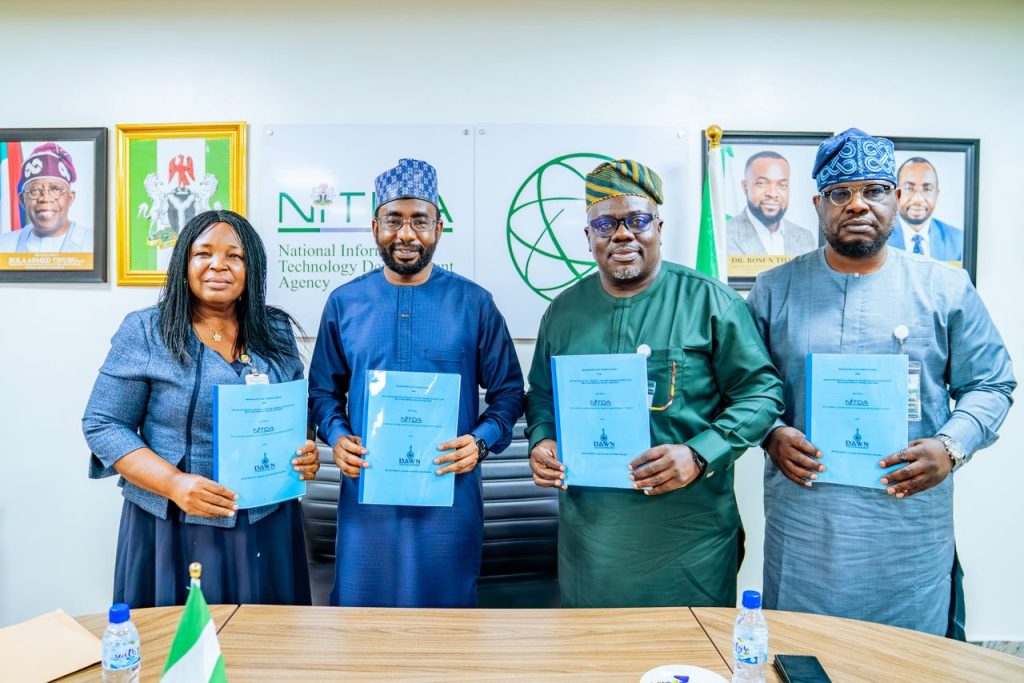
The National Information Technology Development Agency (NITDA) and the Nigerian Independent System Operator (NISO) have commenced discussions on a strategic partnership aimed at accelerating digital transformation within Nigeria’s electricity industry and strengthening the infrastructure required to support the nation’s growing digital economy.
The collaboration was the focus of a high-level meeting between both organisations, where NITDA Director General, Kashifu Inuwa, underscored the critical role of reliable electricity in fostering digital innovation, economic growth, and sustainable national development.
According to Inuwa, the increasing adoption of digital technologies across industries has made stable power supply more important than ever, as electricity remains the foundation upon which emerging technologies and digital services thrive.
He praised NISO for integrating technology into its operations from inception, describing the organisation as a forward-thinking institution well-positioned to deliver lasting value to Nigeria’s power sector.
The NITDA chief noted that the rapid global growth of data centres, artificial intelligence, cloud computing, and other digital infrastructure has intensified the need for dependable electricity. He added that Nigeria can unlock significant opportunities within the global digital economy by improving power reliability while leveraging technology to enhance transparency, efficiency, and accountability across the electricity value chain.
“Technology has become the backbone of modern development. By embracing digitalisation, organisations can improve operational efficiency, strengthen service delivery, and unlock new opportunities for growth,” Inuwa stated.
Highlighting NITDA’s broader mandate, he explained that the agency’s support extends beyond information technology regulation to driving digital transformation across various sectors of the economy.
Drawing from previous experiences, Inuwa revealed that NITDA has successfully supported several government institutions, including the Nigerian Financial Intelligence Unit (NFIU), the Economic and Financial Crimes Commission (EFCC), the Independent Corrupt Practices and Other Related Offences Commission (ICPC), and the Nigerian Shippers’ Council in implementing digital transformation initiatives.
He expressed the agency’s readiness to provide similar support to NISO and proposed the establishment of a joint technical team to identify priority projects and develop a practical roadmap for collaboration.
Earlier, the Managing Director and Chief Executive Officer of NISO, Engr. Abdu Bello Mohammed, described the engagement as a significant milestone in the quest to build a technology-driven electricity management system in Nigeria.
Mohammed explained that NISO emerged from the unbundling of the Transmission Company of Nigeria (TCN) and is responsible for system operations, electricity market administration, and power system planning, while the Transmission Service Provider manages the country’s transmission infrastructure.
He noted that NISO plays a pivotal role in coordinating Nigeria’s electricity network by ensuring the seamless flow of power from generation companies through the transmission network to distribution companies while maintaining grid stability.
As part of efforts to improve operational visibility and efficiency, Mohammed disclosed that NISO has commenced the deployment of Internet of Things (IoT)-enabled meters at key points across the electricity value chain.
According to him, the initiative will provide real-time operational data from generation, transmission, and distribution interfaces pending the completion of the Supervisory Control and Data Acquisition/Energy Management System (SCADA/EMS) project.
He explained that access to accurate, real-time data would significantly improve decision-making processes, strengthen grid management capabilities, and enhance the overall reliability of Nigeria’s electricity system.
Mohammed further expressed confidence that a partnership with NITDA would provide NISO with the technical expertise and strategic insights needed to advance its digital transformation agenda.
The proposed collaboration is expected to promote innovation, improve transparency within the power sector, and create a more conducive environment for investments that rely heavily on dependable digital and energy infrastructure.