

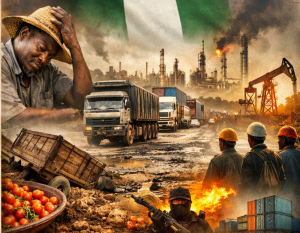
Nigeria’s push for sustainable economic growth is being slowed by fragile and poorly coordinated supply chains, according to a new report released by Rome Business School Nigeria in January 2026.
The report describes supply chains as the quiet engine of the economy, linking agriculture, manufacturing, healthcare and trade. It warns that persistent inefficiencies across these networks are limiting productivity and inflating costs, even though fixing them could raise Nigeria’s annual GDP growth by as much as three per cent, while easing inflation and generating employment.
According to the study, supply chains now play a far broader role than simply moving goods. They influence food availability, access to healthcare, industrial competitiveness and overall quality of life. When supply systems break down, households and businesses feel the impact almost immediately.
Looking at Nigeria’s history, the report notes that the country’s logistics systems evolved from colonial-era export structures focused on raw materials, before being reshaped by the oil boom of the 1970s. Although oil and gas still dominate foreign exchange earnings, these supply routes remain exposed to insecurity, vandalism and administrative bottlenecks, resulting in heavy financial losses.
In agriculture, the report points out that Nigeria earns over $1.5 billion annually from exports such as cocoa and sesame, yet weak transport links, limited processing capacity and poor coordination continue to erode value. As a result, the country has struggled to translate its agricultural strength into broad-based economic gains.
Infrastructure gaps are identified as a major constraint. With large portions of the road network unpaved, transport costs have surged, feeding directly into higher prices for consumers. Port congestion, unreliable electricity and inadequate storage facilities also contribute to significant waste, particularly for perishable goods.
Security challenges further complicate logistics, especially in the North and the Niger Delta, where attacks on transport routes raise costs and disrupt the steady movement of goods. The report also highlights the removal of fuel subsidies as a recent shock that sharply increased logistics expenses, tightening supply and driving up prices nationwide.
While digital tools gained traction during the COVID-19 pandemic, the report finds that Nigeria remains behind in adopting advanced technologies such as artificial intelligence and blockchain. High costs, weak broadband infrastructure and limited technical skills continue to restrict widespread adoption, particularly among smaller businesses.
The impact of these weaknesses is most visible in food and healthcare supply. Small-scale farmers often lose a large share of their produce due to poor access to markets, while health facilities regularly face shortages of essential medicines. Inadequate cold-chain systems and power outages also undermine the delivery of vaccines and other sensitive medical products.
Despite the challenges, the report identifies significant opportunities. The African Continental Free Trade Area is seen as a potential catalyst for growth, with improved logistics and regional cooperation capable of boosting intra-African trade by over 20 per cent. New logistics models, including urban warehousing, electric delivery systems and environmentally friendly transport solutions, are also highlighted as ways to improve efficiency and support e-commerce.
Prof. Antonio Ragusa, Dean and Founder of Rome Business School Nigeria, said the country has what it takes to turn supply chain weaknesses into strengths, provided there is coordinated action.
The report concludes that modernising supply chains is critical to Nigeria’s future. It stresses that with targeted reforms, investment and regional collaboration, the country can strengthen food and health security, reduce its dependence on oil and build a more resilient and inclusive economy.
