


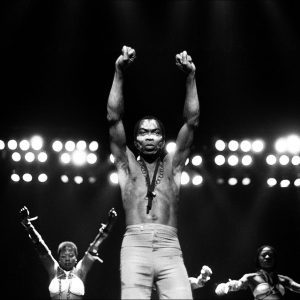
Nearly thirty years after his passing, Afrobeat pioneer Fela Anikulapo Kuti has been awarded a significant international distinction.
The Recording Academy will posthumously present the Nigerian music icon with a Lifetime Achievement Award at the Grammy Awards, making him the first African to do so, according to a Friday BBC report.
According to the BBC, the prize honours Fela’s enduring influence on world music and culture.
Seun Kuti, his son and an Afrobeat musician, responded to the honour by saying, “Fela has been in the hearts of the people for such a long time.” It’s a double win now that the Grammy Awards have recognised it. It’s balancing a story about Fela.
The accolade was long overdue, according to a long-time friend and former manager of the late singer Rikki Stein.
In the past, Africa’s interests haven’t been extremely high. Stein remarked, “I think that’s changing quite a bit lately.”
According to the BBC, the acknowledgement coincides with an increase in interest in African music around the world, primarily due to the popularity of Afrobeats, a genre that has its roots in Fela’s work.
The Best African Performance category was added to the Grammy Awards in 2024, and Burna Boy, a Nigerian singer, was nominated this year for Best Global Music Album.
Fela is now considered one of the world’s greatest musicians thanks to his Lifetime Achievement Award. Bing Crosby was one of the previous honourees, and Carlos Santana, Chaka Khan, and Paul Simon are among this year’s honourees.
It is anticipated that Fela’s friends, family, and acquaintances will be present at the ceremony to accept the award on his behalf.
Seun Kuti stated, “This is necessary for the global human tapestry, not just because it’s my father.”
The BBC portrayed Fela as more than just a singer, describing him as the founder of Afrobeat, a cultural thinker, and a political activist.
He created the genre, which is characterised by prolonged improvisation and politically charged lyrics, by fusing West African rhythms with jazz, funk, and highlife alongside drummer Tony Allen.
Over the course of his career, which ended in 1997, Fela put out more than 50 albums, developed into a harsh critic of authority, and frequently clashed with the Nigerian military governments via his activism and music.