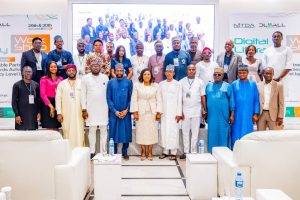
The National Information Technology Development Agency (NITDA) has successfully hosted its inaugural Digital Literacy Stakeholders Workshop, focusing on the theme, “Building Sustainable Partnerships and Pathways Towards Achieving 95% Digital Literacy Level by 2030.” The two-day event brought together key representatives from government agencies, private sector organizations, civil society groups, and academic institutions, all aiming to collaborate on enhancing digital literacy across Nigeria. The primary goal of the workshop was to forge a unified strategy for achieving the ambitious targets set in the National Digital Literacy Framework (NDLF), which includes reaching 70% digital literacy by 2027 and 95% by 2030.
Throughout the workshop, discussions centered on a variety of critical issues, such as the need for mapping ongoing digital literacy initiatives and identifying areas where collaborations can be streamlined to prevent duplication. Attendees explored how technology and innovation could be leveraged to extend digital literacy to underserved rural communities, as well as the importance of creating a unified system to track the outcomes of digital literacy efforts, which would then inform future policy decisions. There was a strong consensus that digital literacy must be integrated into all aspects of national life, including education, business, governance, and community development.
As the workshop concluded, several resolutions were made to guide future efforts in this area. The first major outcome was a renewed commitment from all stakeholders to work more closely together, sharing resources and aligning initiatives for greater impact. NITDA also announced the establishment of a centralized data system to track digital literacy progress across the country, enabling evidence-based planning and ensuring accountability. Additionally, the stakeholders were categorized into three distinct groups—Providers, Enablers, and Funders—to streamline engagement and clarify roles moving forward.
A key focus of the workshop was inclusivity, with a shared understanding that the digital literacy efforts should prioritize marginalized groups, including women, youth, people with disabilities, and remote communities. This ensures that no one is excluded from the opportunity to benefit from digital skills training. Moreover, participants emphasized the importance of long-term sustainability, agreeing that scalable, ongoing interventions are necessary to achieve lasting results, rather than relying on short-term, isolated projects.
The discussions also resulted in the formation of a National Digital Literacy Technical Committee, which will oversee the implementation of the strategies and recommendations discussed at the workshop. This committee will help maintain momentum, ensuring that the initiatives outlined in the NDLF are executed effectively and in a timely manner. The workshop participants agreed to institutionalize the event as an annual gathering to assess progress, share updates, and refine strategies. Another important decision was to promote open data-sharing, facilitated by NITDA, to enhance transparency and foster collaboration between all sectors involved.
Moving forward, the workshop participants committed to designing and deploying digital literacy programs that are tailored to Nigeria’s specific socio-cultural and economic contexts. These programs will address the needs of diverse communities across the country and ensure that digital skills training remains relevant and impactful. Regular follow-up sessions will be held to monitor progress, address challenges, and adjust strategies as needed, with the ultimate goal of achieving the country’s digital literacy targets.
The event underscored NITDA’s pivotal role in driving Nigeria’s digital transformation agenda, which aligns with President Bola Ahmed Tinubu’s Renewed Hope Agenda. This initiative places digital inclusion at the forefront of national development and economic empowerment. In a final highlight, a National Digital Literacy Working Group was inaugurated to provide technical oversight for the framework’s implementation. The group, chaired by David Daser, President of DBI, will ensure that the country’s digital literacy initiatives are executed effectively, making a significant contribution to Nigeria’s digital future.