
With the countdown to Nigeria’s 2027 general elections gaining momentum, the Independent National Electoral Commission (INEC) finds itself at the center of intense public scrutiny. Opposition figures and political groups are raising serious questions regarding the procurement of sensitive election materials and recent high-level administrative reshuffles within the commission.
At the heart of the emerging controversy are demands for total disclosure over which private firms have been awarded multi-billion-naira contracts to print ballot papers and result sheets, alongside concerns over alleged regional imbalances in key operational departments.
Key Electoral Dates Confirmed
The heightened scrutiny comes as the electoral body establishes its official timetable for the upcoming national polls. According to the commission’s schedule:
-
Presidential & National Assembly Elections: Set for January 16, 2027.
-
Governorship & State Houses of Assembly Elections: Fixed for February 6, 2027.
As political parties begin early preparations, critics argue that the credibility of these dates depends heavily on whether the commission can maintain absolute transparency in its administrative and logistical operations.
The Controversy Over Ballot Printing Contracts
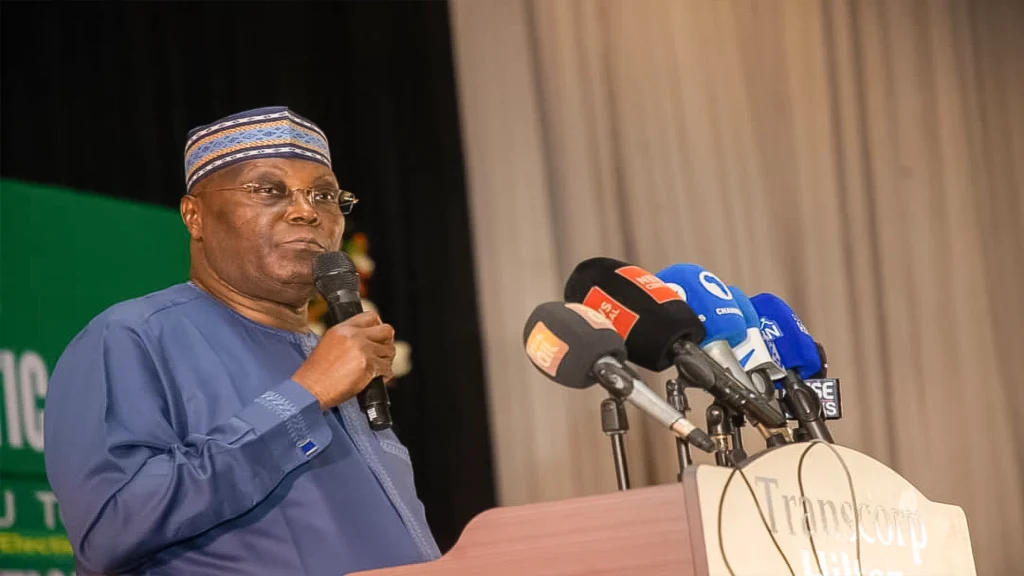
In a detailed statement issued over the weekend, former Vice-President Atiku Abubakar challenged the electoral body to make public the complete list of contractors entrusted with producing sensitive election materials.
Speaking through Phrank Shaibu, Director of Strategic Communication for the African Democratic Congress (ADC) Presidential Campaign Council, Atiku voiced concern over reports that a significant portion of the country’s voting materials might be outsourced to private and foreign entities rather than domestic security printers.
Specifically, Atiku highlighted reports suggesting that more than half of the sensitive materials required for the 2027 presidential poll could be allocated to a foreign firm based in France whose credentials and ownership structure remain undisclosed to the public.
Furthermore, Atiku expressed unease over speculation that the state-owned Nigerian Security Printing and Minting Plc (NSPMC) might only handle printing duties for between 15 and 17 states, leaving private contractors to fulfill the remaining state requirements.
“These reports demand urgent and unequivocal answers. The commission must confirm or deny them and publish the names of every company engaged, the materials and states assigned to each, the procurement method, the security clearances obtained, and the safeguards governing production, storage, and delivery,” Atiku stated. “Nigerians should not have to depend on unnamed sources to discover who is producing their ballots.”
Concerns Over Corporate Links and Independence
The former Vice-President directly linked the procurement process to broader concerns about institutional independence under the current administration of President Bola Tinubu.
Atiku drew attention to reports that Hitech, or a company closely linked to it, might be in line to secure sensitive printing contracts. He highlighted publicly documented business associations between the Chagoury family—owners of Hitech—and the Tinubu family, warning that such arrangements could severely damage public trust.
“The integrity of the commission in the forthcoming election will be seriously compromised if Hitech or a company associated with it is awarded a contract to produce sensitive election materials,” he cautioned.
Calling for greater reliance on qualified domestic security-printing facilities, Atiku stressed that every single ballot paper, result sheet, and sensitive document must feature an unbroken, verifiable chain of custody.
Expanding his concerns beyond electoral logistics, Atiku also urged the Central Bank of Nigeria to clarify its current banknote printing arrangements, specifically asking for public disclosure regarding the involvement of foreign contractors alongside NSPMC in producing higher-denomination currency.
Questions Surrounding Key Operational Reshuffles
Beyond procurement, the electoral body is facing tough questions regarding recent high-level staff redeployments within critical departments—specifically Electoral Operations, Voter Registry, and Information and Communication Technology (ICT).
Reports indicate that key personnel changes include:
-
Isa Magaji Gum: Transitioned from the Electoral Operations Department to head the Voter Registry Department.
-
Mrs. Oluyemi Titilayo Adeyemi-Showunmi: Appointed as the new head of Electoral Operations.
-
Dr. Lawrence Bayode: Identified as the lead official directing Information and Communication Technology (ICT).
Atiku emphasized that while officials should never be presumed compromised simply due to their background, ethnicity, or personal associations, the electoral authority holds an absolute duty to demonstrate that every transfer was carried out strictly on merit and in line with due process.
Allegations of Regional Bias in Staff Postings
Adding weight to Atiku’s query, the African Democratic Congress (ADC) issued a separate statement highlighting what it described as an alarming pattern of regional concentration in sensitive departments.
In a statement signed by its National Publicity Secretary, Bolaji Abdullahi, the ADC disclosed that it had received intelligence and direct complaints suggesting that northern officers serving in strategic ICT and operational roles across several states were being systematically transferred and replaced by personnel originating from South-West states.
While the party did not attach documentary evidence or release specific names publicly, it insisted that the pattern was too distinct to be brushed off as routine administration.
“We have specific names of officers moved from Electoral Operations and ICT in a number of northern states and replaced with officers from Lagos and other South-West states,” the party stated. “Regardless of the commission’s motives, questions about regional concentration in sensitive departments cannot be brushed aside as routine administrative matters.”
The party warned that any administrative setup suggesting regional preference in key operational seats risks creating widespread suspicion that the upcoming elections could be tilted in favor of the ruling All Progressives Congress (APC).
A Call for Public Reassurance
To protect the sanctity of the upcoming 2027 polls, the ADC urged the Chairman of the Commission, Prof. Joash Amupitan (SAN), to publish full details regarding the recent postings, including the selection criteria and official justifications for each transfer.
The party warned that allowing these doubts to persist without a clear, evidence-based rebuttal could inflict long-term damage on the credibility of the entire democratic process.
As preparations intensify across the political landscape, all eyes remain on the electoral commission to provide the clear disclosures demanded by opposition leaders and reassure the electorate that the 2027 elections will be free, fair, and transparent.