
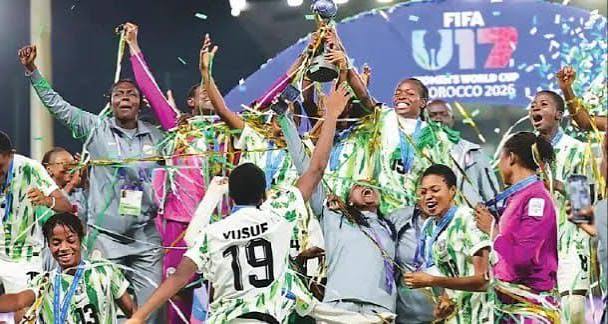

When Nigeria’s Flamingos defeated Japan 2–1 in Rabat on November 7, 2026, to capture the FIFA U-17 Women’s World Cup, the victory did more than add a glittering trophy to Nigerian football it shattered a long-standing ceiling for African women’s football. It marked the first time an African women’s side at any age grade had won a FIFA world title, proving beyond doubt that deep talent exists across the continent’s youth ranks.
Just weeks after that landmark triumph, the Confederation of African Football (CAF) has moved to build a stronger competitive pathway for young girls across Africa. Meeting in Abuja under CAF President Patrice Motsepe, the CAF Executive Committee approved a dedicated U-17 Women’s Africa Cup of Nations and opened bidding to host both the maiden edition of the tournament and the 2028 Women’s Africa Cup of Nations (WAFCON).
Historically, Under-17 girls’ national teams across Africa had limited opportunities for sustained tournament play. Ahead of the biennial FIFA U-17 Women’s World Cup, teams largely played two-legged knockout qualifiers, meaning sides eliminated early had few competitive international fixtures to test themselves, gain tactical maturity, or attract broader scouting attention.
Introducing a full continental championship featuring a group stage and knockout rounds mirrors the established youth tournament structure on the boys’ side and gives young players meaningful, high-stakes competition before stepping up to Under-20 and senior national squads.
Nigeria’s triumph in Rabat highlighted what happens when promising young players get exposure, preparation, and belief on a global stage. Yet sustainable excellence across African women’s football requires consistent continental competition rather than relying solely on occasional breakthroughs.
By pairing the new U-17 Women’s AFCON with host bidding for the 2028 WAFCON, CAF is signaling a push toward stronger institutional competition and clearer progression pathways across age tiers. For Nigeria a traditional powerhouse in African women’s football and rival nations alike, regular continental tournaments create more match minutes, sharper player development, and a wider pool of emerging stars ready for senior international football.