
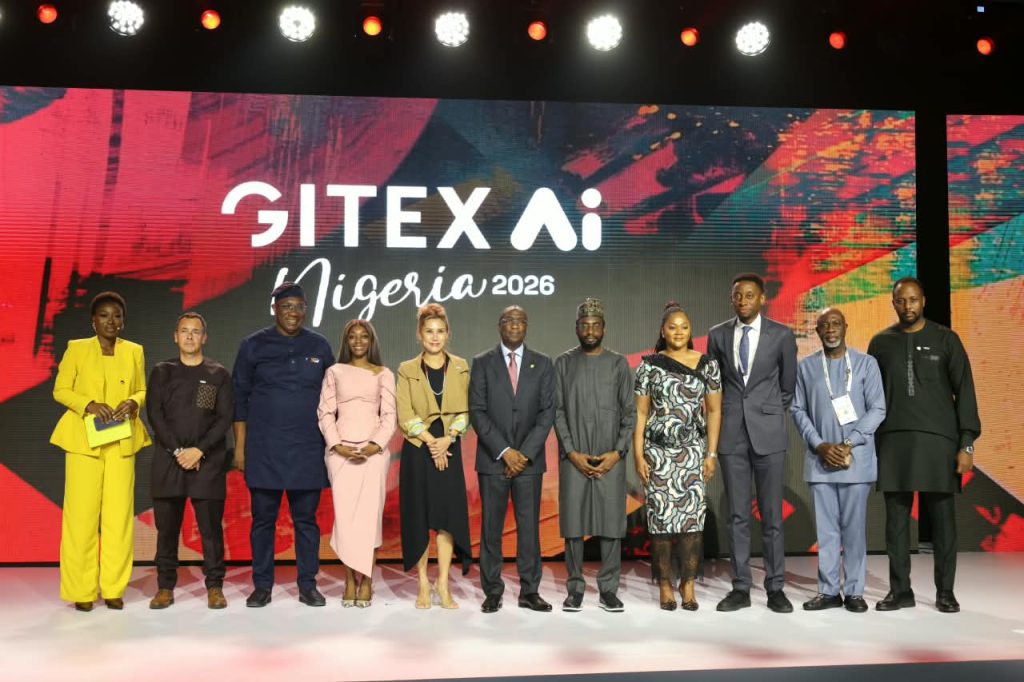
AfCFTA, Lagos State, NITDA, NIMC and global tech leaders rally around digital sovereignty, AI and a single African digital market
 Lagos has emerged as the centre of Africa’s technology conversation as government leaders, technology companies, investors, entrepreneurs and innovators converged on the city for the second edition of GITEX NIGERIA, signalling renewed momentum towards a more connected, innovative and digitally sovereign Africa.
The high-profile inauguration of the two-day event on Wednesday, September 2, followed Monday’s sold-out Government Leadership & AI Summit in Abuja, bringing West Africa’s leading technology, artificial intelligence and startup gathering to Nigeria’s commercial capital for a showcase of emerging technologies, investment opportunities and strategies for building the future economy.
Held under the patronage of President Bola Ahmed Tinubu, GCFR, GITEX NIGERIA is supported by the Federal Ministry of Communications, Innovation and Digital Economy, in collaboration with the National Information Technology Development Agency (NITDA). The event is endorsed by the Lagos State Government and organised by KAOUN International, the global organiser of GITEX events.
The Lagos programme opened with a high-level inauguration ceremony ahead of the Tech Expo & Future Economy Conference, bringing together influential voices shaping Africa’s technology and digital economy.
Lagos positions itself as Africa’s innovation capital
With Lagos increasingly recognised as one of Africa’s most dynamic technology ecosystems, the city is positioning itself not only as Nigeria’s commercial powerhouse but as a major global hub for innovation, investment and entrepreneurship.
Lagos was ranked the world’s fastest-growing tech hub in the 2025 Dealroom Global Tech Ecosystem Index, recording an 11.6-fold increase in enterprise value to US$15.3 billion and producing five unicorns. The city is also home to almost 1,000 active startups, representing about two-thirds of Nigeria’s startup ecosystem.
Lagos further dominates Nigeria’s representation among Africa’s fastest-growing businesses, with 23 of the 28 Nigerian companies featured in the Financial Times’ 2025 ranking of Africa’s fastest-growing companies based in the state.
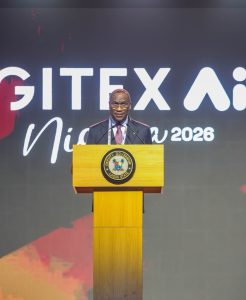
Speaking at the inauguration, H.E. Dr Kadri Obafemi Hamzat, Deputy Governor of Lagos State, said the state’s ambition extends beyond commercial dominance.
“GITEX NIGERIA is here because Lagos is consequential. What happens in this city sets the direction for a continent of around 1.4 billion people. That’s exactly why the conversation about Africa’s future economy belongs here in Lagos.”
He added that Lagos was determined to earn its place as Africa’s leading innovation hub through deliberate investment and execution.
“We want Lagos recognised not only as Nigeria’s commercial capital, but as Africa’s innovation capital. A position like that cannot be declared; it has to be earned through infrastructure, talent, policy, and execution.”
AfCFTA pushes for a single digital continental market
Beyond Nigeria’s borders, discussions at GITEX NIGERIA focused heavily on the need to build an integrated African digital economy capable of turning innovation into cross-border trade and commercial opportunities.
H.E. Wamkele Mene, Secretary-General of the African Continental Free Trade Area (AfCFTA) Secretariat, called for greater African ownership of the continent’s digital transformation.
“Africa should not simply import digital infrastructure systems developed for other countries outside of the continent. We possess the talent, innovation, and technical expertise required to shape our own digital transformation and ensure that it serves our integration and development objectives.”
According to Mene, Africa must move quickly to connect its innovation ecosystems and create a digital continental marketplace where African businesses can operate, transact and scale across borders.
“We can connect Africa’s innovation to a single digital continental market in which the African private sector can operate, transact, and expand across borders, converting digital innovation into commercially meaningful trade.”
His comments reinforced a central theme of the event: that Africa’s digital transformation must translate into tangible economic value, stronger intra-African commerce and greater opportunities for homegrown businesses.
Nigeria targets digital sovereignty and homegrown innovation
For Nigeria, the GITEX NIGERIA platform is also an opportunity to advance the country’s ambition to move from being primarily a consumer of technology to becoming a producer and exporter of digital solutions.
Kashifu Inuwa Abdullahi, Director-General of NITDA, stressed the importance of creating an environment where Nigerian innovators can develop solutions to local challenges and compete globally.
“As a nation, we need to be intentional if we want to be an active participant in this economy. We also have real-world problems that need innovative solutions.”
He said Nigeria was increasingly focused on building sovereignty across critical areas including data, cloud infrastructure, operations and artificial intelligence.
“We don’t want to be at the receiving end of technology; we want to be an active builder of the technology.”
The message underscores a growing policy focus on digital sovereignty, local capacity development and the creation of technology solutions designed around Africa’s unique needs and opportunities.
Digital identity emerges as foundation for trust
Digital identity, cybersecurity, data protection and interoperability also featured prominently during the inauguration, reflecting the growing importance of trust as African economies become increasingly digital.
The event highlighted President Tinubu’s signing of the National Identity Management Commission (NIMC) Act 2026 in June, replacing the 2007 legislation with a modern framework designed to support secure and inclusive digital identity.
The new framework reinforces the National Identification Number (NIN) as Nigeria’s primary identity credential while seeking to strengthen interoperability, data protection, cybersecurity and access to digital services across the public and private sectors.
Engr. Abisoye Coker-Odusote, Director-General and CEO of NIMC, emphasised that digital connectivity must be underpinned by trust.
“Connection without trust breeds vulnerability. When trust is embedded into the framework, onboarding becomes effortless, paperwork vanishes, and cross-border trade accelerates.”
She noted that as African trade increasingly moves online, digital identity, secure authentication and digital public infrastructure will become critical to enabling seamless transactions across borders.
“The Federal Government recognises that digital identity, public key infrastructure (PKI)-based trust, and digital public infrastructure are inseparable parts of a single ecosystem.”
400-plus exhibitors put AI and emerging technologies on display
The Lagos edition of GITEX NIGERIA, running from September 2–3, is showcasing more than 400 exhibiting companies and startups, presenting technologies aimed at transforming sectors across the economy.
Thousands of visitors are expected to engage with exhibitors, innovators and technology leaders, while more than 200 investors managing approximately US$200 billion in assets are participating in the event, further strengthening its role as a platform for investment, partnerships and global market access.
Trixie LohMirmand, CEO of GITEX, said the event was designed to connect Nigerian and African innovators with international markets, knowledge, capital and strategic partnerships.
“GITEX NIGERIA is here to create vital connections that enable Nigerian and African innovators to take their technologies and ideas to the world while accessing knowledge, networks, international partnerships, and opportunities.”
She said Nigeria’s scale and Lagos’ energy provide a strong foundation for Africa to compete in the global technology economy.
“Nigeria has the scale; Lagos has the ambition and energy. We aim to grow collectively and put Africa at the top – not just as a consumer of AI, but as a globally competitive producer.”
With AI, digital infrastructure, cybersecurity, identity, investment and cross-border digital commerce dominating the agenda, GITEX NIGERIA 2026 is positioning Lagos as a critical meeting point for Africa’s technology ecosystem and reinforcing Nigeria’s ambition to play a leading role in shaping the continent’s digital future.
For more information, news and updates on GITEX NIGERIA, visit www.gitexnigeria.ng.