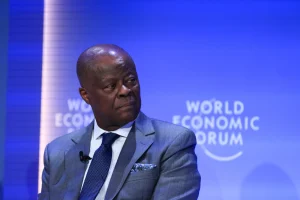
The federal government has stated that it intends to rely more on domestic resources, invest more in the economy, and lessen its reliance on borrowing.
Speaking on Bloomberg Television yesterday at the 56th World Economic Forum in Davos, Switzerland, Wale Edun, the Minister of Finance and Coordinating Minister of the Economy, made this statement.
The minister’s comments highlighted the need to concentrate on revenue generation in light of the Federal Government’s initiatives to boost the economy and enact fiscal reforms.
He stated that the government’s top goal was to mobilise its own resources, even though the nation could tap foreign bond markets if needed.
In the face of growing strain on the world economy, he described the government’s initiatives to increase tax collection and improve fiscal sustainability.
“The issue now is to focus on revenue, focus on domestic resource mobilisation,” Edun stated, highlighting efforts to lower borrowing while increasing revenue creation. Our goal is to depend less on borrowing.
The minister added that although internal changes were essential to the government’s fiscal strategy, Nigeria remained accessible to foreign capital markets if necessary.
In order to promote growth and stabilize public finances, President Bola Tinubu’s administration has implemented a number of economic changes since assuming office in 2023.
These include changing the country’s tax system, eliminating currency limitations, and discontinuing an expensive fuel subsidy.
The government has also proposed tax reforms, which are intended to increase revenue from approximately 14% of GDP to 18% of GDP next year.
Edun added that the federal government’s measures aim to lessen dependency on external debt while promoting long-term economic sustainability.
He claims that these programs are a part of larger moves to boost investor confidence and modernise Nigeria’s economy.
According to economic projections, Nigeria’s reforms are beginning to show results.
Remember that Nigeria’s growth forecast was raised from 4.2 percent in 2025 to 4.4 percent in 2026 by the International Monetary Fund (IMF).