
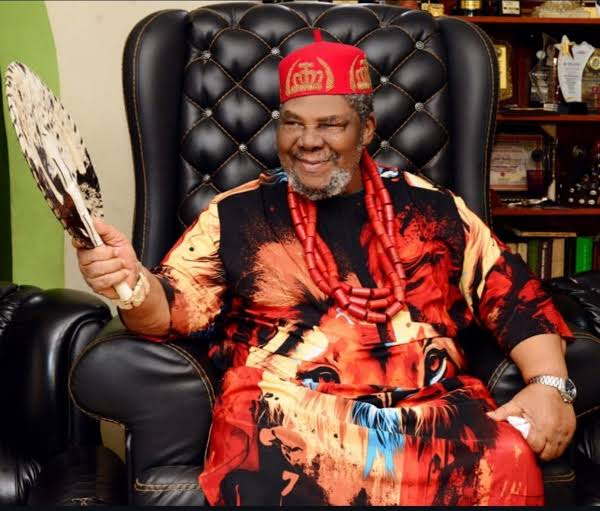

The Young Nigerian Actors and Actresses Club has paid tribute to the late veteran actor, describing his death as a significant loss to Nollywood and a generation of emerging performers who regarded him as a symbol of discipline, excellence and cultural identity. The Nigerian entertainment industry continues to mourn the passing of one of its most celebrated performers, Chief Pete Edochie (MON), as the Young Nigerian Actors and Actresses Club (YNAAC) joins colleagues, filmmakers, cultural organisations and admirers in honouring the life and legacy of the legendary actor.
In a condolence statement released following the announcement of his death, YNAAC expressed deep sorrow over the loss of the veteran broadcaster and actor, describing him as far more than an entertainer. The organisation recognised Edochie as an institution within the Nigerian film industry whose exceptional performances, commanding screen presence and commitment to his craft helped shape the identity of Nollywood.
The organisation extended its condolences to the Edochie family, members of the Nigerian creative community, friends, professional colleagues and admirers across the world. It also acknowledged the profound influence the late actor had on emerging performers, particularly young Nigerians aspiring to build careers in acting, filmmaking and storytelling.
Edochie’s death was announced by his son, Chief Leo Pete Edochie, in a family statement shared on Wednesday, November 25, 2026. According to the announcement, the veteran actor died at approximately 12:30 a.m. in Enugu, Nigeria, at the age of 79, following a prolonged battle with prostate cancer.
The announcement brought an end to the life of a performer whose career spanned broadcasting, television and Nigerian cinema, leaving behind a body of work that influenced generations of actors and audiences.
For YNAAC, the loss represents not only the departure of an entertainment icon but also the passing of a cultural figure whose professional journey offers valuable lessons to the next generation of Nigerian performers.
YNAAC PAYS TRIBUTE TO A MAN WHO HELPED DEFINE NOLLYWOOD
In its statement, the Young Nigerian Actors and Actresses Club described Pete Edochie as a cultural icon, a master of his craft and one of the towering personalities whose contributions helped establish Nigerian cinema as an influential storytelling industry.
The organisation highlighted his exceptional acting abilities, distinctive voice, discipline, wisdom and mastery of language as qualities that distinguished him throughout his career.
YNAAC noted that his performances inspired generations of actors and actresses, many of whom grew up watching his portrayals of traditional rulers, family patriarchs, community leaders and influential personalities. According to the organisation, his ability to command attention on screen, communicate complex emotions and deliver dialogue with authority made him a remarkable example of professional excellence. The club also emphasised that his influence extended beyond the characters he portrayed. His career demonstrated the importance of dedication, consistency, cultural awareness and a deep understanding of the responsibilities that come with being a storyteller.
For aspiring performers, Edochie represented an example of how an actor could build a recognisable professional identity without losing connection with cultural heritage and traditional values. The condolence statement further described his passing as a profound loss to the Nigerian creative community and to young talents who regarded him as a role model. YNAAC concluded its tribute by celebrating his remarkable life, legendary career and enduring contribution to the development of Nigerian entertainment. The organisation prayed for strength and comfort for his family, asking God to grant them the fortitude to bear the loss. Its message ended with a solemn farewell to the veteran actor, expressing confidence that his legacy would continue through the generations of performers, filmmakers and storytellers he inspired.
PETE EDOCHIE: THE MAN BEHIND THE LEGEND
Born on March 7, 1947, in Zaria, Kaduna State, Peter Uwadiegwu Ogugua Edochie, popularly known as Pete Edochie, had his roots in Akamnato, Ifite Nteje, in present-day Anambra State.
His journey to becoming one of Africa’s most recognisable actors did not begin on a film set. Before becoming a household name in Nigerian entertainment, he established himself in broadcasting, developing professional experience that would later contribute to his confidence, communication skills and understanding of performance.
According to biographical details published by Punch Newspapers, Edochie attended St Patrick’s and St James Primary Schools in Zaria before proceeding to St John’s College in Kaduna. He also studied journalism and television at the School of Journalism and Television in England.
His professional broadcasting career began in 1967 when he joined the Eastern Nigerian Broadcasting Corporation as a junior programmes assistant. Over the years, he advanced through the broadcasting profession, eventually becoming Director of Programmes at the Anambra Broadcasting Service. He also served as Deputy Managing Director and occasionally acted as Managing Director. His years in broadcasting provided a foundation for his later success in acting. Working in an environment that demanded clear communication, discipline, presentation skills and an understanding of audiences helped develop qualities that became evident in his screen performances.
He was also remembered for his distinctive delivery and ability to communicate authority through speech. His transition from broadcasting into acting would eventually place him among the most influential personalities in Nigerian television and film.
HOW THINGS FALL APART CHANGED HIS CAREER FOREVER
Although Pete Edochie had developed considerable professional experience before becoming an actor, his portrayal of Okonkwo in the Nigerian Television Authority’s adaptation of Chinua Achebe’s celebrated novel, Things Fall Apart, became the defining breakthrough of his entertainment career.
The 1987 television adaptation introduced his performance to a much wider audience and established him as a formidable acting talent.
Playing Okonkwo required an interpretation of a complex character shaped by tradition, ambition, masculinity, personal insecurity, cultural expectations and the fear of appearing weak.
Okonkwo was not simply a powerful community leader. He was a deeply complicated character whose determination to maintain his reputation and authority contributed to his personal struggles and eventual tragedy.
Edochie’s performance captured many of these contradictions, helping audiences understand the character beyond his outward strength.
His portrayal became one of the most memorable interpretations of an African literary character on Nigerian television.
The role also carried significance beyond entertainment. Achebe’s novel had already become an important work of African literature, examining colonial encounters, cultural transformation and the complexities of Igbo society.
Bringing its central character to television required a performer capable of communicating the emotional and cultural dimensions of the story.
Edochie’s interpretation helped make the production memorable to audiences in Nigeria and beyond.
According to Punch’s retrospective account of his career, the performance attracted international attention, including interest from the British Broadcasting Corporation, which sent a delegation to interview him about his portrayal.
President Bola Ahmed Tinubu also referenced the performance in his official condolence message, describing Edochie’s interpretation of Okonkwo as unforgettable.
His achievement demonstrated how Nigerian television productions could translate important African literary works into compelling screen experiences.
More importantly, it established a professional identity that would follow him throughout his subsequent decades in entertainment.
FROM OKONKWO TO NOLLYWOOD’S MOST RECOGNISABLE PATRIARCH
Following the success of Things Fall Apart, Pete Edochie became a familiar face in Nigerian film and television productions.
His career included appearances in notable productions such as Igodo, Rituals, Billionaire’s Club and Genevieve Nnaji’s 2018 film Lionheart.
Across these productions, he became particularly associated with characters who embodied authority, influence, wealth, tradition and family leadership.
His portrayals of traditional rulers, wealthy businessmen, community elders and family patriarchs became an important part of his professional identity.
However, reducing his acting career to the portrayal of powerful men would overlook the qualities that made his performances distinctive.
He brought a particular approach to dialogue delivery, character interpretation and screen presence. His performances frequently combined controlled expressions, measured speech, deliberate gestures and a commanding voice.
He could communicate authority without relying exclusively on physical action. A carefully delivered sentence, a pause or a change in facial expression could communicate tension and establish the relationship between characters.
His use of proverbs and traditional expressions also became a recognisable feature of his performances.
For many viewers, these elements created a distinctive experience that connected Nigerian screen entertainment with familiar cultural expressions.
His characters often reflected the complexities of African family structures, leadership, community expectations and generational relationships.
This cultural connection helped make his performances recognisable to audiences who saw aspects of their communities and traditions reflected in the characters he portrayed.
The Presidency, in its November 25 condolence message, specifically recognised his contributions to productions including Igodo, Rituals and Lionheart, noting that his performances helped shape Nollywood’s evolution and international visibility.
THE VOICE, THE PROVERBS AND THE PRESENCE THAT BECAME HIS SIGNATURE
One of the most enduring aspects of Pete Edochie’s professional identity was his distinctive voice.
His deep vocal delivery, measured rhythm and carefully articulated expressions became an important part of his screen personality.
In an industry where performers often compete for attention through dramatic expressions and emotional intensity, Edochie developed a style that relied heavily on composure and authority.
He demonstrated that an actor did not always need to raise his voice or exaggerate physical movements to communicate power.
Sometimes, the effectiveness of a performance lies in knowing when to pause, how to deliver a line and how to communicate an emotion without explaining everything.
His use of African proverbs was equally significant.
Proverbs frequently appeared in his dialogue, particularly in roles involving traditional institutions, family leadership and community relationships.
These expressions offered audiences more than memorable lines. They introduced cultural wisdom, moral reflections and traditional approaches to understanding human behaviour.
For younger viewers, his performances provided exposure to forms of communication deeply connected to African oral traditions.
For older audiences, they often evoked familiar expressions associated with community elders and traditional leadership.
His ability to make these expressions central to his characters contributed to his recognisable acting identity.
The Nigerian creative industry has produced many talented performers, but only a relatively small number develop a screen presence that audiences can identify almost immediately.
Edochie belonged to that category.
His voice, expressions and delivery became so closely associated with his performances that they formed part of the wider popular culture surrounding Nollywood.
A CAREER THAT EARNED NATIONAL AND INDUSTRY RECOGNITION
Pete Edochie’s contributions to Nigerian entertainment attracted several recognitions during his lifetime.
In 2003, he received the national honour of Member of the Order of the Niger (MON) from former President Olusegun Obasanjo.
The honour recognised his contributions and placed him among Nigerians acknowledged for their service and achievements.
His professional accomplishments also attracted recognition within the African entertainment industry.
Among the honours documented in Punch’s career retrospective were the Industry Merit Award from Africa Magic, a Lifetime Achievement Award from the Africa Film Academy and the African Film Legend Award presented at the African Film Festival in 2020.
These recognitions reflected the influence of a career that extended beyond individual movie appearances.
They also highlighted the importance of veteran performers in an industry whose development has depended on the contributions of actors, directors, producers, screenwriters, broadcasters and other creative professionals.
For YNAAC, his achievements represent an example of the relationship between professional commitment and lasting recognition.
His journey from broadcasting to becoming one of Nigeria’s most celebrated actors demonstrates that careers in the creative industry can develop through different professional pathways.
It also reinforces the importance of building competence and maintaining professional standards over time.
WHY HIS PASSING MATTERS TO THE NEXT GENERATION OF NOLLYWOOD
The death of an established performer often creates an opportunity for the entertainment industry to reflect on the individuals who helped build its foundations.
For younger actors, Pete Edochie’s passing raises an important question: how can the next generation preserve the professional values and storytelling traditions that helped shape Nigerian cinema?
The Young Nigerian Actors and Actresses Club’s response places particular emphasis on this question.
Its tribute suggests that Edochie’s influence should not be measured only by the number of films in which he appeared or the popularity of his characters.
His contribution should also be considered through the professional standards he represented and the generations of performers who drew inspiration from his work.
For emerging actors, one important lesson from his career is the value of developing a distinctive acting identity.
Edochie was recognisable because of the way he approached dialogue, interpreted characters and established relationships with audiences.
Actors entering the industry today operate in a different entertainment environment. Digital platforms, streaming services, social media and changing audience preferences have transformed the ways Nigerian films are produced, distributed and consumed.
Yet the fundamental requirements of acting remain important.
An actor must understand character development, emotional interpretation, dialogue delivery, timing and the ability to communicate convincingly with an audience.
Edochie’s career offers a reminder that visibility alone does not necessarily create a lasting professional legacy.
Consistency, discipline, versatility and a commitment to the craft remain essential.
Another important lesson concerns cultural identity.
His performances demonstrated that African stories could be presented in ways that preserved cultural expressions while remaining accessible to audiences beyond Nigeria.
For young Nigerian performers, this provides an opportunity to understand that international relevance does not require abandoning cultural authenticity.
Indeed, stories rooted in local experiences can communicate universal themes when they are told with skill and understanding.
This is particularly relevant as Nollywood continues to expand its international reach.
The industry needs emerging performers who can combine contemporary storytelling techniques with a genuine understanding of Nigeria’s diverse cultures and histories.
In this regard, Edochie’s legacy represents more than nostalgia. It provides a professional reference point for the future.
GOVERNMENT AND THE CREATIVE INDUSTRY RECOGNISE A NATIONAL LOSS
Tributes to Pete Edochie have extended beyond YNAAC and his immediate professional circle.
President Bola Ahmed Tinubu issued an official condolence message on November 25, describing the late actor as one of the pioneers of Nigeria’s vibrant film industry.
The President recalled his performance as Okonkwo and highlighted his contributions to productions that helped shape Nollywood’s growth and international visibility.
The Federal Minister of Art, Culture, Tourism and the Creative Economy, Hannatu Musa Musawa, also described Edochie as a national treasure and an important custodian of Nigerian culture, language and storytelling traditions.
In a condolence message published by the Federal Ministry of Information and National Orientation, the Minister highlighted his influence as an actor, broadcaster, cultural ambassador and mentor figure to generations of artists.
She also emphasised the significance of his work in projecting Nigerian cultural heritage to audiences across Africa and the wider world.
These official tributes demonstrate that the significance of Edochie’s career extended beyond the entertainment business.
His work contributed to the country’s cultural representation and the visibility of Nigerian storytelling.
The attention surrounding his death also reflects the important position Nollywood occupies within Nigeria’s creative economy.
Nigerian films have become an important means through which local experiences, languages, traditions and social realities reach audiences internationally.
Veteran performers who helped establish the industry’s identity remain an important part of that history.
A FINAL CHAPTER THAT REMINDS NIGERIANS OF THE IMPORTANCE OF LEGACY
There is an interesting dimension to the public response following Edochie’s passing.
For years, false reports about his death circulated across social media platforms, prompting repeated clarifications from his family and representatives.
In February 2026, his family publicly dismissed another viral death claim, with his son Leo describing the report as false. His communications team also warned against the circulation of unverified information.
That history made the November announcement particularly significant.
This time, the news came through an official family statement and was subsequently reported by established media organisations, including The Guardian, Punch and Channels Television.
The distinction is important in an era when celebrity death rumours can spread rapidly through social media, blogs and messaging platforms.
It also serves as a reminder of the responsibility that comes with publishing entertainment news, especially when the subject concerns someone’s life or the wellbeing of a grieving family.
Beyond the circumstances surrounding the announcement, Edochie’s death has encouraged conversations about the importance of celebrating creative professionals while they are alive.
The entertainment industry frequently celebrates its legends during award ceremonies, anniversaries and milestone events. However, the passing of influential figures often brings renewed attention to the need to document their contributions and preserve their work.
For younger performers, the opportunity to learn from experienced professionals should not be postponed until those individuals are no longer available.
Their experiences, knowledge, professional discipline and understanding of the industry are valuable resources that can benefit emerging talents.
The legacy of an actor should therefore be preserved not only through repeated viewing of old productions but also through mentorship, professional education, archival projects and the continued production of meaningful stories.
This is one of the broader conversations that Edochie’s passing leaves behind for Nollywood.
YNAAC: CELEBRATING A LEGACY THAT MUST OUTLIVE ITS CREATOR
For the Young Nigerian Actors and Actresses Club, the death of Chief Pete Edochie is a moment of grief, reflection and renewed commitment to the values that sustain the creative profession.
The organisation’s tribute places emphasis on creativity, integrity and excellence, principles that are particularly important for young people seeking opportunities within Nigeria’s competitive entertainment industry.
Its message recognises that the responsibility of building Nollywood does not belong exclusively to established actors or industry veterans.
Emerging performers, filmmakers, writers, directors and other creative professionals also have a responsibility to contribute to the industry’s continued development.
The passing of an influential figure such as Edochie makes that responsibility even more significant.
His career demonstrates the value of taking the craft seriously, understanding the cultural significance of storytelling and building a professional identity that can withstand changing industry trends.
YNAAC’s decision to join the wider Nollywood community in mourning him also reflects the importance of recognising the contributions of those who came before the next generation.
The organisation extended its heartfelt condolences to his wife, Barrister Josephine Edochie, his children, siblings, extended family, colleagues and admirers.
It prayed that God would grant the family the strength and comfort needed during this difficult period.
The family has indicated that funeral arrangements will be announced in due course. Until an official announcement is made, details concerning the funeral should be treated as unconfirmed.
AN ICON MAY DEPART, BUT THE STORIES REMAIN
Chief Pete Edochie’s passing marks the end of an extraordinary chapter in Nigerian entertainment.
From his early broadcasting career in 1967 to his unforgettable interpretation of Okonkwo in Things Fall Apart, and his subsequent appearances in numerous Nigerian productions, he built a career that placed him among the country’s most recognisable screen personalities.
He represented a generation of performers whose work helped establish the foundations upon which contemporary Nollywood continues to develop.
His influence was reflected in his performances, his distinctive delivery, his portrayal of African cultural expressions and the recognition he received from government institutions and the entertainment industry.
For those who watched him grow into an iconic figure, his death represents a deeply personal loss.
For young actors who discovered his work through television broadcasts, films and digital platforms, it is an opportunity to appreciate the professional journey of a man whose contribution to African storytelling will remain significant.
And for Nollywood, it is a reminder that the strength of an industry is not determined only by the number of films it produces, but also by the quality of the stories it tells and the individuals whose work gives those stories lasting meaning.
YNAAC’s tribute captures this sentiment through its recognition of Edochie’s influence on generations of actors, filmmakers and storytellers.
As the Nigerian creative community mourns, the organisation’s message remains clear: the responsibility of preserving his legacy belongs to those who continue to tell African stories.
Chief Pete Edochie may no longer grace the screen with his commanding presence, but the characters he brought to life, the cultural expressions he helped popularise and the lessons embedded in his professional journey will continue to reach new audiences.
Rest in peace, Chief Dr Pete Edochie (MON), Ononenyi.
Your work remains. Your influence endures. Your legacy lives on.
YOUNG NIGERIAN ACTORS AND ACTRESSES CLUB (YNAAC)
Creativity • Integrity • Excellence
YNAAC Advocacy | YNAAC Creativity | YNAAC Legacy