
Health authorities in Ogun State, south-west Nigeria, have urged emergency agencies, transport unions, healthcare workers, and the general public to strengthen their collaboration in order to save more lives during medical crises.
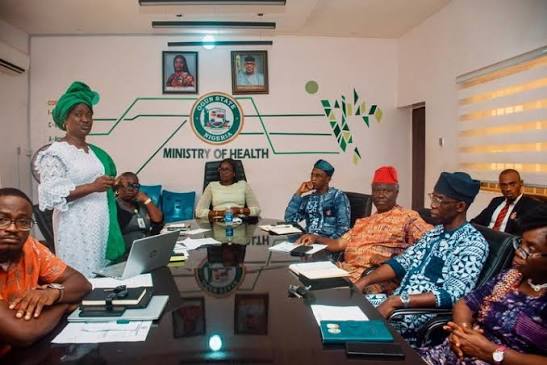
The appeal was made on Friday by the Ogun State Commissioner for Health, Dr Tomi Coker, during a quarterly strategy session of the Ogun State Emergency Medical Treatment Committee (OGSEMTC). The gathering, which was organised by the Ogun State Ambulance and Emergency Services, brought together a wide coalition of groups involved in public safety, transport, and healthcare delivery.
According to Dr Coker, improving emergency medical care across the state cannot be left to doctors and nurses alone. Instead, she emphasised that saving lives depends heavily on a coordinated, community-wide effort—especially during the critical moments before a patient reaches a hospital.
The Crucial Role of Everyday First Responders
In medical emergencies, the first few minutes often determine whether a patient survives or suffers permanent harm. Dr Coker pointed out that when accidents or sudden health crises occur, medical personnel are rarely the first people at the scene.
“When a road traffic crash happens on the Lagos-Ibadan Expressway, the first person there is not a doctor,” Dr Coker told attendees. “It is a commercial driver, a road traffic officer, a journalist, or a bystander.”
She explained that the same reality applies to domestic and maternal emergencies in rural and urban communities alike.
“When a pregnant woman bleeds at home in Yewa, the first call is not to the hospital. It is to a neighbour, a transport union member, or a community leader,” she noted. “If we do not work together, we lose lives that could have been saved in minutes.”
Because ordinary citizens, drivers, and traffic wardens frequently act as informal first responders, their immediate actions—such as alerting ambulance services, clearing traffic, or safely assisting victims—can make the difference between life and death.
Bringing Stakeholders to One Table
To bridge the gap between communities, road officials, and hospitals, the state government established OGSEMTC. The committee serves as a central hub where different sectors can streamline communication, align their procedures, and respond to emergencies as a single unit.
During Friday’s meeting, Dr Coker acknowledged the wide range of partners working alongside the Ministry of Health. These include traffic and security agencies such as the Traffic Compliance and Enforcement Corps (TRACE), the Federal Road Safety Corps (FRSC), and the Nigeria Police Force.
She also highlighted the vital participation of major transport unions operating across the state, including the Ogun State Parks and Garages Development Board (OGSPAM), the National Union of Road Transport Workers (NURTW), the Road Transport Employers Association of Nigeria (RTEAN), the Amalgamated Commercial Tricycle and Motorcycle Owners, Repairs and Riders Association of Nigeria (ACOMORAN), and the Articulate Motorcycle Owners and Riders Association of Nigeria (AMORAN).
Alongside transport operators, the coalition includes broadcast and print journalists, civil society groups, the State Primary Health Care Development Agency, the Ogun State Health Insurance Agency (OGSHIA), and the Ogun State Blood Transfusion Service.
“This gathering is unique because emergency does not belong to the Ministry of Health alone,” the commissioner said. “Emergency belongs to all of us. That is why OGSEMTC was created—to bring all of us to one table, to speak one language, and to act as one team.”
Strengthening Ambulance Corridors and Hospital Referrals
Reviewing recent improvements in the state’s healthcare infrastructure, Dr Coker noted that closer cooperation among agencies has already begun to yield positive results. Ambulance response times have improved significantly along major highways and transit corridors in Ogun State, allowing paramedics to reach accident scenes more quickly.
Furthermore, the state has worked to strengthen the referral network connecting different tiers of medical care. When a patient is initially stabilised at a local Primary Healthcare Centre, clearer communication channels now ensure a smoother and faster transfer to secondary hospitals or specialised tertiary institutions when advanced treatment is required.
This seamless movement of patients is critical in preventing delays that often lead to avoidable fatalities, particularly in trauma cases and complicated childbirths.
Removing Financial Barriers to Urgent Care
A major obstacle to emergency care in many parts of Nigeria is the cost of immediate treatment, which can sometimes delay life-saving interventions. To address this challenge, Ogun State has partnered with the National Emergency Medical Services and Ambulance System (NEMSAS), a federal initiative designed to expand access to urgent healthcare for vulnerable citizens.
Dr Coker explained that through this partnership, eligible emergency patients are no longer turned away or delayed due to an inability to pay upfront. Under the scheme, qualifying victims receive free emergency medical treatment during the critical first 48 hours after an incident.
This policy ensures that medical teams can focus entirely on stabilising patients and performing urgent procedures without waiting for financial deposits from families or Good Samaritans who bring victims to the hospital.
Ensuring Safe Blood Supplies
In addition to rapid transport and free initial care, the commissioner stressed that hospitals must be fully equipped to handle severe trauma and obstetric emergencies once patients arrive. Chief among these needs is a reliable supply of safe blood.
“The need for a robust Blood Transfusion Service cannot be overemphasised when it comes to emergency services,” Dr Coker stated. “We are working to ensure blood is available when and where it is needed most.”
By strengthening blood banking systems alongside ambulance networks and community partnerships, the Ogun State Government aims to build a resilient healthcare safety net capable of responding swiftly to emergencies anywhere in the state.