
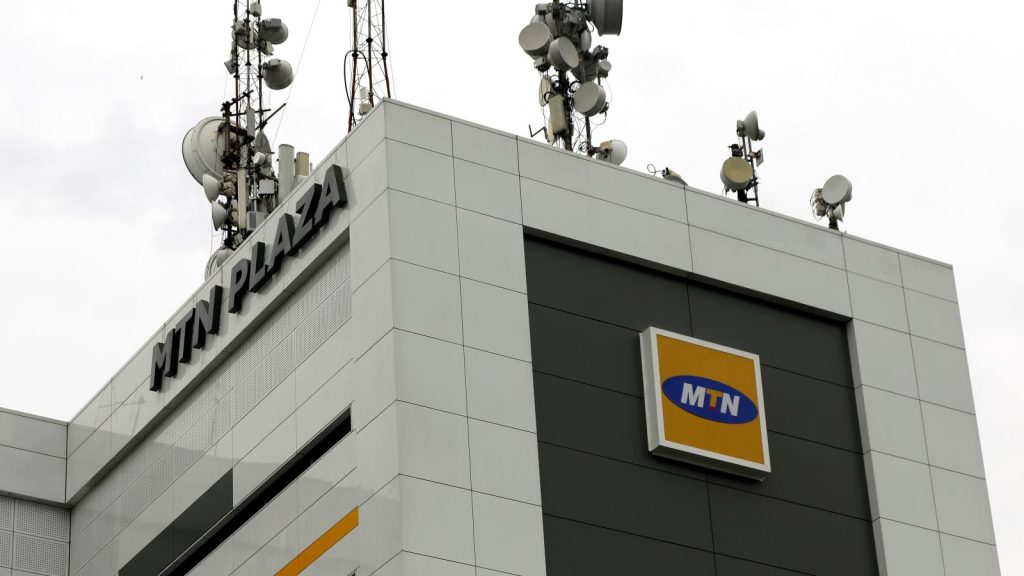

In a digital economy where mobile connectivity underpins banking, commerce, education, remote work, and everyday social life, network capacity is no longer a background utility it is the foundation of national productivity. Across Nigeria, millions of subscribers rely on mobile networks to stream video, run fintech transactions, conduct business on messaging platforms, and access cloud services around the clock. Meeting that appetite requires continuous physical engineering on the ground, far removed from the sleek interfaces visible on a smartphone screen.
MTN Nigeria has taken another concrete step to reinforce that backbone, rolling out a network expansion drive that adds 106 new sites while upgrading 97 existing locations. Designed to absorb rising data and connectivity demand across its footprint, the deployment underscores the scale of infrastructure work required to keep pace with Nigeria’s expanding digital appetite.
Digital adoption in Nigeria has accelerated steadily across urban centers and secondary towns alike. From mobile money transfers and e-commerce logistics to video calls, digital media consumption, and data-heavy applications, every additional connected device places heavier load on base stations, radio spectrum, and backhaul links.
When demand outpaces site capacity, users feel the friction immediately: slower data speeds during peak evening hours, dropped connections in crowded neighborhoods, and uneven indoor or transit coverage. By building 106 new sites and upgrading 97 existing sites, MTN Nigeria is targeting both coverage gaps and congestion bottlenecks aiming to expand reach while strengthening reliability where traffic is already heavy.
Telecommunications infrastructure upgrades typically balance two distinct engineering priorities:
-
Deploying New Sites: Adding physical cell sites helps extend signal reach into growing residential corridors, commercial pockets, and underserved areas, reducing the distance and load carried by neighboring towers.
-
Upgrading Existing Sites: Modernizing active locations boosts throughput, improves signal stability, and increases capacity to handle simultaneous high-bandwidth usage without degradation.
Together, new deployments and site upgrades reflect an ongoing effort to make everyday connectivity more consistent and dependable as subscribers’ digital habits shift toward heavier data use.
For telecom operators in Nigeria, expanding physical network infrastructure involves substantial capital expenditure, import and logistics planning for specialized equipment, power management at sites, and coordination with state and local authorities over right-of-way and site approvals.
Yet the commercial and economic logic remains straightforward: without sufficient network capacity and quality of service, digital services struggle to scale, enterprises face operational delays, and consumer trust erodes. Sustained investment in base station expansion and modernization signals a commitment to keeping network readiness aligned with long-term digital demand.
For everyday users, businesses, and digital creators, infrastructure rollouts are ultimately judged by real-world experience—faster page loads, smoother voice and data sessions, and fewer dead zones during peak hours. As MTN Nigeria integrates the 106 new sites and 97 upgraded locations across its network, consistent execution and maintenance will remain key to turning physical hardware additions into lasting improvements in quality of experience.