
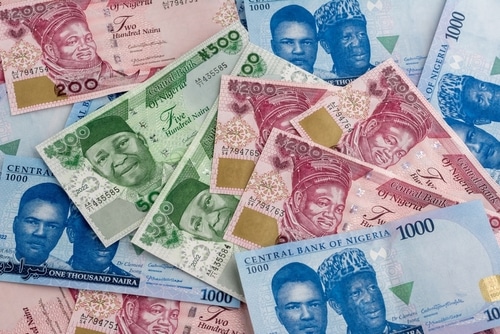
The Nigerian naira is experiencing renewed downward pressure as the dual forces of early political spending ahead of the 2027 general elections and heightened demand for foreign currency during the Christmas season begin to weigh heavily on the foreign exchange market.
Over the past week, the local currency recorded consecutive losses across both the official and parallel markets, raising fresh concerns among economists, currency dealers, and businesses about exchange rate stability heading into the end of the year.
By the close of trading on Friday, the naira had weakened to N1,394 against the US dollar on the official foreign exchange window. Conditions were even tighter on the informal street market, where the currency slid further to N1,460 per dollar by Sunday.
A Week of Steady Decline
The downward trend in the official market unfolded steadily over several trading sessions.
-
Tuesday: The naira traded at N1,363 to the dollar.
-
Wednesday: It dropped by N16.99 to settle at N1,379.99 per dollar.
-
Thursday: The currency shed another N8.01, closing at N1,388 per dollar.
-
Friday: A further loss of N6 brought the official rate to N1,394 per dollar.
The parallel market mirrored this trajectory, albeit at a wider margin. On Thursday, street traders quoted the dollar at N1,440—a significant depreciation from the N1,375 rate recorded just a month earlier. While some currency dealers indicated a willingness to offer slight discounts to buyers purchasing large volumes of dollars, the overarching market sentiment remained defined by intense demand and tightening supply.
Election Preparations Fuel Street Demand
Currency traders operating in Nigeria’s major commercial and administrative hubs say the surge in dollar purchases is not merely driven by routine commercial activity. Instead, they point to a noticeable uptick in transactions linked to the approaching 2027 electoral cycle.
In Abuja, parallel market dealer Haruna Ibrahim noted that intermediaries have become regular fixtures at currency exchange points, seeking to convert large sums of naira into foreign currency.
“There are people we see here who say they are politicians,” Mr Ibrahim explained. “They come here to buy dollars, claiming that they were sent by their bosses. I do not know which parties they belong to, but they come here regularly.”
A similar pattern has been observed in Lagos. A Bureau de Change operator who identified himself simply as Ahmed said traders operating in the Zone 5 area widely believe that early political mobilization is driving up demand, as political actors move to stockpile foreign currency well ahead of party primaries and campaign season.
Economists Warn of Liquidity and Policy Risks
Financial analysts say the developments on the streets align with broader macroeconomic pressures currently building within the Nigerian economy.
Dr Muda Yusuf, Chief Executive Officer of the Centre for Promotion of Private Enterprise, explained that domestic political dynamics are increasingly spilling over into the foreign exchange market. According to Dr Yusuf, election-related spending injects significant naira liquidity into the financial system, which inevitably finds its way into the currency market.
“The political spending liquidity may already be putting pressure on the naira,” Dr Yusuf said, noting that the Central Bank of Nigeria had previously flagged the risks posed by election cycles during its most recent Monetary Policy Committee meeting.
Because political financing often relies on informal, undocumented transactions, much of this demand bypasses official banking channels and concentrates directly on the parallel market, widening the gap between official and street rates.
Beyond liquidity, Dr Yusuf warned that political rhetoric is also unsettling investors. Statements made by certain political figures suggesting they might reverse the economic reforms introduced by President Bola Tinubu’s administration have created a climate of policy uncertainty. That uncertainty, he noted, risks triggering capital flight as foreign and domestic investors seek safer havens for their funds.
Supply Bottlenecks and Seasonal Strain
While political factors are drawing significant attention, market analysts emphasize that fundamental supply-and-demand imbalances remain at the core of the naira’s struggles.
Ike Ibeabuchi, an economist and emerging markets expert, pointed out that the currency’s depreciation is closely tied to a slowdown in dollar inflows alongside rising demand for international payments.
“Lower foreign exchange inflows from exporters, investors, and other sources reduce dollar supply in the market, while demand for foreign currency for imports, international payments, and other transactions continues to exert pressure on the naira,” Mr Ibeabuchi said.
The timing compounds the challenge. The final quarter of the year traditionally brings a spike in foreign exchange demand as businesses restock inventory for Christmas and individuals fund holiday travel and overseas remittances. Mr Ibeabuchi cautioned that when this predictable seasonal surge collides with heavier-than-expected election spending, the resulting pressure could severely test the central bank’s ability to maintain stability.
Foreign Reserves Dip Slightly
The strain in the currency market has coincided with a modest decline in Nigeria’s external buffers. Data from the central bank indicates that the country’s foreign exchange reserves stood at $54.65 billion on Friday. This represents a daily drop of $60.63 million from the $54.713 billion recorded on Thursday.
As Nigeria moves closer to both the peak of the festive season and the official kickoff of 2027 electioneering, market watchers say monetary authorities will face a delicate balancing act: managing excess liquidity at home while working to boost dollar inflows from abroad to keep the naira from sliding further.