
 The National Information Technology Development Agency (NITDA) has emphasised the need for Nigeria to invest in indigenous technology development, responsible innovation and strategic digital infrastructure to build public confidence in an increasingly artificial intelligence-driven world.
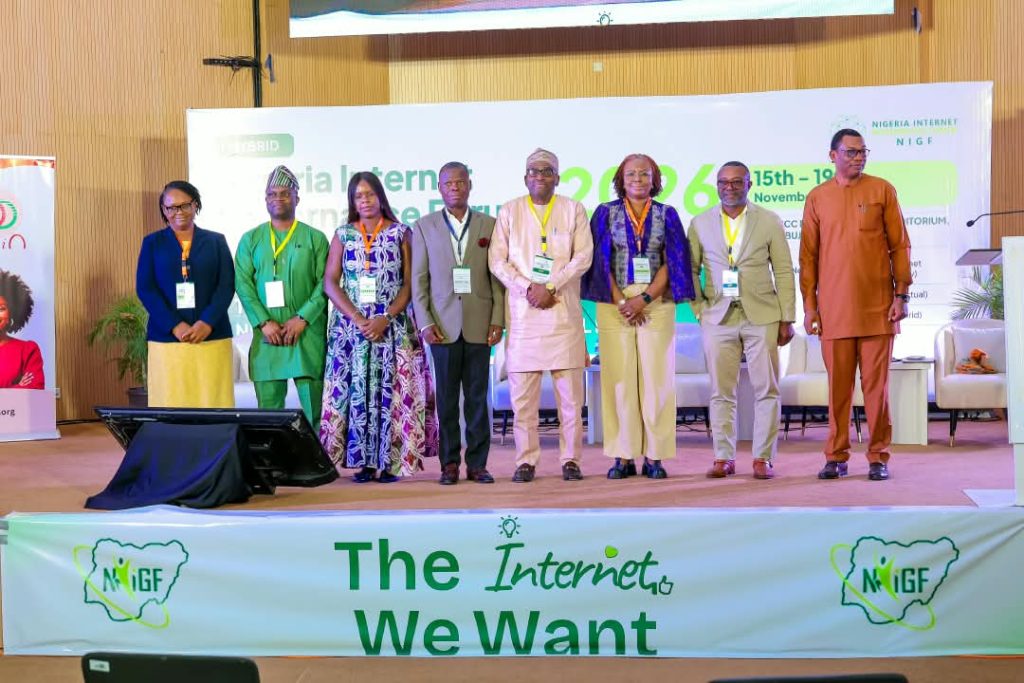
The Director General of NITDA, Kashifu Inuwa Abdullahi, CCIE, made this call in a goodwill message delivered on his behalf by the Director of the e-Government Department, Engr. Salisu Kaka, at the opening of the 2026 Nigeria Internet Governance Forum (NIGF) in Abuja.
The forum, themed “Trust in the Age of Intelligence: Nigeria’s Shared Stake in a Digital Future,” brought together government institutions, regulators, industry players, civil society organisations and other stakeholders to discuss emerging technology trends and their implications for Nigeria’s digital future.
Inuwa described the forum as an important platform for shaping national conversations on internet governance, noting that the growing integration of artificial intelligence into everyday activities has made digital trust a critical issue requiring deliberate attention.
 He observed that society was gradually transitioning from direct human involvement in decision-making to what he described as “algorithm management,” raising concerns about accountability, reliability and the extent to which individuals can trust decisions generated by intelligent systems.
The NITDA boss particularly warned about the risks associated with AI hallucinations, where artificial intelligence systems produce inaccurate or misleading information that could have serious consequences for individuals, businesses and society.
He stressed that trust must be deliberately incorporated into the development and deployment of technology rather than assumed to be an automatic benefit of digital advancement.
 According to him, Nigeria must take greater ownership of its digital future by developing home-grown technologies that reflect its unique realities, priorities and development needs.
He urged stakeholders to move beyond depending solely on imported technological solutions and become active contributors to the development of technologies that address the country’s specific challenges.
Inuwa further called on government and industry players to make strategic investments in indigenous innovation while creating an enabling environment for local technology developers to thrive.
He maintained that technology should be designed to serve the needs and expectations of Nigerians, rather than compelling the country to adjust its priorities to systems developed elsewhere.
Earlier, the Chairman of the NIGF Multi-stakeholder Advisory Group, Dr. Dimie Wariowei, urged stakeholders to take an active role in shaping Nigeria’s internet governance policies.
He explained that the forum’s multi-stakeholder approach provides an inclusive platform for government, private sector players, civil society, technical experts and young people to contribute to policy discussions and build consensus on the country’s digital priorities.
Wariowei also highlighted the importance of Nigeria’s participation in regional and global internet governance conversations, noting that recommendations from the Abuja forum could contribute to wider continental and international policy engagements ahead of the global Internet Governance Forum scheduled to hold in Nairobi, Kenya, from December 14 to 18, 2026.
Discussions at this year’s forum are focused on three major areas: fintech and cybersecurity, child online safety, and digital cooperation, with trust identified as a fundamental requirement for the sustainable adoption of emerging digital technologies.