
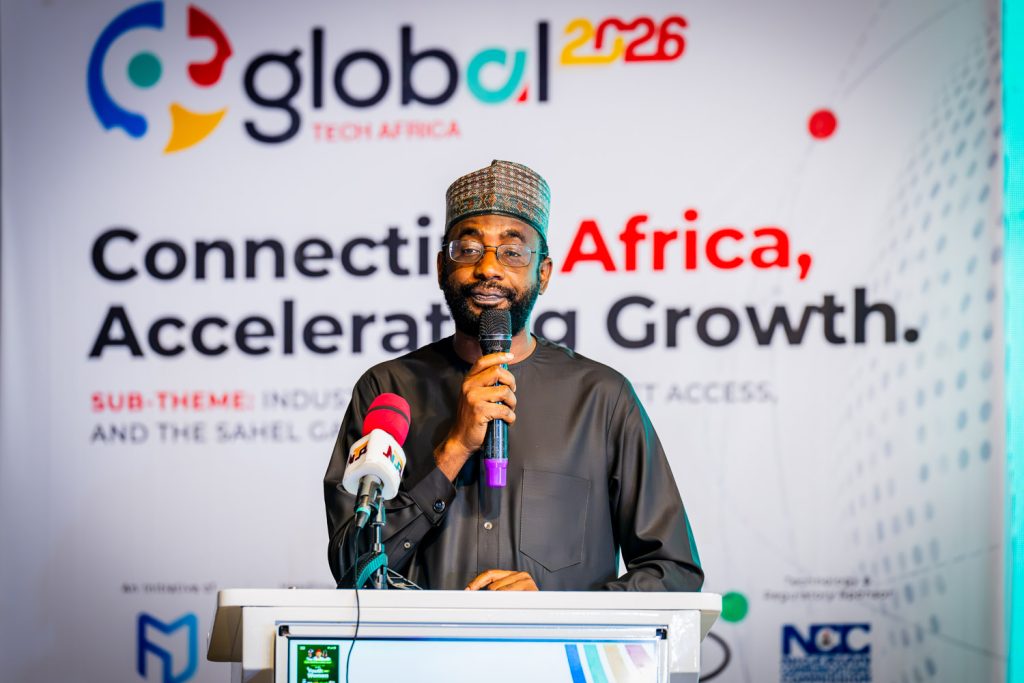
 The Federal Government is intensifying efforts to accelerate Nigeria’s digital economy through strategic investments in digital skills development, technology innovation, broadband infrastructure and emerging technologies, as part of its broader agenda to drive economic growth and position the country as a leading digital hub in Africa.
The Director-General of the National Information Technology Development Agency (NITDA), Kashifu Inuwa Abdullahi, disclosed this at the Global Tech Africa event in Kano, themed “Connecting Africa, Accelerating Growth.”
Inuwa said the administration of President Bola Ahmed Tinubu is implementing strategic interventions to strengthen Nigeria’s digital ecosystem, develop indigenous technological capabilities and create opportunities for Nigerians to participate meaningfully in the global digital economy.
He emphasised that human capital development remains central to the government’s digital transformation agenda, highlighting initiatives such as the Three Million Technical Talent (3MTT) programme and the Digital Literacy for All (DL4ALL) initiative.
According to him, while 3MTT is designed to build a globally competitive technology workforce, DL4ALL focuses on equipping Nigerians with essential digital skills needed to access opportunities, improve productivity and participate in the digital economy.
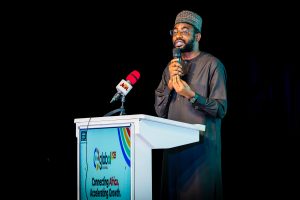 He added that the government is also working to integrate digital education into Nigeria’s formal education system, from kindergarten through tertiary institutions, to nurture a generation capable of developing homegrown technological solutions and competing globally.
Through the DL4ALL initiative, the Federal Government is targeting 95 per cent digital literacy by 2030, with the objective of ensuring that citizens across different communities and economic sectors possess the skills required to navigate an increasingly digital society.
The NITDA DG stressed that digital transformation must extend beyond internet connectivity and access to digital devices. He explained that the real value of digitalisation lies in translating connectivity into digital literacy, technology adoption, increased productivity and economic prosperity.
He noted that technology should empower individuals, businesses and traders to streamline operations, reduce costs, access wider markets and create new sources of economic value.
On funding for innovation, Inuwa revealed that NITDA is collaborating with the Japan International Cooperation Agency (JICA) and the Nigeria Sovereign Investment Authority (NSIA) towards establishing six funds to support startups and entrepreneurs developing innovative solutions.
He also identified the Bank of Industry and other development finance institutions as important partners in providing financial support to emerging businesses.
However, he called for greater private-sector participation in innovation financing, noting that government resources alone cannot adequately sustain the growth of Nigeria’s startup ecosystem.
He explained that beyond providing capital, private investors bring valuable expertise in corporate governance, business management, equity partnerships and strategic leadership, which are essential for building sustainable businesses.
Addressing digital infrastructure, Inuwa highlighted the Federal Government’s commitment to expanding broadband access through plans to extend fibre-optic infrastructure across all 774 Local Government Areas, the 36 states and the Federal Capital Territory.
He said the expansion of connectivity must be complemented by adequate domestic computing capacity, stressing that Nigeria needs the infrastructure to securely process, store and manage its growing volume of digital data.
In this regard, he highlighted NITDA’s National Sovereign Cloud Initiative, which is designed to strengthen local computing infrastructure, promote digital sovereignty and ensure that data generated within the country can be securely processed and stored locally.
Describing data centres as the refineries of the digital economy, Inuwa explained that they provide the computing infrastructure required to transform raw data into valuable insights, products and services.
He maintained that developing indigenous capacity in this area would reduce Nigeria’s dependence on foreign computing infrastructure while positioning the country as a major computing hub for West and Central Africa.
On artificial intelligence, the NITDA boss raised concerns over Africa’s limited representation in the global AI ecosystem, noting that the continent contributes less than two per cent of the data used to train AI models.
He therefore called for increased local participation in developing Large Language Models (LLMs) and other artificial intelligence solutions that reflect Nigeria’s indigenous languages, cultural diversity and socioeconomic realities.
Using Kano as a reference point, Inuwa also advocated leveraging digital technology to revive the state’s historic position as a leading commercial hub for the Sahel region.
He observed that the emergence of e-commerce and evolving business models has significantly changed traditional trading patterns, allowing consumers in neighbouring countries to purchase goods online without physically visiting Kano.
Nevertheless, he expressed optimism that Kano could reclaim its commercial prominence by embracing digital trade platforms, strengthening regional market connections and exploiting opportunities offered by the African Continental Free Trade Area (AfCFTA).
He noted that strategic digital investments could position the state as a vital commercial bridge connecting North Africa and the Middle East with sub-Saharan Africa.
The NITDA DG reiterated that Nigeria’s digital transformation ambitions must be driven by investments in people, infrastructure, innovation and emerging technologies to unlock economic opportunities and strengthen the country’s competitiveness in the global digital economy.