
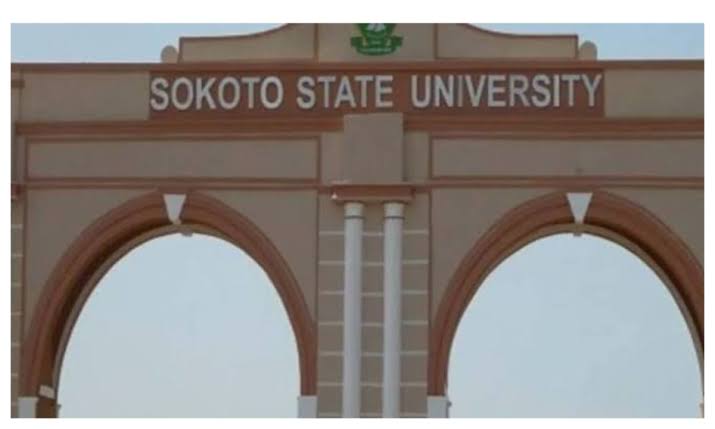
Academic and administrative activities at Sokoto State University have been brought to a complete halt after non-teaching staff shut down key services across the campus. The shutdown marks the beginning of a five-working-day warning strike called by the Senior Staff Association of Nigerian Universities over a series of long-standing, unresolved financial entitlements.
Union leaders have issued a clear warning to the state authorities: unless the state government addresses their key demands before the warning period expires, the union will transition into a full, total, and indefinite strike.
The industrial action, which officially commenced on Monday, November 2, comes following the expiration of a 14-working-day ultimatum issued to the Sokoto State Government on October 14.
Why the Union Is Striking
The core of the dispute centers on unpaid financial benefits and delayed allowance implementations that the union argues its members are legally owed.
The major demands submitted by the non-teaching staff include:
-
Salary Increment Arrears: The immediate payment of backlogged arrears stemming from an approved 25 per cent salary increase.
-
Consolidated Allowances: The approval and immediate implementation of the 35 per cent Consolidated Non-Teaching Tools Allowance.
-
Annual Salary Increments: The routine release and implementation of annual salary step increments for all eligible staff members.
-
Check-Off Dues: The immediate remittance of outstanding check-off dues owed to the union.
According to joint statements released by the university’s union leadership, the decision to down tools was taken as a last resort. Representatives emphasized that members had shown considerable patience while pursuing peaceful options, but continuous delays left them with no alternative.
“Despite repeated engagements, appeals and consultations with relevant government authorities, no concrete action has been taken to address the legitimate demands of our members.”
Months of Unsuccessful Dialogue
The current strike is the climax of months of frustrated attempts at negotiation. Union leaders detailed a sequence of diplomatic efforts made to resolve the dispute amicably before resorting to industrial action.
Prior to issuing their formal ultimatum in mid-October, union representatives held extensive discussions with high-ranking state officials, including the Commissioner for Higher Education, the ministry’s permanent secretary, and the state deputy governor.
In response to growing tensions, the state government established a dedicated committee to negotiate directly with university-based unions across both Sokoto State University and Shehu Shagari University of Education.
However, negotiations collapsed during a crucial meeting held on October 9. At that session, government representatives informed the union of two key decisions:
-
Refusal on Salary Arrears: The government maintained that the backlogged arrears from the 25 per cent salary increment would not be paid.
-
Delayed Allowance Implementation: The proposed 35 per cent Consolidated Non-Teaching Tools Allowance would not take effect until January 2027, and even then, it would remain subject to available budgetary allocations.
Unsatisfied with these terms, the union firmly rejected the government’s stance, arguing that postponing entitlements by years offered no real relief to workers struggling with current economic conditions. Furthermore, staff resubmitted their formal position as requested by administrative officials, but the state government failed to offer any updated proposal before the October ultimatum expired.
Allegations of Disparate Treatment
A central driver of the union’s resolve is what it views as unfair treatment compared to other staff cadres within the state’s tertiary education sector.
Union leaders pointed out that the 35 per cent allowance is a legitimate, standard entitlement that has already been approved and implemented for academic staff under teaching unions, as well as for various other worker categories across state-owned institutions. Non-teaching staff argue that withholding the same benefit from their cadre creates an unjust disparity within the exact same educational system.
Calls for High-Level Intervention
With services at the university now suspended, union leadership is appealing directly to top state leadership to step in and resolve the deadlock before the campus faces a prolonged crisis.
The union called on Governor Ahmed Aliyu to personally intervene in the matter and approve the outstanding financial demands, emphasizing that executive action is the only path left to prevent the dispute from escalating further.
In addition to executive leadership, the union appealed to key community stakeholders—including traditional institutions, parents, students, and civic leaders—to mediate between both parties and help bring about a swift, equitable resolution.
Threat of an Indefinite Shutdown
As the five-day warning strike progresses, campus operations remain entirely suspended. If no concrete agreement is reached by the end of the warning period, the union warned it will transition directly into an indefinite, total shutdown of all university operations.
Such a prolonged closure would interrupt administrative functions, delay academic schedules, and leave thousands of students facing an uncertain future. All eyes now rest on the state government to see whether fresh negotiations will be opened before the warning strike runs its course.