

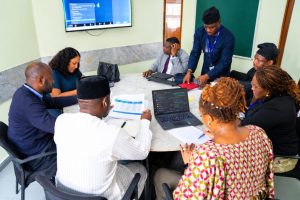
The National Information Technology Development Agency (NITDA) has called for stronger stakeholder partnerships and renewed commitment to the implementation of its Strategic Roadmap and Action Plan (SRAP) 2.0, emphasising that collaboration remains critical to accelerating Nigeria’s digital transformation.
The Director-General of NITDA, Kashifu Inuwa, made the call at the SRAP 2.0 Stakeholders’ Engagement held at Lagos Business School, Lagos State. He was represented at the event by the Director of the Special Duties Directorate, Dr Aristotle Onumo.
Inuwa commended the leadership of Lagos Business School for sustaining its partnership with the agency, noting that collective intelligence, shared responsibility and inclusive participation were essential to achieving meaningful progress across Nigeria’s digital ecosystem.
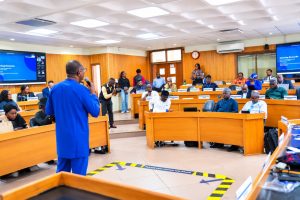
He explained that SRAP 2.0 was developed through extensive consultations with stakeholders, stressing that its successful implementation required the continued involvement of those who contributed to shaping its priorities.
According to him, the engagement provided an opportunity to evaluate progress, assess the relevance of existing priorities, identify areas requiring adjustments and determine whether the agency’s interventions were delivering the intended outcomes.
He noted that the review would also enable NITDA to measure its performance against commitments made to stakeholders and ensure that its programmes remained responsive to the evolving needs of Nigeria’s technology ecosystem.
The NITDA Director-General highlighted the agency’s gradual transition towards becoming an ecosystem enabler that promotes digital innovation through collaboration and co-creation. He explained that the approach was moving beyond the traditional model of issuing regulations, directives and guidelines towards working more closely with stakeholders to develop and implement solutions that address national challenges.
He maintained that building an environment where innovation can thrive requires government institutions, industry players, academia, entrepreneurs and other stakeholders to work together in translating digital policies into tangible economic and social benefits.
Inuwa noted that NITDA had spent the past three years advancing this transition and was approaching its final phase, urging stakeholders to sustain the momentum and strengthen their commitment to achieving the roadmap’s objectives.
He reaffirmed the agency’s vision of building a digitally enabled Nigeria where technology drives inclusive economic development, improves service delivery and creates opportunities for citizens and businesses.
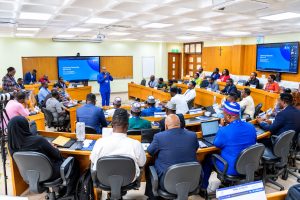
The Director-General also underscored the importance of the eight strategic pillars underpinning SRAP 2.0, urging participants to critically assess progress across key areas, including digital skills development, regulatory effectiveness, digital infrastructure and services, entrepreneurship, innovation and the growth of Nigeria’s startup ecosystem.
He further called for an assessment of the implementation of the Nigeria Startup Act and its impact on strengthening the startup community, supporting technology-driven enterprises and creating an enabling environment for innovation.
On stakeholder participation, Inuwa emphasised the need to ensure that relevant players across the digital ecosystem were actively involved in shaping and implementing policies and programmes. He noted that sustained engagement would help identify implementation gaps, address emerging challenges and improve the overall effectiveness of the agency’s interventions.
He expressed confidence that stronger partnerships, constructive engagement and collective commitment would accelerate the delivery of Nigeria’s digital development objectives.
Inuwa urged stakeholders to remain actively involved in the implementation of SRAP 2.0, stressing that achieving a digitally enabled Nigeria would require a shared commitment to innovation, inclusive growth and the effective use of technology as a driver of national development and digital transformation across Africa.