
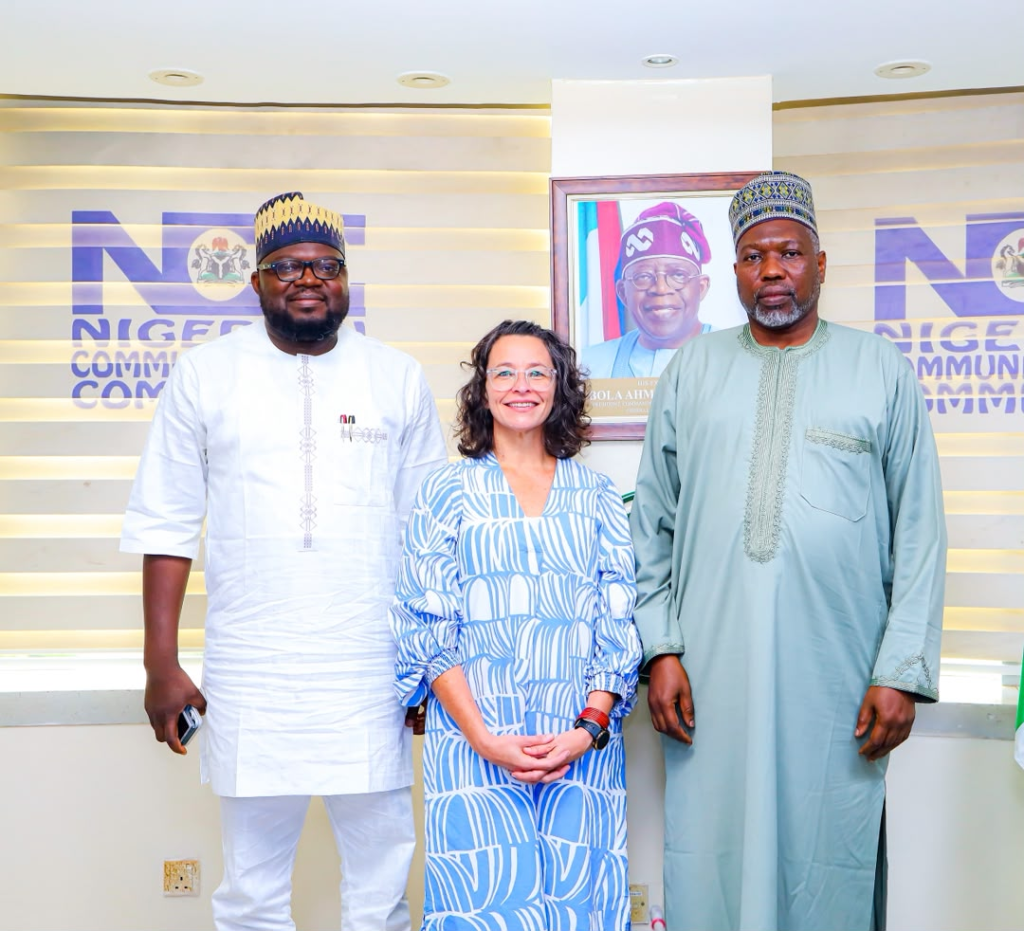
The Nigerian Communications Commission (NCC) has reaffirmed its commitment to leveraging the Digital Bridge Institute’s (DBI) designation as an International Telecommunication Union (ITU) Digital Transformation Centre (DTC) to expand digital literacy, strengthen digital inclusion and equip more Nigerians with the skills required to participate meaningfully in the digital economy.
The Commission stated this when it received the Senior Digital Skills Officer of the ITU, Ms. Robyn Fysh, who paid a courtesy visit to the NCC headquarters in Abuja as part of her official engagement in Nigeria.
The visit was held against the backdrop of DBI’s recent designation as an ITU Digital Transformation Centre, a recognition that places the Institute within the ITU’s global network of institutions dedicated to advancing digital skills development and digital transformation. DBI also serves as the ITU Digital Training Academy (DTA) in Nigeria.
Representing the Executive Vice Chairman and Chief Executive Officer of the NCC, Dr. Aminu Maida, the Director of Research and Development, Engr. Babagana Digima, received Fysh alongside a delegation from DBI led by its President and Chief Executive Officer, Mr. David Daser.
Digima described DBI’s new status as a significant opportunity to deepen collaboration among the NCC, DBI and the ITU and expand access to digital skills development programmes across the country.
He said digital literacy and capacity development remain critical to achieving Nigeria’s digital economy aspirations, particularly in ensuring that underserved and vulnerable communities are not excluded from the benefits of digital transformation.
“DBI’s recognition as an ITU Digital Transformation Centre is a significant milestone for Nigeria’s digital skills ecosystem and an opportunity to expand access to digital literacy and capacity-building programmes across the country,” he said.
According to Digima, the NCC remains committed to working with government agencies, state governments, development partners and other stakeholders to broaden access to digital skills training and strengthen the country’s digital transformation agenda.
“The NCC remains committed to initiatives that equip Nigerians with the skills needed to participate meaningfully in the digital economy. We will continue to work closely with relevant government agencies, state governments, development partners and other stakeholders to expand access to digital skills training and ensure that no community is left behind in Nigeria’s digital transformation journey,” he added.
Earlier, Fysh commended the longstanding collaboration between the ITU and the NCC in advancing digital development initiatives and promoting digital skills acquisition in Nigeria.
She said the engagement provided an opportunity for the three organisations to exchange ideas, strengthen existing partnerships and explore areas of mutual interest towards accelerating digital transformation and empowering citizens through digital skills and innovation.
Fysh explained that the ITU Digital Transformation Centres initiative, launched in partnership with Cisco in 2019, has reached more than 870,000 participants globally, with women accounting for more than half of the beneficiaries.
She said the programme is designed to provide individuals, particularly those in underserved communities, with practical digital skills that can enhance employability, entrepreneurship and participation in the digital economy.
“DBI’s new status as a Digital Transformation Centre will help strengthen efforts to empower more people with relevant digital skills and opportunities,” Fysh added.
Also speaking, the President and CEO of DBI, Mr. David Daser, expressed appreciation to the NCC for its support, which he said played an important role in enabling the Institute to attain its ITU Digital Transformation Centre designation.
Daser said the achievement reflects the ITU’s confidence in DBI and the NCC’s continued commitment to strengthening digital capacity development in Nigeria.
He noted that DBI recently attained a significant milestone by becoming the first institution globally to simultaneously hold the status of an ITU Academy Training Centre (ATC) and an ITU Digital Transformation Centre (DTC), following support from the NCC.
He called for continued collaboration with the NCC to scale the initiative and extend digital skills training and certification opportunities to underserved communities across the country.
“As a prominent state actor, the NCC can help drive this agenda by leveraging its infrastructure, networks and partnerships to extend digital skills training and certification opportunities to underserved communities nationwide,” Daser said.
He further noted that the initiative aligns with the objectives of Nigeria’s National Digital Literacy Framework, which targets 95 per cent digital literacy by 2030.
According to him, achieving the target will require stronger collaboration, sustained investment and deliberate efforts to ensure that underserved populations have access to relevant digital skills and opportunities.
Daser described the achievement as a testament to the shared commitment of the NCC and DBI to strengthening Nigeria’s digital capacity and positioning the country as a leading hub for digital skills development in Africa.
“As a Digital Transformation Centre, we are better positioned to expand our impact and support the development of a digitally skilled workforce for Nigeria and Africa,” he added.