
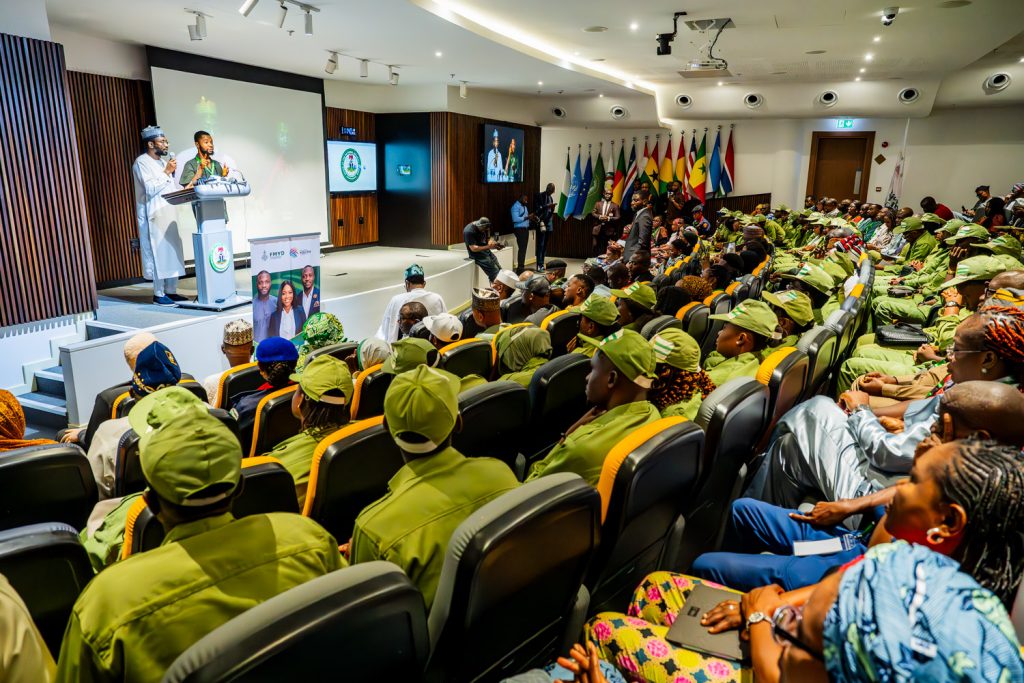
 The National Information Technology Development Agency (NITDA) is set to deploy technology and artificial intelligence (AI) to capture, analyse and organise contributions from young Nigerians participating in the 2026 National Youth Conference, with the aim of transforming their ideas and aspirations into policy proposals for national development.
The Director-General of NITDA, Kashifu Inuwa, disclosed this while delivering a goodwill message at the opening ceremony of the conference in Abuja, where he described Nigerian youths as a strategic asset whose ideas and perspectives should be reflected in national decision-making.
Inuwa said the conference was designed to provide a structured channel through which young Nigerians can communicate their expectations, concerns, experiences and ideas directly to government.
He noted that although social media platforms such as X, Instagram, Facebook and TikTok have created unprecedented opportunities for young people to express themselves, the sheer volume of online content can make it difficult to distinguish genuine concerns and policy ideas from misinformation and other forms of digital noise.
According to him, the conference would provide an opportunity to “filter the noise” and identify the key issues emerging from conversations among young Nigerians across different sectors of the economy.
“It is a deliberate step to make sure your voices, your aspirations, your ideas are brought closer to the heart of national decision-making. This conference is also for the administration to listen to what you want government to do in terms of the economy, job creation, technology, and creating a greater Nigeria,” he said.
The NITDA DG explained that the Agency, in partnership with the relevant ministry, would deploy technology to capture contributions from participants, while AI would be used to analyse and organise the submissions into thematic areas.
He said the analysed information would subsequently be presented to a committee to support its understanding of the issues raised by young Nigerians and contribute to the development of policy proposals.
Inuwa also disclosed that technology would facilitate remote participation, allowing young Nigerians who are unable to attend the physical sessions to contribute to the process. According to him, this would help broaden participation and ensure that geographical or logistical limitations do not prevent young people from having their voices heard.
The NITDA DG assured participants that their contributions would not simply end at the conference, but would be captured, analysed and documented to create a clear pathway through which their ideas could feed into the policy process.
“I want to assure you that all your discussions will be captured, and the technology will keep it, and we will present it to the committee, and government will use that to turn your aspirations into ideas, ideas into proposals, proposals into policies for government to build the policies you want,” he said.
He further assured participants that NITDA would remain involved throughout the process and provide end-to-end technological support to the initiative, with an emphasis on transparency and openness in the engagement.
The Minister of Youth Development, Mr Ayodele Olawande, led other dignitaries at the opening ceremony. Also in attendance were the Director-General of the National Youth Service Corps, Brigadier-General Olakunle Nafiu; National President of the National Association of Nigerian Students, Akinteye Hafeez; representatives of the academia; and representatives of Commissioners of Youth Development from the 36 states of the federation.
The National Youth Conference 2026 is structured as a multi-stage national engagement focusing on six broad areas: governance and political participation; entrepreneurship and job creation; climate action and energy transition; education and future-ready skills; technology and digital innovation; and security and social cohesion.
The conference is expected to draw participation from young Nigerians across the country’s 360 federal constituencies, the six geopolitical zones and the diaspora.
As part of the engagement, the six geopolitical zones are scheduled to participate in dedicated virtual sessions from October 5 to 17, 2026, with NITDA providing technical support.
The technology-driven approach is expected to provide a structured mechanism for collecting and analysing youth perspectives at scale, while creating a documented pathway for their concerns, ideas and aspirations to feed into ongoing national policy discussions.