
The Federal Government of Nigeria is working to attract German technology, equipment and investment to the country’s steel and metal industries.
The plan is aimed at improving the way Nigeria processes its mineral resources, producing more equipment locally and creating more jobs in the steel sector.
The government also wants German companies to help with technology transfer and the development of local industries that can support Nigeria’s economy.
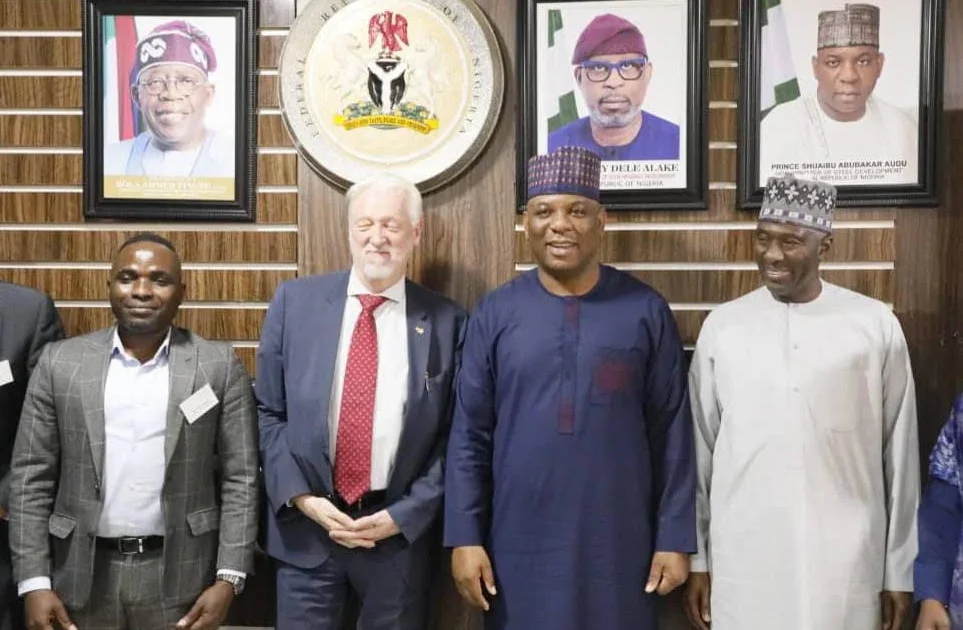
The Minister of Steel Development, Prince Shuaibu Abubakar Audu, made this known on Thursday during a meeting with a delegation of German equipment manufacturers at the ministry’s headquarters in Abuja.
The German delegation was led by Chux Onaa, Head of the German Mechanical Engineering Industry Association (VDMA-German OEMs).
The meeting was part of efforts to turn discussions between Nigeria and Germany into actual business partnerships and investments.
According to a statement released on Friday by the Ministry’s Head of Press and Public Relations, Ijomah Opia, the minister said the meeting was aimed at creating opportunities for German companies to invest in Nigeria’s steel industry.
The latest meeting followed earlier discussions between Nigerian and German representatives at the 9th German-African Economic Forum in Dortmund, Germany.
During the forum, both sides discussed possible areas of cooperation, including steel production, mineral development, engineering, metal processing and technical training.
Minister Audu said the visit by the German companies showed growing interest in Nigeria’s industrial sector.
He said Nigeria has large mineral resources and a growing market that could provide opportunities for companies interested in industrial development.
The minister also said the government wants to create an environment where the steel industry can grow through the use of modern technology.
According to him, a stronger steel industry would support infrastructure development, manufacturing, job creation and the wider diversification of the Nigerian economy.
The Ministry of Steel Development identified several areas where it wants German companies to get involved.
One of the areas is the use of modern technology in steel production. This includes equipment that can improve the production of steel while reducing energy use.
Another area is the production and assembly of industrial equipment in Nigeria.
The government wants to encourage German equipment manufacturers to establish local assembly, manufacturing and maintenance centres. This could reduce the need for Nigeria to import complete machines from other countries.
The government is also interested in improving the processing of minerals such as iron ore, coking coal, limestone and manganese.
At present, some of Nigeria’s mineral resources are not processed fully before they are used or exported. Better local processing could provide materials needed by steel plants and other industries.
Technical training is another important part of the plan.
The government wants Nigerian engineers and technicians to receive training that would help them operate and maintain modern industrial equipment.
The government also wants German companies to take part in existing and new steel projects in Nigeria.
One of the major projects mentioned is the Ajaokuta Steel Complex. The National Iron Ore Mining Company (NIOMCO) was also listed as part of the areas where cooperation could take place.
The government hopes that working with experienced international companies will help improve Nigeria’s steel production and strengthen the country’s industrial base.
Nigeria has large deposits of iron ore and other minerals needed for steel production. However, the country still imports a large amount of finished steel products and other materials used in construction and manufacturing.
Steel is needed in many parts of the economy.
It is used in construction, roads, bridges, railways, housing, factories, machinery and other infrastructure projects.
A stronger local steel industry could reduce the amount of money Nigeria spends importing steel products.
It could also help businesses that depend on steel and other metal products.
The government believes that producing more steel locally could support other industries, including vehicle production, machinery manufacturing and the development of energy and transport infrastructure.
Germany has a strong manufacturing and engineering industry, with companies known for producing industrial machines and equipment.
The German Mechanical Engineering Industry Association, known as VDMA, represents companies in the German mechanical engineering sector.
The Nigerian government hopes that cooperation with German companies will give local industries access to modern equipment and technical knowledge.
Such cooperation could also help Nigerian companies meet international production standards and connect with wider supply chains.
However, turning the discussions into actual investments will require both sides to agree on specific projects, financing, technology transfer and other business arrangements.
The meeting between Nigerian officials and German equipment manufacturers is part of the government’s wider efforts to develop the steel and manufacturing sectors.
Nigeria wants to make better use of its mineral resources instead of depending heavily on imported finished products.
The government is also looking to attract foreign companies that can provide technology, equipment and technical skills.
If the planned partnerships move forward, they could support the development of local equipment manufacturing, mineral processing and steel production.
The government also hopes that a stronger steel industry will create jobs and support other businesses that depend on locally produced materials.
For now, discussions between Nigeria and German companies are focused on identifying areas where both sides can work together. The success of the plan will depend on how these discussions are turned into actual investments and projects in the Nigerian steel industry.