
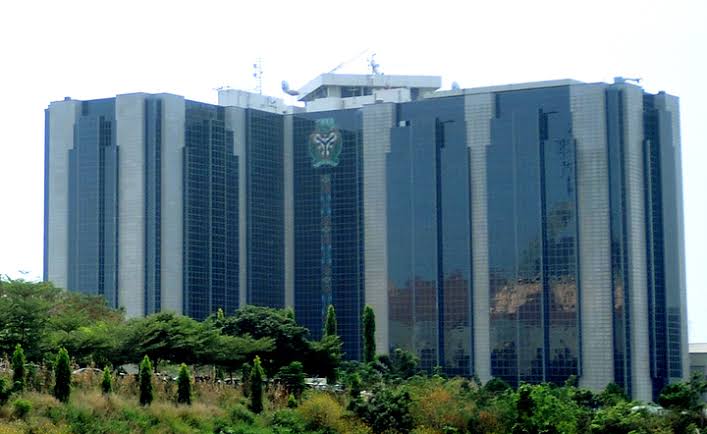

Commercial, merchant, and non-interest banks operating across Nigeria shut down a net total of 476 physical branches and cash centers between 2022 and 2025, shrinking their physical operational footprints by 8.8% over the three-year evaluation period. This significant structural contraction occurred despite a net increase in the overall number of licensed banking institutions operating nationwide, pointing to a strategic shift away from traditional brick-and-mortar operations toward digital and alternative payment channels.
Data released in the Central Bank of Nigeria’s (CBN) 2025 Statistical Bulletin for the Financial Sector compiled in collaboration with the Nigeria Deposit Insurance Corporation (NDIC)reveals that the total number of physical banking outlets nationwide fell from 5,410 in 2022 to 4,934 in 2025.
Timeline and Acceleration of Branch Closures
A year-by-year breakdown of the statistical data indicates that the pace of physical branch closures accelerated sharply after 2023, with approximately 92% of the net 476 closures occurring between 2024 and 2025:
2022 to 2023: Physical locations experienced a minor reduction of 37 outlets, dropping from 5,410 to 5,373.
2023 to 2024: The contraction pace quickened significantly, with 229 physical outlets decommissioned, reducing the network to 5,144 locations.
2024 to 2025: Banks closed an additional net 210 physical outlets, bringing the nationwide total down to 4,934.
This contraction took place while the total count of licensed operating banks expanded from 32 institutions in 2022 to 33 in 2023, peaking at 35 in 2024 before stabilizing at 34 in 2025. Meanwhile, the number of international branches operated by Nigerian financial institutions remained stable at two throughout the three-year timeline.
A state-by-state assessment shows that Lagos State, Nigeria’s primary financial hub, recorded the largest absolute reduction in physical banking facilities.
In 2022, Lagos hosted 1,602 bank branches and cash centers. This figure declined steadily to 1,532 in 2023, 1,521 in 2024, and dropped further to 1,444 in 2025. Over the three-year period, banks shuttered a net total of 158 locations in Lagos—representing a 9.9% reduction. The commercial center alone accounted for roughly one-third of all net branch closures recorded across the country.
Despite these closures, Lagos continues to hold a dominant share of Nigeria’s physical banking footprint, housing approximately 29% of all remaining branches and cash centers in 2025.
Other key geopolitical zones and commercial centers experienced notable contractions:
-
Federal Capital Territory (Abuja): Decreased from 400 branches in 2022/2023 to 391 in 2024, and 362 in 2025, marking a net decline of 38 outlets (9.5%).
-
Ekiti State: Suffered the steepest percentage contraction nationwide, losing nearly half its physical network. Outlets fell from 107 in 2022 to 57 in 2025—a drop of 50 locations (46.7%).
-
Enugu & Oyo States:Enugu lost 44 locations (falling from 162 to 118), while Oyo lost 41 outlets (declining from 237 to 196).
-
Other Affected States:Ondo State dropped from 127 to 105; Plateau fell from 80 to 61; Osun declined from 113 to 96; Cross River dropped from 83 to 67; and Rivers State fell from 290 to 275.
-
Northern Commercial Hubs: Kano State initially expanded its footprint from 164 locations in 2022 to 183 in 2024, before dropping sharply to 157 in 2025 (a net three-year loss of 7 outlets). Similarly, Kaduna expanded from 148 in 2022 to 164 in 2024, before contracting to 146 in 2025.
Conversely, a small group of states recorded net expansions in physical branch networks. Delta State added 23 locations (growing from 173 to 196), Edo State increased from 155 to 165, Jigawa grew from 31 to 37, and Kogi State rose from 63 to 68.
Despite localized growth, national data reveals persistent structural imbalances in physical access to financial services. While Lagos maintained 1,444 locations in 2025, several states operated with fewer than 35 physical outlets nationwide, including Yobe (23), Taraba (26), Zamfara (28), Bayelsa (31), Gombe (31), and Ebonyi (32).
The acceleration of branch closures underscores a rapid industry-wide pivot away from high-cost brick-and-mortar real estate toward digital banking platforms, mobile applications, agency banking networks, and electronic payment gateways.Addressing financial inclusion and digital adoption during the 2026 CBN Fair in Lokoja, Kogi State, the Acting Director of the Corporate Communications and Investor Relations Department at the CBN, Hakama Sidi-Ali (represented by Lokoja Branch Controller Zubairu Salihu), stressed that expanding alternative payment channels remains vital for supporting economic activity.The apex bank highlighted that digital transaction channels are especially critical for expanding affordable financial services to micro-entrepreneurs, agricultural producers, small-scale traders, and informal sector operators who have historically faced physical and structural barriers to conventional branch banking.