
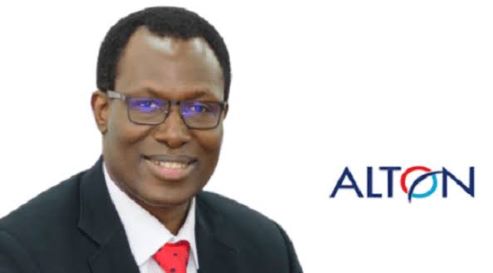
The Association of Licensed Telecommunications Operators of Nigeria (ALTON) has maintained that sustainable improvements in the country’s telecommunications network quality can only be achieved through collaborative, multi-sector responsibility among operators, regulators, and government agencies, rather than the apportionment of blame.
The position was articulated by ALTON Chairman Engr. Gbenga Adebayo during a comprehensive television interview on News Central, coming on the heels of intense legislative scrutiny and a parliamentary directive summoning major industry players over widespread public complaints regarding poor service delivery.
Ground Realities: Power Deficits, Vandalism, and Infrastructure Bottlenecks
Addressing the growing public frustration over dropped calls, failed connections, and rapid airtime depletion, Adebayo acknowledged that subscribers are experiencing severe service disruptions. However, he emphasized that telecom operators should not be held solely accountable for systemic operational bottlenecks that lie entirely beyond their direct administrative control.
The ALTON chief detailed the principal triads choking Nigeria’s telecommunications growth:
-
Energy Deficits: Chronic instability and a lack of reliable public power supply have forced operators to shoulder the exorbitant operational expenditure of running diesel generators and independent solar backup installations across tens of thousands of remote and urban cell sites.
-
Industrial Vandalism: Rampant theft, targeted destruction of telecom hardware, and the continuous looting of diesel and solar infrastructure at base transceiver station (BTS) locations continue to inflict massive financial losses on the industry.
-
Access Restrictions & Wayleave Bottlenecks: Bureaucratic hurdles, physical access denials to network facilities, and uncoordinated civil works—such as major road expansions along key trade arteries like the Lagos-Calabar Coastal Road—frequently result in accidental fiber optic cable cuts and prolonged service outages.
Highlighting the scale of operations required to sustain digital connectivity across Africa’s largest economy, Adebayo noted that over 50,000 active telecom sites rely on continuous maintenance and immense capital outlays, supported by infrastructure sharing companies such as IHS Towers, American Tower, and Pan African Towers.
Navigating Legislative Oversight and Regulatory Balance
The intervention comes as tension peaks between lawmakers and the telecommunications sector. The National Assembly recently launched high-level investigative hearings—summoning the Nigerian Communications Commission (NCC) alongside major operators including MTN, Airtel, Globacom, and T2—to address consumer grievances over unauthorized airtime deductions for incomplete calls.
Commenting on the legal actions instituted by ALTON and its member companies at the Federal High Court in response to previous parliamentary standoffs, Adebayo clarified that the association’s legal recourse was designed to protect the constitutional and operational interests of its members within the framework of the law, rather than evade oversight.
He reiterated the vital stabilizing role of the NCC, stressing that effective regulation must foster a balanced, investor-friendly operating environment.
“You cannot achieve sustainable improvements in network quality through command and control,” Adebayo stated, advocating instead for constructive, data-driven engagement among all institutional stakeholders.
Contextualizing Data Depletion and Pricing Realities
Responding to subscriber complaints concerning rapid data consumption, Adebayo explained that data usage patterns are multifaceted. He pointed out that modern mobile applications, background device synchronization, higher software rendering definitions, and an exponential surge in consumer demand for heavy media streaming heavily influence how quickly data allotments are exhausted.
Furthermore, he defended the necessity of the tariff adjustments implemented following regulatory approvals, explaining that adjustments were critical to cushioning operators against mounting inflationary pressures, foreign exchange volatility, and the steep cost of equipment importation necessary to sustain network expansion.
As the Senate’s investigative window progresses, industry observers and millions of mobile subscribers look toward a collaborative framework where policy harmonization, infrastructure protection, and consumer rights protection intersect to deliver long-term network reliability.