
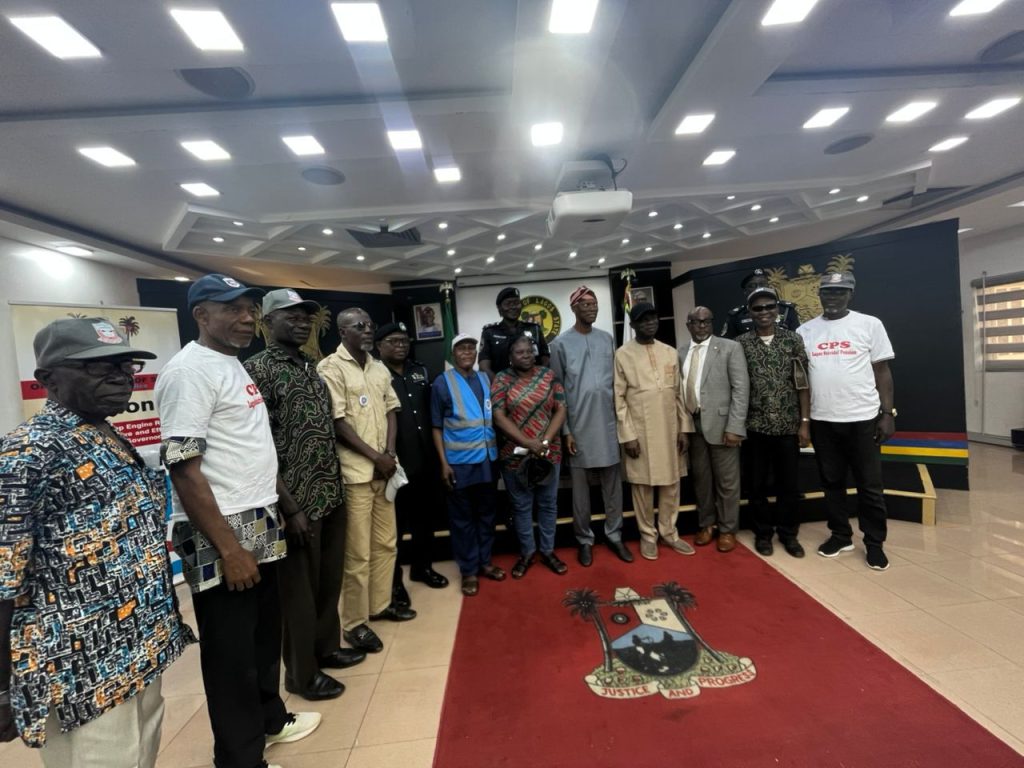
The Commissioner of Police in charge of the Lagos State Command, CP Tijani Fatai, attended the official opening ceremony of a specialized one-day training program on Monday, August 31, 2026. The event took place at the M.D. Abubakar Hall, located inside the Zone 2 Police Headquarters in Onikan, Lagos. This vital training session was jointly organized by the Nigeria Police Force Zone 2 Zonal Headquarters and the Institute for Police and Security Policy Research. The main theme chosen for the entire workshop was “Professionalism, Neutrality and Collaboration: Strengthening Election Security for Safe and Credible Elections.”
This workshop was organized as an early step by the leadership of the Nigeria Police Force to ensure that officers are fully prepared and equipped ahead of the upcoming elections. The training focused heavily on improving how police personnel carry out their duties, ensuring that officers remain completely neutral and unbiased when dealing with political matters, and boosting their general operational readiness. In addition, the program aimed to build strong working relationships and effective collaboration among different security structures, ensuring that the voting process remains safe, peaceful, and trustworthy for all citizens.
The participants who attended the event included all fourteen Area Commanders from across the Lagos State Command, alongside their fellow Area Commanders serving in the Ogun State Command. Together, these senior operational leaders gathered to review strategies and align their security approaches across both neighboring states.
The decision to organize this intensive one-day training program comes at a crucial time as the nation prepares for its next series of public elections. Elections represent a critical moment for any nation, as millions of citizens come out to exercise their civic rights by voting for their preferred leaders. During such periods, the responsibility of maintaining law, order, and public safety falls largely on the shoulders of the Nigeria Police Force, which serves as the primary law enforcement agency in the country.
To manage the high demand for safety during these periods, police leadership recognizes that standard daily routines are not enough. Managing elections requires specific skills, strict self-control, and a clear understanding of the laws governing the electoral process. The Zone 2 Headquarters, which oversees police operations in both Lagos State and Ogun State, teamed up with the Institute for Police and Security Policy Research to design a curriculum that directly addresses the unique challenges officers face before, during, and after voting day.
By bringing senior police leaders together in a structured environment, the workshop provided a platform to review past operational successes and failures, identify potential security risks in local communities, and establish clear guidelines for field personnel. The ultimate goal of this initiative is to build public confidence in the police force, ensuring that citizens feel safe enough to visit their local polling units and cast their votes without fear of intimidation, violence, or unfair treatment.
The overall direction of the workshop was guided by three key ideas: professionalism, neutrality, and collaboration. Each of these principles plays a distinct and important role in ensuring a peaceful electoral process.
Professionalism refers to the standard of conduct, efficiency, and respect for human rights that officers display while performing their official duties. During election periods, police officers are placed directly in the public eye, often operating in high-pressure environments surrounded by large crowds and political supporters. Under such conditions, standard self-control is essential.
The training emphasized that officers must act strictly within the bounds of the law at all times. They were reminded to treat all voters, election officials, observers, and media personnel with respect and courtesy. Training topics covered techniques for managing large crowds, methods for de-escalating tense situations without resorting to force, and proper procedures for securing election materials such as ballot boxes and voting equipment. By maintaining a high level of professionalism, police officers can prevent small disagreements at polling stations from spiraling into larger conflicts.
Neutrality is perhaps the most vital requirement for any police officer involved in election duties. The Nigeria Police Force is a national institution meant to serve all citizens, regardless of their political beliefs, party affiliations, or candidate preferences. When police officers are perceived as biased or favoring one political group over another, it damages public trust and can lead to civil unrest.
During the workshop, CP Tijani Fatai and the resource persons made it very clear that partiality will not be tolerated. Officers were instructed that their sole duty during elections is to enforce the law, protect lives and property, and ensure that the voting process runs smoothly. They must not assist any candidate, harass political opponents, or take instructions from unauthorized individuals. By remaining completely neutral, the police help guarantee a level playing field for all participants, which is essential for the election results to be accepted as genuine and credible.
Securing an election across major population centers like Lagos and Ogun States is a vast task that requires effective teamwork. Lagos is Nigeria’s economic hub with millions of residents, while neighboring Ogun State shares extensive land borders, busy transit corridors, and shared suburban communities with Lagos. Because people and goods move constantly between both states, security issues in one state can easily spill over into the other.
The inclusion of all fourteen Area Commanders from Lagos alongside their counterparts from Ogun State was a deliberate step to encourage cross-border coordination. By training together, these senior commanders were able to share local intelligence, identify shared security threats, and establish direct lines of communication. This joint approach ensures that if trouble arises near state borders or if suspects attempt to flee from one jurisdiction to another, officers can coordinate quickly to maintain control. Furthermore, the collaboration extends to working smoothly with other security agencies, electoral officials, and civil society groups involved in monitoring the elections.
The presence of top police leadership at the event highlighted the importance attached to election security by the police command.
CP Tijani Fatai Commissioner of Police, Lagos State Command As the top administrative and operational leader of the police in Lagos State, CP Fatai’s attendance demonstrated strong leadership commitment to the program. His address to the commanders served as an official mandate, directing them to take the lessons learned back to their respective divisions and ensure that every frontline officer under their command adheres strictly to the operational guidelines.
Area Commanders oversee multiple police divisions within specific geographical sectors of the state. They are directly responsible for deploying officers, managing local patrols, and responding to major incidents. Their participation ensures that strategic directives from the workshop will be translated into practical action plans at the zonal and divisional levels.
The presence of Ogun State’s operational leaders reinforced the regional strategy of Zone 2. By aligning operational tactics across both states, the command ensures consistency in how police officers respond to election-related events throughout the entire zone.
Serving as the host entity, Zone 2 provided the administrative backbone and facilities at the M.D. Abubakar Hall for the program. The zonal command plays an oversight role, ensuring that the activities of both Lagos and Ogun commands remain synchronized.
As the collaborating partner, the institute provided subject-matter experts, training materials, and research-backed methodologies to ensure the workshop delivered practical, modern solutions for contemporary security challenges.
While the one-day workshop was attended primarily by senior operational commanders, its impact is designed to ripple through the entire police command structure down to the frontline personnel stationed at individual polling units.
Following the conclusion of the workshop, the participating Area Commanders are expected to organize step-down training sessions within their respective area commands and divisions. Through these localized briefings, the key directives regarding professionalism, neutrality, and inter-agency cooperation will be passed down to Divisional Police Officers (DPOs), patrol officers, and field personnel.
Ensuring that officers have adequate transportation, communication gear, protective equipment, and welfare support so they can carry out their duties efficiently throughout long election days.
Mapping out potential hotspots, vulnerable polling units, and areas with a history of political tension so that extra patrols and quick-response teams can be deployed where they are needed most.
Ensuring that every deployed officer understands the specific provisions of the Electoral Act and criminal law regarding offenses such as ballot snatching, voter intimidation, vote-buying, and public disturbance.
Establishing robust channels for real-time reporting between field officers, divisional headquarters, and central command posts to ensure rapid responses to emerging situations.
The proactive steps taken by the Nigeria Police Force through initiatives like this Zone 2 training workshop are intended to produce direct, positive outcomes for the public and the broader democratic process.
First and foremost, well-trained and neutral police officers create a secure environment where voters feel safe to come out and cast their ballots without fear of violence or harassment. Higher voter turnout is vital for a healthy democracy, and effective security is a key factor in encouraging participation.
Secondly, clear operational guidelines help prevent misunderstandings or conflicts between law enforcement officers and the public. When citizens see that police personnel are acting professionally, fairly, and within the law, it builds mutual trust and reduces friction at polling locations.
Finally, proper preparation deters individuals or groups who might intend to disrupt the voting process. Knowing that police commanders across Lagos and Ogun States have aligned their strategies, gathered intelligence, and deployed coordinated response units acts as a strong deterrent against electoral violence and illegal activities.
Through continuous training, institutional collaboration, and clear operational leadership, the Lagos State Police Command and Zone 2 Headquarters continue to demonstrate their commitment to safeguarding the democratic process and ensuring that upcoming elections are peaceful, safe, and credible for all citizens.
SP ABIMBOLA ADEBISI, anipr, mipra
POLICE PUBLIC RELATIONS OFFICER,
LAGOS STATE COMMAND, IKEJA.