
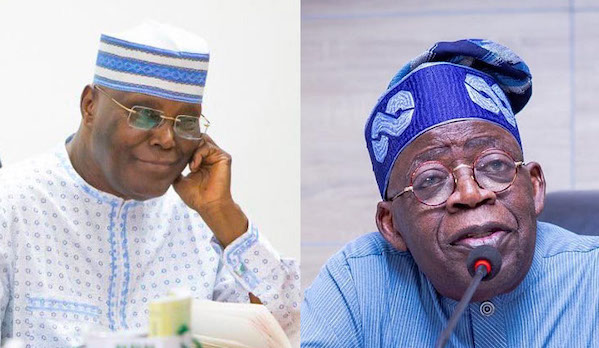

The Presidency has launched a firm counter-offensive against former Vice President and opposition leader Atiku Abubakar following his public pledge to “open the borders” if elected president. In an official stance issued from Abuja, the Federal Government asserted that Nigeria’s land borders are already open, characterizing the opposition leader’s promises as political slogans detached from administrative reality.
The formal response came via a comprehensive statement titled “Atiku and the Borders: Nigerians Deserve Facts, Not Campaign Slogans,” authored by the Special Adviser to the President on Media and Public Communication, Sunday Dare. The executive intervention follows growing political debate surrounding cross-border trade, regional economic integration, and national security ahead of upcoming general elections.
The Fact of Open Borders and Tactical Reality
Setting out the Federal Government’s position, the Presidency emphasized that the major land borders across the country have been operational for months. According to the statement, the government officially reopened most of Nigeria’s land borders on March 14, 2024, maintaining an uninterrupted policy of commercial accessibility.
To further demonstrate active border reopening initiatives, the Presidency highlighted President Bola Ahmed Tinubu’s authorization of the operational reopening of the Kamba and Tsamiya border corridors in Kebbi State on February 14, 2026. That strategic move, executed in collaboration with the Nigeria Customs Service and neighboring authorities in the Niger Republic and Benin Republic, was designed to restore lawful trade networks, reactivate regional transport hubs, and alleviate economic friction for border communities in Northern Nigeria while preserving national security protocols.
Given these recorded policy implementations, the Federal Government questioned the rationale behind promising actions that have already been executed.
“The facts are straightforward: Nigeria’s land borders are already open,” the Presidency noted. “It is therefore difficult to understand which borders the former Vice President intends to ‘open’ when the borders are already open. On February 14, 2026, President Tinubu opened the Kamba borders in Kebbi State, with attendant economic and diplomatic gains.”
The executive communication drew a clear line between an open border structured for lawful commerce and an unregulated, unmonitored frontier. The Presidency warned that if the opposition’s proposal implies removing security controls, such a strategy poses grave risks to national survival.
The statement challenged the former Vice President to provide specific, technical details of his policy alternative rather than relying on broad electoral declarations:
“If he means he would relax existing border controls, then Nigerians deserve to know precisely which controls he intends to remove, why he considers their removal necessary, and what safeguards his administration would deploy against terrorism, arms trafficking, smuggling, human trafficking, and other forms of transnational organised crime.”
Emphasizing that legal trade cannot exist in a state of operational lawlessness, the statement added:
“This distinction is fundamental. But of course, Atiku is unhinged now, and he would say or announce anything to attract and deceive the politically gullible. An open border is not an uncontrolled border. Modern border management is designed to facilitate legitimate movement, trade and economic interaction while preventing criminals and terrorist organisations from exploiting the same channels. Effective border governance therefore requires a combination of immigration control, customs administration, intelligence-sharing, surveillance, technology and coordinated security operations.”
Underlining the necessity of stringent border oversight, the Federal Government tied Nigeria’s internal stability directly to broader regional dynamics across West Africa, the Sahel, and the Lake Chad Basin. The administration noted that Nigeria shares expansive, difficult-to-patrol land borders with Niger, Chad, and Cameroon—corridors where non-state armed groups, violent extremists, and transnational syndicates actively seek to move contraband and personnel.
To reinforce the argument for robust border intelligence, the Presidency cited data from the Global Terrorism Index 2026. The international index highlights that roughly 41 percent of global terrorist incidents take place within 50 kilometers of an international boundary, while approximately 64 percent occur within 100 kilometers. These metrics illustrate how remote borderlands—characterized by challenging topography and sparse state infrastructure—are routinely targeted by extremist networks operating across jurisdictions.
“The implications for Nigeria are obvious,” the Presidency stressed. “As domestic insurgencies evolve into increasingly networked and transnational terrorist threats, effective border management becomes an indispensable component of national security. Terrorists and criminal networks exploit sovereign boundaries precisely because security forces cannot simply pursue them across international borders without appropriate cooperation and legal frameworks.”
Addressing ongoing joint military and counter-insurgency operations along the Northeast and Northwest corridors, the Federal Government cautioned against interpreting heightened military vigilance as economic closure. The tactical presence of armed forces along strategic transit zones reflects responsible, proactive border security rather than an administrative lockdown on commercial activities.
Call for Substantive Policy Debate
Concluding its assessment, the Presidency called for a higher standard of public debate, asserting that a former state official of the Vice President’s stature should be well aware of the operational difference between security enforcement and trade restriction.
The administration argued that effective democratic engagement requires political aspirants to present detailed, actionable policy blueprints rather than promising to reverse existing, functioning reforms.
“What Nigerians should reasonably expect from a presidential aspirant is not a slogan about ‘opening borders,’ but a detailed explanation of how his administration would improve border surveillance, strengthen intelligence-sharing with neighbouring states, modernise customs and immigration operations, deploy technology, protect border communities and deepen regional cooperation against terrorism and organised crime,” Sunday Dare stated.
Reaffirming the administration’s stance on transparent governance, the Presidency noted that President Bola Ahmed Tinubu’s record remains open to public evaluation based on concrete indices in economic recovery, regional diplomacy, and security. However, it insisted that national conversations regarding territorial integrity must remain firmly anchored in established facts, systemic realities, and rigorous security priorities.