
Proposed collaboration targets digital infrastructure, emerging technologies, research, innovation and industry-relevant skills development
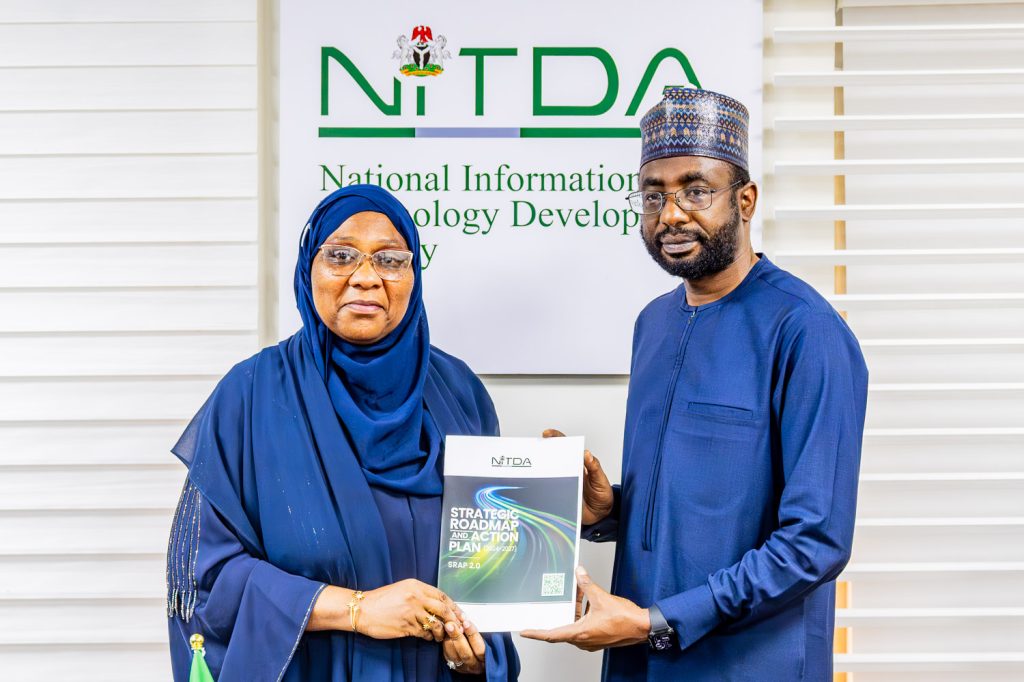
The National Information Technology Development Agency (NITDA) and North West University have commenced discussions on a strategic partnership aimed at strengthening digital capacity, research, innovation and technology-driven education at the institution.
The engagement brought together the leadership of NITDA and the university to explore ways technology can be deployed more effectively to improve teaching and learning, advance research and innovation, strengthen digital infrastructure and enhance the employability of graduates.
Speaking during the engagement, the Director General of NITDA, Kashifu Inuwa, stressed that any partnership between the agency and the university should be structured around sustainable, long-term outcomes rather than one-off interventions.
According to him, universities occupy a critical position in Nigeria’s digital transformation because they are responsible for developing the human capital, knowledge and research needed to drive technological and economic advancement.
Inuwa said Nigeria’s digital development strategy must therefore prioritise institutional strengthening and the development of people capable of powering the country’s growing digital economy.
He also identified the persistent gap between university training and industry requirements as a major challenge to graduate employability. He encouraged the university to strengthen relationships with employers and technology companies while regularly reviewing its academic curricula to reflect emerging technologies and practical skills required in both local and international labour markets.
“We need to create an ecosystem where the university produces the human capital required by government and the private sector, while industry also contributes to the development of relevant skills and research,” Inuwa said.
The NITDA DG further highlighted the importance of digital literacy, encouraging the university to integrate digital skills into its General Studies programme in line with the National Digital Literacy Framework.
Beyond foundational digital literacy, he urged the institution to strengthen programmes in emerging fields, including artificial intelligence, cybersecurity, cloud computing, robotics and other advanced technologies.
Inuwa also encouraged the university to leverage the National Universities Commission’s Core Curriculum and Minimum Academic Standards (CCMAS) framework to develop programmes that respond to technological developments and emerging opportunities across the economy.
He cited the collaboration between NITDA, Nasarawa State University and Cisco as an example of how academia-industry partnerships can provide students with practical exposure, professional certifications and academic recognition.
Focus on Research and Innovation
Inuwa said the proposed partnership should extend beyond teaching and digital infrastructure to include research and innovation, particularly projects focused on solving real-world challenges.
He advocated the early involvement of government agencies and private-sector organisations in university research, noting that such partnerships could help bridge the gap between research outputs and practical applications.
Potential areas of collaboration identified by NITDA include technical training, innovation laboratories, research partnerships and collaboration with global technology companies.
The NITDA DG also cautioned against measuring digital development solely by the volume of technology equipment supplied to institutions.
While computers and other digital devices eventually become obsolete, he noted, investments in knowledge, skills, research and innovation can deliver sustainable and long-term benefits.
North West University Outlines Digital Transformation Priorities
Earlier, the Vice-Chancellor of North West University, Professor Amina Salihi, said digital transformation and research were central to her administration’s development agenda.
She explained that the university’s 14-point agenda was designed to reposition the institution as a competitive 21st-century university, with technology playing a critical role in improving academic standards, global visibility and institutional ranking.
Professor Salihi noted that the university, established in 2012, had experienced significant growth, expanding from four faculties, one campus and approximately 1,000 students to 10 faculties and about 30,000 students.
The institution has also expanded its academic programmes, infrastructure and support facilities, including a teaching hospital for its medical programme.
The Vice-Chancellor, who assumed office in December 2025, said her administration had conducted assessments to identify areas requiring urgent intervention. She identified infrastructure, power and digital technology among the university’s major priorities.
She disclosed that construction of a Computer-Based Testing (CBT) centre was underway through the intervention of a philanthropist. She appealed to NITDA to support the project with the necessary information technology equipment, noting that the facility could potentially become an accredited centre for recruitment examinations and professional testing.
Professor Salihi also disclosed plans to establish an Open and Distance Learning Centre, which she said would require reliable digital infrastructure and technical expertise.
She further appealed for additional digital devices, including laptops, to support academic and administrative activities across the university.
According to the Vice-Chancellor, North West University has received interventions from the state government, TETFund, the Energy Commission and private philanthropists, particularly in areas such as student accommodation and renewable energy.
She disclosed that a two-megawatt solarisation project was being implemented at the main campus, while another solar power project was underway at the city campus.
Towards a Sustainable Digital Partnership
Professor Salihi expressed optimism that the engagement with NITDA would result in a structured and sustainable partnership capable of addressing the university’s technology needs while creating opportunities for research, innovation and digital skills development.
The proposed collaboration is expected to provide a framework for joint initiatives covering digital infrastructure, computer-based testing, open and distance learning, emerging technologies, research, innovation and human capital development.
Both institutions are expected to continue discussions towards defining specific areas of cooperation and establishing a sustainable framework that can contribute to strengthening digital education, research and innovation within Nigeria’s university system.
Alternative caption: NITDA and North West University explore strategic partnership to strengthen digital infrastructure, emerging technology education, research and innovation.