
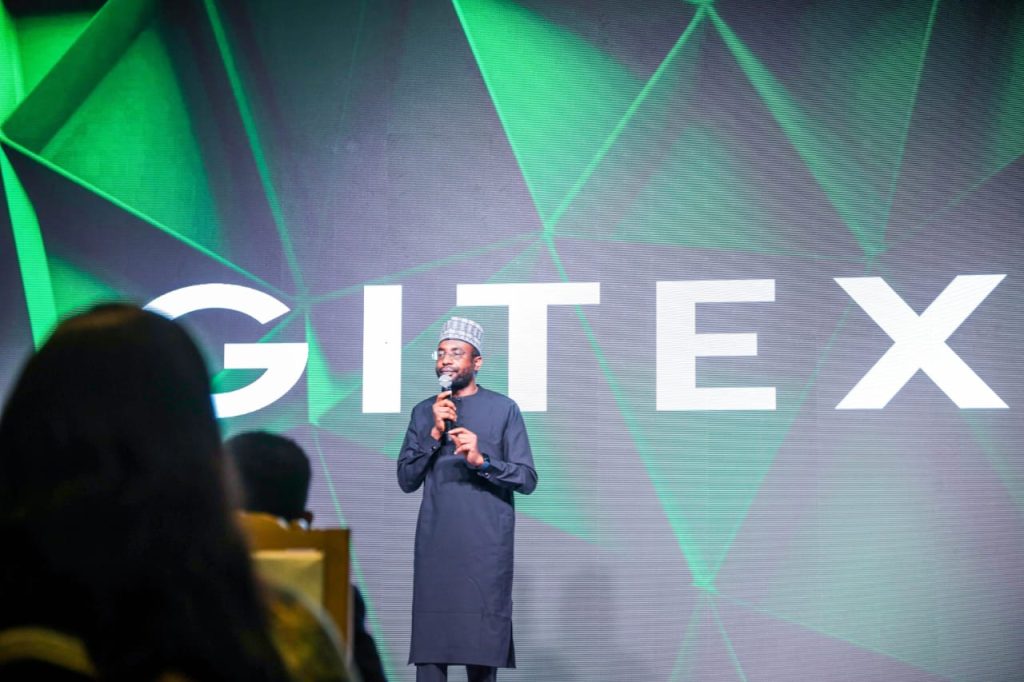
Nigeria is strengthening its position as a major force in Africa’s digital transformation as preparations intensify for the second edition of GITEX NIGERIA, which will bring together global technology leaders, investors, policymakers, innovators and startups to accelerate the country’s digital economy ambitions.
Held under the patronage of President Bola Ahmed Tinubu, GITEX NIGERIA will take place across Abuja and Lagos from August 31 to September 3, 2026, providing a platform for high-level conversations around artificial intelligence, digital infrastructure, innovation, investment and technology-driven economic growth.
The event, themed “Beyond Connectivity, The Bridge to Sovereign Innovation,” is supported by the Federal Ministry of Communications, Innovation and Digital Economy, in collaboration with the National Information Technology Development Agency (NITDA). The event is also endorsed by the Lagos State Government and organised by KAOUN International, the global organiser of GITEX events.
The 2026 edition comes at a time when Nigeria is translating its digital transformation policies into concrete programmes aimed at expanding connectivity, developing digital talent and creating an environment for technology-led economic growth.
A key component of this effort is the 3 Million Technical Talent (3MTT) programme, which has recorded 1.87 million registrations across all 774 local government areas, with more than 135,000 Nigerians trained through three cohorts. According to the organisers, community resources have extended learning opportunities to more than 300,000 people, while 15,000 job and opportunity pathways have been created.
The government is also advancing Project BRIDGE, a national ICT infrastructure initiative designed to expand high-speed connectivity and strengthen the country’s digital backbone.
The project is expected to create up to 20,000 direct jobs and more than 150,000 indirect jobs, train 5,000 Nigerian youths and increase internet penetration to more than 70 percent. It is also designed to extend high-speed connectivity to millions of households, businesses, schools and hospitality establishments, particularly in underserved communities.
Speaking on the country’s digital ambitions, Minister of Communications, Innovation and Digital Economy, Dr. Bosun Tijani, said Nigeria’s focus is increasingly shifting towards building the infrastructure, skills and institutional foundations required to achieve digital sovereignty and develop a globally competitive AI-powered economy.
He noted that Nigeria aims to move beyond being a consumer of digital technologies to becoming a producer and exporter of digital solutions and artificial intelligence innovations.
GITEX NIGERIA to Drive AI, Investment and Digital Infrastructure Conversations
GITEX NIGERIA 2026 is expected to serve as a meeting point for global technology expertise, investment and public-private collaboration, with discussions focused on scaling AI infrastructure, strengthening digital resilience and developing sustainable innovation ecosystems.
The Government Leadership and AI Summit, which opens in Abuja on August 31, will bring together government leaders, regulators and other stakeholders to examine the future of digital public infrastructure and responsible AI adoption across West Africa.
The GITEX NIGERIA Tech Expo & Future Economy Conference and Startup Festival will also return for their second editions, providing platforms for technology companies, entrepreneurs and startups to showcase solutions and connect with investors and potential partners.
A new addition to this year’s programme is FDX NIGERIA by GITEX, which will focus on finance and digital asset exchange. The platform is expected to explore opportunities for advancing financial inclusion, accelerating the formalisation of businesses and connecting emerging technologies with global capital.
Lagos Reinforces Position as Africa’s Technology Gateway
Lagos State will play a central role in the 2026 edition, further reinforcing its position as one of Africa’s leading technology and business hubs.
Governor Babajide Sanwo-Olu highlighted the state’s growing contribution to Nigeria’s economy and its role in attracting technology talent, capital and innovation from across Africa and beyond.
According to him, hosting GITEX NIGERIA in Lagos supports the state’s ambition to build a smarter, more connected and globally competitive economy while strengthening Lagos’ position as a gateway to opportunities across Nigeria and Africa.
For NITDA, the event also aligns with the agency’s focus on developing a secure, trusted and inclusive digital ecosystem.

NITDA Director-General/CEO, Kashifu Inuwa Abdullahi, noted that Nigeria’s digital future will depend not only on the adoption of emerging technologies but also on the development of appropriate frameworks for resilience, trust, security and responsible governance.
He described GITEX NIGERIA as an important platform for facilitating global expertise, investment and partnerships that can contribute to the development of a secure and inclusive AI ecosystem.
Building Nigeria’s AI-Driven Future
Nigeria’s growing digital ecosystem is being supported by government programmes, technology companies, startups and a growing pool of digital talent.
Initiatives including 3MTT, Project BRIDGE and the National AI Strategy are designed to strengthen the foundations for talent development, digital infrastructure, investment and responsible AI adoption.
Against this backdrop, GITEX NIGERIA is positioning itself as more than a technology exhibition. It is emerging as a platform for connecting policy with investment, innovation with infrastructure, and Nigerian technology solutions with global markets.
With Africa’s AI economy projected to generate significant economic opportunities over the coming decade, Nigeria’s ability to develop talent, infrastructure, investment and responsible AI frameworks will be critical to determining its role in the continent’s digital future.
GITEX NIGERIA 2026 is therefore expected to provide a significant platform for stakeholders to forge partnerships and explore strategies that can transform Nigeria’s technological potential into sustainable economic impact.