
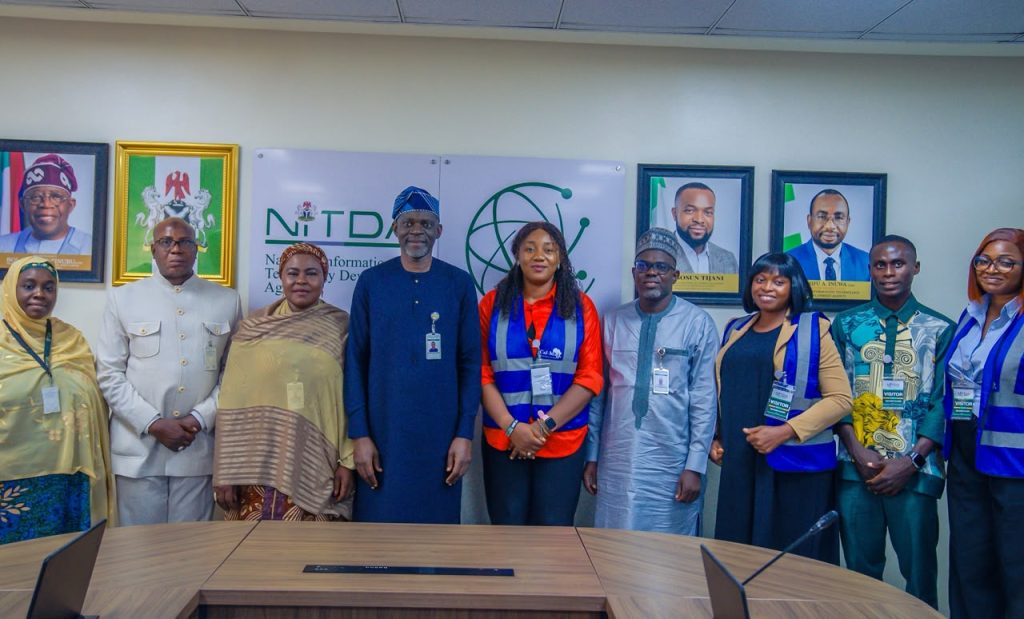
 The National Information Technology Development Agency (NITDA) has reaffirmed its commitment to bridging Nigeria’s digital divide by strengthening strategic partnerships that expand digital literacy, improve access to technology and empower underserved communities as part of the country’s digital transformation agenda.
The Director General of NITDA, Kashifu Inuwa, gave the assurance when he received the Executive Director of Cal-Maji Foundation, Mrs Faith Ayuba, during a courtesy visit to the Agency’s headquarters in Abuja.
Represented by the Director of Digital Development Services, Mr Oluwunmi Oladejo, the Director General said partnerships with community-based organisations remain critical to achieving NITDA’s vision of building an inclusive digital economy where every Nigerian has access to digital opportunities, regardless of location or socio-economic status.
He described the Foundation’s visit as a testament to the enduring impact of NITDA’s intervention programmes across the country.
“It is always encouraging to receive feedback from communities that have benefited from our interventions. Many of these projects were implemented years ago, and it is gratifying to know they are still transforming lives and creating opportunities,” he said.
Inuwa explained that NITDA continues to evaluate the performance of its digital intervention centres nationwide while leveraging emerging technologies to enhance digital learning and virtual capacity-building initiatives.
He noted that the Agency’s National Digital Literacy Framework (NDLF) remains the foundation of its efforts to equip children, students, artisans, farmers, professionals and other segments of society with the digital skills required to participate effectively in today’s technology-driven economy.
Responding to requests for additional support, the Director General disclosed that the Agency would consider training community-based instructors to ensure the sustainability of digital literacy programmes at the grassroots. He advised the Foundation to submit a formal proposal, accompanied by evidence of activities at the centre, to facilitate further collaboration.
While reaffirming NITDA’s readiness to deepen the partnership, Inuwa acknowledged that maintaining internet connectivity across numerous intervention centres nationwide remains a significant challenge that requires innovative funding models and stronger collaboration between government, development partners and the private sector.
Earlier, the Executive Director of Cal-Maji Foundation, Mrs Faith Ayuba, commended NITDA for its openness to collaboration and its commitment to supporting impactful community development initiatives.
She described the Agency as one of the few government institutions that prioritises genuine impact over personal connections when partnering with organisations working to improve the lives of vulnerable populations.
According to her, Cal-Maji Foundation is dedicated to expanding access to quality education, strengthening food systems, improving food security and providing social protection for women, children and young people in remote and underserved communities.
Ayuba revealed that the NITDA Knowledge Access Centre, established at the Foundation’s community school in a border community in Kogi State, has significantly transformed teaching and learning by providing students and residents with access to computers, internet connectivity and digital education.
“The ICT centre became an equaliser. Young people who ordinarily would never have had access to computers or the internet suddenly had the opportunity to acquire digital knowledge. We came back simply to say thank you because this partnership has changed lives,” she said.
She disclosed that more than 1,000 children have benefited from the Foundation’s educational programmes and introduced a former student who progressed from the community school to a Nigerian university after leveraging the digital resources available at the centre. She described his success story as clear evidence of the transformative and long-term impact of NITDA’s intervention.
Ayuba also appealed for deeper collaboration through the training of community instructors, the upgrade of computer systems and expanded access to NITDA’s digital capacity-building programmes. She stressed that as Nigeria embraces emerging technologies such as Artificial Intelligence (AI) and cybersecurity, rural communities must not be left behind.
The meeting ended with both organisations reaffirming their commitment to strengthening collaboration, expanding digital access and empowering underserved communities through sustainable digital literacy initiatives that support Nigeria’s vision of an inclusive and globally competitive digital economy.