

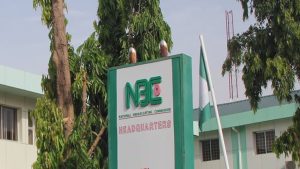
The main goal of this project is to make sure that at least 40 million homes across Nigeria can watch high-quality television. Not only will the picture be clearer, but these homes will also get access to as many as 100 free channels.
The head of the NBC, whose name is Charles Ebuebu, shared these exciting details during a special talk with the News Agency of Nigeria (NAN) in Abuja. He explained how the government has changed its strategy to make sure this dream becomes a reality for every Nigerian, no matter where they live.
To understand why this is a big deal, we first need to understand what the Digital Switch Over actually means.
For many years, television in Nigeria used an old system called analogue broadcasting. This old system used old-style antennas to catch signals through the air. The problem with analogue television is that:
-
The picture quality is often poor and blurry.
-
The sound can have a lot of noise or static.
-
It can only carry a few channels at a time.
-
Bad weather, like heavy rain, can easily ruin the signal.
The Digital Switch Over (DSO) is the process of turning off this old analogue system and turning on a new digital system. Digital television is much better because it sends signals in a way that allows for crystal-clear pictures and perfect sound. It also allows a single signal to carry many more channels than before.
At first, the NBC tried to build this new digital network using ground-based equipment. This is known as terrestrial transmission. Terrestrial transmission works by building big towers on the ground that send TV signals to antennas on the roofs of people’s houses.
The government started this terrestrial plan by launching it in eight states. However, they quickly ran into major problems. Charles Ebuebu explained that after launching in those eight states, they realized the system only covered a very small part of the country—less than one-quarter of Nigeria.
Because of these big problems, the NBC decided to stop using the ground-based plan. Instead, they chose a much smarter and faster method: satellite broadcasting.
A satellite sits high up in space and can send television signals down to every single corner of Nigeria at the exact same time. It does not matter if you live in a crowded city like Lagos, a hilly area in Jos, or a quiet village in the far north. As long as you have a small satellite dish, you can receive the signal instantly.
Charles Ebuebu pointed out that by choosing the satellite method, the project achieved 100 percent coverage of Nigeria from day one. This completely solved the problem of taking years to build towers and trying to send signals past mountains.
To make this work, the NBC is partnering with a government-owned company called the Nigerian Communications Satellite Limited (NigComSat). While the NBC remains the official regulator that sets the rules for TV and radio in Nigeria, NigComSat is the company providing the actual satellite and ground services to keep the channels running.
Right now, the satellite system is already broadcasting more than 73 channels across the country. The NBC is working hard to add more channels, with the goal of reaching 100 channels in the very near future.
“Free-to-air” means that once you have the right box to receive the signal, you do not need to pay monthly subscription fees to watch these channels. This is different from private pay-TV services where you have to pay money every month to keep watching. This will save a lot of money for millions of Nigerian families.
| Feature | Old Terrestrial Plan | New Satellite Plan |
| How it works | Uses towers built on the ground | Uses a satellite in space |
| Coverage | Covered less than 25% of the country | Covers 100% of the country |
| Cost to build | Very expensive (requires 160 towers) | Much cheaper and uses existing tech |
| Time to set up | Would take more than 3 years | Active and working right now |
| Current channels | 24 to 28 channels (depending on state) | Over 73 channels (aiming for 100 soon) |
The shift to a satellite-based Digital Switch Over is a massive step forward for Nigeria. By targeting 40 million homes, the government is making sure that even people in the most remote villages have access to the same high-quality information and entertainment as those living in big cities.
By working together with NigComSat, the National Broadcasting Commission is making television modern, reliable, and free for millions of citizens. This project is not just about clearer pictures; it is about bringing Nigerians closer together through shared stories, news, and education.