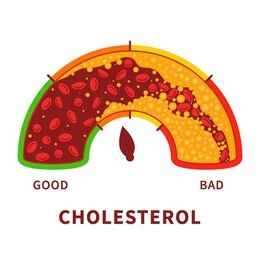
Pharma companies extracted USD 2 trillion from consumers in the name of cholesterol level treatment.

Share, like and Comment

What a shame on medical research fraud and authorities. Their incompetency costed USD 2 trillion to people who were fit and healthy.

Cholesterol is finally officially removed from Naughty List. The US government has finally accepted that cholesterol is not a nutrient of concern. doing a U-turn on their warnings to us to stay away from high-cholesterol foods since the 1970s to avoid heart disease and clogged arteries.

This means eggs, butter, full-fat dairy products, nuts, coconut oil and meat have now been classified as safe and have been officially removed from the nutrients of concern list.

The US Department of Agriculture, which is responsible for updating the guidelines every five years, stated in its findings for 2015: “Previously, the Dietary Guidelines for Americans recommended that cholesterol intake be limited to no more than 300 mg/day.

“The 2015 DGAC will not bring forward this recommendation because available evidence shows no appreciable relationship between consumption of dietary cholesterol and serum (blood) cholesterol, consistent with the AHA/ACC (American Heart Association / American College of Cardiology)

The Dietary Guidelines Advisory Committee will, in response, no longer warn people against eating high-cholesterol foods and will instead focus on sugar as the main substance of dietary concern.

US cardiologist Dr Steven Nissen said: It’s the right decision. We got the dietary guidelines wrong. They’ve been wrong for decades.”

When we eat more foods rich in this compound, our bodies make less. If we deprive ourselves of foods high in cholesterol – such as eggs, butter, and liver – our body revs up.

The Real Truth about Cholesterol. The majority of the cholesterol in you is produced by your liver. Your brain is primarily made up from cholesterol. It is essential for nerve cells to function.

Cholesterol is the basis for the creation of all the steroid hormones, including estrogen, testosterone, and corticosteroids. High cholesterol in the body is a clear indication which shows the liver of the individual is in good health.

Dr. George V. Mann M.D. associate director of the Framingham study for the incidence and prevalence of cardiovascular disease (CVD) and its risk factors states:
Saturated fats and cholesterol in the diet are not the cause of coronary heart disease. That myth is the greatest deception of the century, perhaps of any century.

Cholesterol is the biggest medical scam of all time. There is no such thing as bad Cholesterol, So you can stop trying to change your Cholesterol level. Studies prove beyond a doubt, cholesterol doesn’t cause heart disease and it won’t stop a heart attack. The majority of people that have heart attacks have normal cholesterol levels.

OUR BODY NEEDS 950 mg OF CHOLESTEROL FOR DAILY METABOLISM AND THE LIVER IS THE MAIN Producer. ONLY 15% OF CHOLESTEROL IS BEING DONATED BY THE FOOD WE EAT.

If the fat content is less in the food we eat, our liver get to work more to maintain the level at 950 mg. If the cholesterol level is high in our body, it shows the liver is working perfect.

Experts say that there is nothing like LDL or HDL.  Cholesterol is not found to create block any where in human body.


Share, like and Comment

Leave a Reply

Your email address will not be published. Required fields are marked *

Next Post

NASENI Launches 5-Day Training on Biogas and Biomethanol Plant Design with SRH Berlin

Tue Jul 23 , 2024
Share, like and Comment Representative of the EVC of NASENI, Deputy Director, Nano Science Department, Dr. Chika Ezeanyanaso in a group photograph of the trainees at the opening of the 5-day training. The National Agency for Science and Engineering Infrastructure (NASENI) has initiated a 5-day intensive training program aimed at […]

You May Like

Breaking News

Stakeholders Rally Behind NCC’s Plan to Deliver Free Access to Digital Learning Platforms Nationwide The Nigerian Communications Commission (NCC) has received overwhelming support from key stakeholders for its proposed framework to provide zero-rated access to educational platforms and digital learning content, a move expected to remove cost barriers to online education and accelerate digital inclusion across Nigeria. The endorsement came during the Commission’s maiden public consultation on the proposed framework, “Zero-Rated Access to Educational Platforms and Content in Nigeria,” held in Abuja on Tuesday. The initiative, which seeks to enable students and learners to access approved educational resources without incurring data charges, was widely applauded as a transformative step towards expanding educational opportunities and bridging the country’s digital divide. The consultation attracted representatives from the Federal Ministry of Communications, Innovation and Digital Economy, the Federal Ministry of Education, the United Nations Educational, Scientific and Cultural Organization (UNESCO), the Association of Licensed Telecommunications Operators of Nigeria (ALTON), the Nigerian Governors’ Forum (NGF), uLesson Group, telecommunications operators, development partners and other stakeholders. Participants unanimously stressed that while the initiative holds immense promise, its success will depend on sustained collaboration among government agencies, telecommunications operators, Internet Service Providers (ISPs), educational institutions and the private sector. They also called for increased investments in broadband infrastructure, network expansion and service quality to guarantee reliable and affordable internet connectivity capable of supporting nationwide access to digital learning resources. Speaking at the forum, the Executive Vice Chairman and Chief Executive Officer of the NCC, Dr. Aminu Maida, disclosed that the Industry Committee established by the Commission had undertaken extensive reviews of the technical, policy, regulatory and commercial implications of the initiative before developing a consultation paper to guide stakeholder engagement. Represented by the Commission’s Director of Policy, Competition and Economic Analysis, Ayuba Shuaibu, Maida said broad stakeholder participation was essential to developing a practical, inclusive and sustainable framework that reflects industry realities while advancing Nigeria’s educational goals. He noted that contributions from network operators, educational institutions, content providers, government agencies, development partners, civil society organisations, teachers, students and the wider public would help shape a framework that balances educational priorities with regulatory effectiveness, transparency, commercial viability and long-term sustainability. According to him, the public consultation underscores the Commission’s commitment to leveraging digital technology to improve access to education and promote inclusive national development. “The engagement provides a platform for stakeholders across the communications, education, technology and development sectors to jointly examine practical pathways for providing learners with free or specially supported access to accredited educational platforms and digital content,” he said. Maida explained that the initiative is specifically designed to eliminate connectivity barriers that prevent millions of Nigerians from accessing quality educational resources, particularly students in underserved and disadvantaged communities. “The initiative forms part of the Commission’s broader efforts to leverage technology in advancing national educational objectives and promoting inclusive digital participation,” he added. The consultation also enabled participants to scrutinise the proposed implementation framework, assess operational and regulatory requirements, and offer recommendations on critical issues, including eligibility criteria for educational platforms, governance structures, consumer protection mechanisms, implementation models and accreditation standards for educational content. Stakeholders submitted practical recommendations aimed at strengthening the framework, ensuring fairness among service providers, safeguarding consumers and enhancing the long-term sustainability of the initiative. The Commission stated that all submissions received during the consultation would be carefully reviewed and incorporated into the final framework, which will serve as the roadmap for implementation. Once operational, the Zero-Rated Access Initiative is expected to significantly expand access to digital education, improve digital literacy, promote equitable learning opportunities and support Nigeria’s broader socio-economic development by making quality educational resources more accessible to every learner, regardless of location or financial status.