
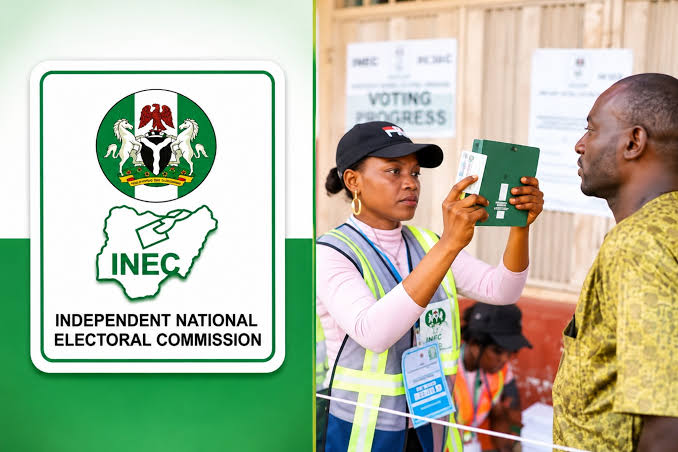
The Independent National Electoral Commission (INEC) has expressed satisfaction with the performance of its Bimodal Voter Accreditation System (BVAS) during a mock election exercise conducted in Lagos State as preparations continue for Nigeria’s 2027 general elections.
The exercise was organised to test electoral equipment, voter accreditation procedures and the technology expected to support the election process. INEC officials said the mock exercise provided an opportunity to examine how the machines would perform under real voting conditions before the country enters another major election period.
According to reports, the Resident Electoral Commissioner in Lagos State, Professor Ayobami Salami, said the BVAS machines performed satisfactorily at the polling units he monitored. He stated that voters were accredited in less than one minute and that no complaints about technical problems or network failure had been received at the locations visited.
The mock election took place across selected polling units in Lagos State. The exercise was designed to allow the commission to identify possible challenges, examine its equipment and improve its preparations before the 2027 general elections.
The development comes at a time when Nigerians are closely watching the electoral commission because of the importance of technology, transparency and public confidence in the election process.
INEC Conducts Nationwide Mock Election
The nationwide mock accreditation and election simulation exercise was conducted on Saturday, November 28, 2026, in selected locations across the country. INEC said the exercise was intended to test its election technology and procedures before the 2027 general elections. The commission has been preparing to improve the use of electronic voter accreditation and the transmission of polling-unit results.
In Lagos State, the exercise reportedly covered 490 polling units across 245 wards. Two polling units were selected in each ward for the simulation. The selected locations provided INEC with an opportunity to test its equipment, observe how voters interacted with the accreditation system and assess whether election officials could complete the required processes without unnecessary delays
Mock elections are important because they allow electoral authorities to identify weaknesses before the actual election day. Instead of waiting until millions of voters arrive at polling units, the commission can use a simulation to discover possible problems and make adjustments.
Such problems could include equipment failure, slow accreditation, inadequate preparation of election officials, difficulties with voter identification, network connectivity issues or confusion about procedures.
The exercise also allows electoral officials to practise their responsibilities and become more familiar with the equipment they will use during the elections.
INEC’s preparation is particularly important because Nigeria’s elections involve voters across different communities, including urban areas with relatively strong telecommunications infrastructure and rural locations where network connectivity can sometimes be unreliable.
The commission therefore needs to test its systems in different conditions to understand whether the technology can support the election process.
INEC Reports Satisfactory BVAS Performance in Lagos
Professor Ayobami Salami, the Lagos State Resident Electoral Commissioner, reportedly expressed satisfaction with the performance of the BVAS machines during the mock election. He said accreditation was completed in less than one minute per voter at the location he monitored. The REC also said he had not received complaints from electoral officials, voters or members of the public about technical problems during the exercise.
His comments suggested that the equipment performed well during the monitored exercise. However, the result of a mock election should not automatically be treated as proof that every polling unit will experience the same performance during the actual general elections. The mock exercise involved selected polling units, while the general elections will involve a much larger number of voters, officials, polling locations and operational demands.
The difference in scale means that INEC must continue testing and improving its systems. Nevertheless, the commission’s reported experience in Lagos represents an encouraging development for preparations ahead of 2027.
The BVAS system has become an important part of Nigeria’s electoral process because it is used to verify voters before they are permitted to cast their ballots.
The system is designed to support voter identification through biometric verification. Depending on the available features and operational procedures, voters may be verified through facial recognition or fingerprint scanning.
The aim is to prevent electoral fraud associated with impersonation and improve the accuracy of voter accreditation.
INEC officials have repeatedly stressed that voters must be properly identified before they are allowed to vote.
The system is expected to help ensure that the person presenting themselves at a polling unit is the registered voter whose details appear in the electoral database.
Nigeria has continued to introduce technology into its electoral process in an effort to improve transparency and strengthen public confidence.
The BVAS system is one of the major technologies used by INEC in this process.
Before the introduction of biometric accreditation, voter verification relied heavily on manual procedures. Although election officials had responsibilities to check voter information and identify eligible voters, manual processes could create opportunities for mistakes and abuse.
Biometric accreditation provides another layer of verification.
By using biometric information, the system can help electoral officials determine whether a voter has been properly registered and whether the person attempting to vote matches the information available in the system.
The technology is also intended to discourage multiple voting and reduce the possibility of individuals voting in place of registered voters.
However, technology alone cannot guarantee credible elections.
The success of the BVAS system depends on several factors, including proper training of electoral officials, availability of equipment, reliable power supply, effective communication networks, adequate technical support and clear procedures for dealing with problems.
INEC must ensure that officials understand how to operate the machines and what to do when a device fails to recognise a voter’s biometric information. The commission must also ensure that voters understand the accreditation process.
Public education is important because some voters may be unfamiliar with the technology or may become concerned when they experience difficulties during accreditation.
Clear information can help prevent confusion and unnecessary disputes at polling units.
INEC Reduces BVAS Voter Threshold
Another important development reported during the mock election was INEC’s decision to reduce the number of registered voters assigned to a single BVAS machine.
Professor Salami reportedly said the commission reduced the maximum number of voters assigned to one machine from 1,250 to 850.
The decision was aimed at reducing long queues and improving the speed of accreditation.
Under the previous arrangement, a polling unit with a large number of registered voters could depend on one machine for a significant portion of the accreditation process.
This could result in long waiting periods, particularly when voters arrive at the polling unit at the same time.
By reducing the number of voters assigned to each machine, INEC hopes to make the process more manageable.
The commission said polling units with more than 850 registered voters would receive an additional BVAS machine.
For example, a polling unit with 1,000 registered voters could receive an additional machine to reduce the pressure on a single device.
The arrangement is expected to improve the movement of voters through the accreditation process.
It could also help reduce congestion and encourage people to participate in the elections.
Long queues have historically been a concern during elections in Nigeria. When voters spend several hours waiting to be accredited, some may become discouraged or leave without completing the process.
Reducing waiting time could therefore improve the voting experience.
However, INEC must ensure that additional machines are properly distributed and that polling units receive enough trained officials to operate them.
Providing additional equipment without adequate personnel could create another operational challenge.
The commission must also ensure that machines are available when needed and that backup arrangements are in place in case equipment develops problems.
Additional BVAS Machines Acquired
Professor Salami also disclosed that INEC had acquired approximately 57,000 additional BVAS machines.
According to the report, the machines were calibrated alongside existing devices to ensure that they operated with uniform settings.
The acquisition is part of preparations for the 2027 general elections.
The expansion of available equipment could help INEC manage the large number of polling units and voters expected during the election period.
Nigeria has a large electorate, and the commission must prepare for voting activities across all states and the Federal Capital Territory.
Having additional machines could help improve equipment availability and provide backup support where necessary.
The commission will still need to ensure that the machines are distributed according to the needs of different polling units.
Areas with large numbers of registered voters may require additional equipment, while locations with fewer voters may require fewer machines.
The allocation process must therefore be based on accurate information about voter registration figures, polling-unit arrangements and operational requirements.
INEC must also ensure that equipment is properly maintained before election day.
The acquisition of machines is only one part of the preparation process. Officials must test them, confirm that they are working correctly and ensure that technical support is available throughout the election.
The commission’s mock exercise is intended to provide an opportunity to assess some of these arrangements.
Electronic Transmission of Results Remains Important
Another major objective of the mock election was to test electronic transmission of polling-unit results to the INEC Result Viewing Portal, commonly known as IReV.
The result transmission process is important because Nigerians have continued to demand greater transparency in elections.
The ability to upload polling-unit results electronically can help members of the public, political parties, observers and other stakeholders monitor the election process.
Electronic transmission can also make it easier to compare results from polling units with information released during the official collation process.
However, the system must be reliable.
INEC needs to ensure that results are uploaded accurately and that technical problems do not create confusion during the election.
Network connectivity is one of the major issues that electoral authorities must consider.
Some communities may have limited telecommunications coverage, while others may experience network interruptions during periods of high demand.
The commission must therefore assess connectivity conditions and develop arrangements for locations where electronic transmission may be difficult.
It is also important that electoral officials understand the procedures for handling technical problems.
If a polling unit experiences network difficulties, officials must follow the approved procedures and ensure that the problem does not affect the integrity of the election.
INEC should communicate clearly with the public about how the system works and what voters should expect.
Public confidence can be strengthened when electoral authorities provide information about the process and explain how technical challenges will be addressed.
Lagos Exercise Provides an Opportunity for Improvement
Lagos State is one of Nigeria’s most important political and economic centres.
The state has a large population and a significant number of registered voters.
Conducting a mock election in selected polling units across Lagos provides INEC with an opportunity to examine its arrangements in a busy environment.
The exercise also allows officials to assess how voters respond to the accreditation system.
According to the report, the exercise was conducted in 490 polling units across 245 wards.
The selected polling units were used to test electoral technology and procedures ahead of the 2027 elections.
The commission’s assessment of the exercise will be important because it can help identify areas where additional training, equipment or technical support may be required.
INEC must also consider the experience of voters.
The electoral process should be understandable, accessible and efficient.
Voters should not be expected to struggle unnecessarily with accreditation procedures.
Officials must be able to explain the process, assist voters appropriately and ensure that people with disabilities and other vulnerable groups are not excluded.
The commission should also consider how elderly voters and individuals with limited knowledge of technology can be supported during the process.
Election preparation is not only about machines.
It also involves ensuring that voters can participate without facing unnecessary obstacles.
Public Confidence Ahead of the 2027 General Elections
The 2027 general elections are expected to attract significant public attention.
Political parties are preparing their campaigns, candidates are discussing their ambitions and Nigerians are beginning to consider the issues that may influence their voting decisions.
INEC’s preparations will therefore be closely watched.
The commission is expected to organise elections that are transparent, credible, peaceful and conducted according to the law.
Public confidence is one of the most important factors in the electoral process.
When voters believe that the election system is reliable, they are more likely to participate and accept the results.
However, when concerns arise about technology, transparency or the conduct of officials, public confidence may weaken.
INEC must therefore demonstrate that it is taking preparations seriously.
The mock election is one way of showing that the commission is testing its equipment and procedures before election day.
The exercise also provides an opportunity for political parties, observers and other stakeholders to assess the electoral process.
Their observations can help identify areas where improvements may be necessary.
INEC should consider feedback from participants and use it to strengthen its preparations.
The commission must also provide regular updates about its activities.
Information about equipment testing, voter education, election security and preparations for result transmission can help Nigerians understand what is being done ahead of the elections.
Lessons From Previous Elections
Nigeria’s electoral history has shown that election technology can attract both praise and criticism.
The introduction of electronic accreditation and result viewing systems was intended to improve the electoral process.
However, challenges experienced during previous elections have raised questions about the reliability of technology, the availability of networks and the ability of electoral officials to manage unexpected problems.
These experiences have made preparations for the 2027 elections particularly important.
INEC must identify lessons from previous elections and ensure that similar problems are addressed before the next general elections.
The commission should not depend only on equipment testing.
It must also conduct training exercises, improve communication with stakeholders and establish effective arrangements for technical support.
Election officials must understand their responsibilities and be prepared to handle different situations.
The commission should also ensure that its systems are tested under conditions that reflect the challenges of actual elections.
A mock exercise can provide useful information, but it cannot completely reproduce the pressure and scale of a nationwide election.
Therefore, further testing and preparation will remain necessary.
Voter Education and Participation
The success of the 2027 elections will also depend on voter participation.
INEC must encourage eligible Nigerians to understand the voting process and prepare to participate.
Voter education should explain registration requirements, accreditation procedures, polling-unit arrangements and the importance of peaceful participation.
The commission should make information available through different channels, including radio, television, social media, community meetings and public announcements.
It should also work with community leaders, civil society organisations and other stakeholders to reach voters in different locations.
The mock election provides an opportunity to demonstrate how the BVAS system works.
Voters who understand the accreditation process may be less likely to experience confusion during the actual election.
Public awareness campaigns should also explain that biometric verification is part of the process of confirming voter identity.
INEC must communicate the procedures clearly and ensure that voters understand what happens when biometric verification is unsuccessful.
The commission should provide information about the approved procedures for handling such situations.
This can help reduce disputes and ensure that voters receive accurate information.
Election Security and Technology
Election security remains another important issue as Nigeria prepares for 2027.
The use of technology requires effective security arrangements to protect equipment, electoral officials and voters.
INEC must work with security agencies to ensure that polling units are safe and that voters can participate without intimidation.
Security personnel must remain impartial and respect the rights of citizens.
The commission must also protect its technological systems from unauthorised access and other potential threats.
Data protection is important because electoral technology involves sensitive voter information.
INEC must ensure that voter information is handled responsibly and that systems are protected against misuse.
The commission should also establish procedures for reporting and addressing technical or security concerns.
The combination of technology, training and security arrangements will be important in ensuring that the election process remains reliable.
What Nigerians Should Expect Next
The mock election is part of a wider preparation process that will continue before the 2027 general elections.
INEC is expected to assess the results of the exercise and identify areas where improvements may be necessary.
The commission may use the findings to strengthen its equipment, training programmes and operational procedures.
Political parties, election observers and members of the public will also continue to monitor the preparations.
The performance of the BVAS system during the mock exercise has been described as encouraging by the Lagos Resident Electoral Commissioner.
However, the actual general elections will involve a much larger number of voters and polling units.
INEC must therefore continue to test its systems and ensure that the technology is prepared for the demands of election day.
The commission will also need to provide clear information about the procedures for accreditation, voting and result transmission.
The success of the preparation process will depend on the ability of INEC to identify challenges early and address them before the elections.
INEC’s reported satisfaction with the BVAS performance during the Lagos mock election represents an encouraging development in preparations for the 2027 general elections.
The exercise allowed the commission to test voter accreditation equipment, examine procedures and assess the performance of its electoral technology.
The decision to reduce the number of registered voters assigned to each BVAS machine from 1,250 to 850 is also expected to help reduce queues and improve the accreditation process.
The acquisition of approximately 57,000 additional machines could further support the commission’s preparations.
Nevertheless, the success of the 2027 elections will depend on more than the performance of equipment during a mock exercise.
INEC must continue to improve its systems, train electoral officials, strengthen communication networks, educate voters and ensure that security arrangements are effective.
The commission must also demonstrate transparency and provide clear information about its preparations.
As Nigerians look ahead to the 2027 general elections, the performance of electoral technology will remain an important issue.
The mock election provides an opportunity for INEC to identify problems before election day and improve its arrangements.
The ultimate test will come when millions of Nigerians go to the polls to elect their leaders.
For now, the reported performance of the BVAS machines in Lagos provides a positive indication, but continued preparation and effective implementation will be necessary to ensure that the technology performs reliably during the actual elections.