
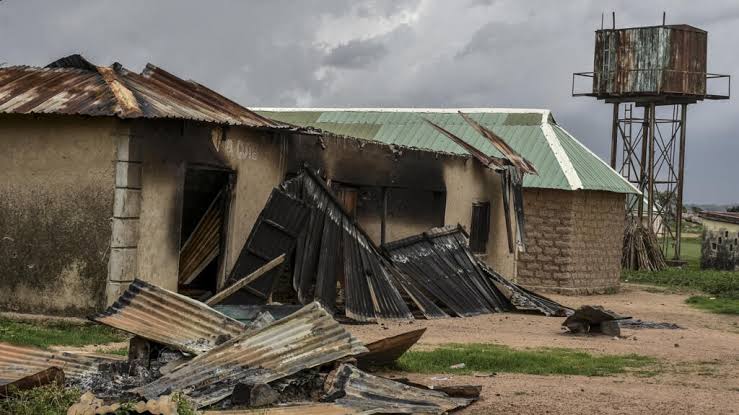
Residents of communities in Borgu Local Government Area of Niger State have reportedly fled their homes following another attack by suspected bandits who set houses ablaze and created panic among people living in the area.
The latest incident occurred in the Lumma-Sanke area, including communities around Shagunu district and Gada-Oli, where residents were forced to escape after suspected armed attackers invaded the area.
The attack has increased concerns about security in parts of Niger State, particularly communities located in areas affected by repeated attacks and displacement.
The Niger State Police Command confirmed the incident, saying residents fled their homes after the attackers invaded the communities and set several houses on fire.
The police said security forces responded to the attack, while the full extent of damage and the number of affected residents were still being assessed.
The incident has raised questions about the safety of rural communities and the protection available to residents facing repeated security threats.
Residents in affected areas have reportedly been forced to leave their homes in search of safer locations.
The attack comes amid continued concerns about banditry, kidnapping and other security challenges affecting communities in parts of north-central Nigeria.
Attack Causes Panic in Borgu Communities
The attack reportedly took place in the Lumma-Sanke area of Borgu Local Government Area, Niger State.
According to reports, suspected bandits invaded the communities and set houses ablaze.
The incident caused panic among residents, many of whom reportedly fled their homes to avoid being caught in the violence.
The affected communities are located in an area where residents have experienced security concerns in recent times.
The latest attack has added to fears that rural communities may remain vulnerable to further incidents.
Residents have expressed concerns about their safety and the protection of their homes, businesses and family members.
When armed attackers invade a community, the immediate concern for residents is often how to escape safely.
People may leave behind belongings, livestock, food supplies and other property because their priority is protecting their lives.
The destruction of homes can also create long-term problems for families.
Residents who flee may need temporary accommodation, food, clothing, medical assistance and other forms of support.
Children may be affected when families are forced to leave their communities.
Some may lose access to schools, while others may experience fear and uncertainty because of the sudden disruption.
The attack therefore has consequences beyond the immediate damage to buildings.
It can affect livelihoods, education, community relationships and the ability of residents to return to normal life.
Police Confirm the Attack
The Niger State Police Command confirmed the attack through its spokesperson, Wasiu Abiodun.
According to the police statement, suspected bandits invaded the Lumma-Sanke community through Shagunu district in Borgu Local Government Area, alongside Gada-Oli.
The police said the invasion caused serious panic among residents, who fled their homes for safety.
The attackers reportedly set several houses ablaze.
The police also said the military air component responded and provided support to ground tactical teams.
According to the statement, security forces engaged the attackers, who eventually fled the location.
The police said the number of affected people and the extent of damage to property were still being determined.
The command said further information would be communicated as investigations and assessments continued.
The confirmation of the attack provides an important official account of the incident.
However, the full details of the damage, the number of people displaced and the condition of residents remain subject to further assessment.
The authorities will need to establish the extent of the destruction and determine whether additional assistance is required.
Residents Forced to Leave Their Homes
The displacement of residents is one of the major concerns following the attack.
People who flee their homes during security incidents may have limited time to gather their belongings.
Some families may leave with only the items they can carry.
Others may become separated from relatives while trying to escape.
The sudden movement of people can create additional difficulties, particularly for children, elderly residents and individuals with disabilities.
Families may also face uncertainty about where to stay.
Some may seek refuge with relatives in neighbouring communities, while others may move to locations they consider safer.
The situation can place pressure on communities receiving displaced residents.
Host families may have limited resources to accommodate additional people.
Food, water, shelter and other essential services may become more difficult to provide when the number of residents increases suddenly.
Local authorities and humanitarian organisations may therefore need to assess the needs of displaced families.
The assistance required could include temporary shelter, food supplies, healthcare, clothing and support for children.
Residents who have lost homes may also require help rebuilding their livelihoods.
The situation highlights the importance of emergency response arrangements in communities affected by insecurity.
Concerns About Repeated Attacks
The latest incident has raised concerns about repeated attacks in parts of Borgu Local Government Area.
Reports indicate that communities in the area have experienced several security incidents in recent days.
Residents have expressed concern about the effect of the attacks on their ability to live and work safely.
Repeated attacks can create a climate of fear.
Even when residents are not directly affected by an incident, the possibility of another attack can influence their daily activities.
Farmers may become afraid to visit their farms.
Business owners may reduce their operating hours.
Transport operators may avoid certain routes.
Families may decide to relocate because they no longer feel safe in their communities.
These developments can affect local economic activity.
Rural communities depend heavily on farming, trading and other activities that require residents to move between homes, farms and markets.
When insecurity disrupts these activities, families may experience financial difficulties.
The impact can also affect food production.
Farmers who are unable to access their farms may lose crops or fail to plant during the appropriate season.
This could create problems for household income and food availability.
The latest attack therefore raises concerns not only about security but also about the economic conditions of affected communities.
Security Response Following the Attack
The police said the military air component responded to the incident and provided support to ground tactical teams.
According to the police account, the security response involved coordinated action that led to the attackers fleeing the location.
The authorities have not yet provided a complete assessment of the incident.
The police said the number of affected people and the extent of damage to property were still being determined.
The security response will be important in establishing what happened and identifying areas where additional protection may be necessary.
Authorities may need to assess the security situation in surrounding communities and determine whether residents can safely return.
The response may also involve investigations into the attack and efforts to identify those responsible.
Security agencies have responsibilities to protect communities, investigate criminal activity and prevent further attacks.
They must also communicate clearly with residents about available support and safety arrangements.
Information about the security situation can help residents make decisions about whether to remain in their homes or seek temporary shelter elsewhere.
The authorities should also ensure that affected residents can report incidents and receive assistance where necessary.
Challenges Facing Rural Communities
Rural communities in Niger State and other parts of Nigeria face several challenges when security incidents occur.
The distance between communities and major towns can make access to emergency services difficult.
Residents may also have limited access to healthcare facilities, transportation and communication networks.
When an attack occurs, these challenges can affect how quickly people receive assistance.
Some communities may have limited access to reliable information.
Residents may depend on neighbours, local leaders or community groups for updates.
During emergencies, misinformation can create additional fear.
Authorities should therefore provide timely and accurate information about incidents.
Clear communication can help residents understand the situation and avoid unnecessary panic.
It can also help families locate relatives and identify available assistance.
Local leaders may play important roles in coordinating community support.
They can communicate with residents, help identify vulnerable families and work with relevant authorities.
However, community leaders should not be expected to replace formal security agencies.
The responsibility for maintaining security rests with the relevant authorities.
Community cooperation may help improve communication and response efforts, but it must operate within the law.
Impact on Families and Children
- The effects of insecurity can be particularly serious for families.
- When residents are forced to leave their homes, children may experience disruption to their education and daily routines.
- Some may have to move to different communities where schools are unavailable or overcrowded.
- Others may face difficulties accessing healthcare or other essential services.
- Parents may also experience stress because they are uncertain about the safety of their homes and the future of their families.
- The destruction of houses can leave families without shelter.
- They may need to depend on relatives, neighbours or humanitarian assistance.
- The loss of household belongings can also create financial difficulties.
- Families may have to replace furniture, clothing, food supplies and other essential items.
- The emotional effects of insecurity should not be ignored.
- People who experience violence or displacement may suffer fear, anxiety and other psychological difficulties.
- Children may be particularly affected when they witness violence or experience sudden separation from familiar surroundings.
- Support services may therefore be necessary for affected residents.
- Healthcare providers, social workers and community organisations can help identify people who require assistance.
- The response to security incidents should consider both physical safety and the emotional well-being of affected families.
- Insecurity can have serious consequences for local economies.
- When residents flee their communities, businesses may close.
- Markets may experience reduced activity.
- Farmers may become unable to access their land.
- Transport operators may avoid routes considered unsafe.
- These changes can affect income and employment.
- Small businesses may lose customers and become unable to meet their financial obligations.
- Farmers may lose crops or experience delays in planting and harvesting.
- The disruption can also affect food supply chains.
- Communities that depend on agricultural production may experience reduced output when insecurity prevents residents from working.
- The economic impact can extend beyond the affected communities.
- Markets in nearby towns may receive fewer agricultural products.
- Prices may increase when supplies become limited.
- Transport costs may also rise when traders are forced to use longer routes or make additional security arrangements.
- The government may need to provide assistance to affected residents and support the recovery of local economic activities.
- Rebuilding homes and restoring community infrastructure may also require financial resources.
- The attack highlights the importance of security in supporting economic development.
- Without safety, residents may struggle to maintain their businesses, farming activities and other sources of income.
- The response to the attack will require cooperation among security agencies, state authorities, local governments and community leaders.
- Authorities may need to assess the needs of displaced residents and determine the support required.
- Emergency assistance could include temporary shelter, food, water, healthcare and other essential supplies.
- The government may also need to provide support for residents whose homes were destroyed.
- Community leaders can help identify affected families and communicate information about available assistance.
- They can also help coordinate support from local organisations and other stakeholders.
- Humanitarian organisations may be able to assist with emergency relief and longer-term recovery.
- However, assistance must be based on accurate assessments of the situation.
- Authorities should identify the number of affected households, the condition of displaced residents and the extent of damage to property.
- The information will help determine the type and amount of assistance required.
- It is also important to ensure that support reaches the people who need it.
- Displaced families should receive information about where to obtain assistance and how to report additional needs.
The Importance of Community Safety
The latest attack has renewed attention on the safety of communities in Niger State.
Residents need to be able to live, work, attend school and carry out daily activities without fear.
Community safety requires effective security arrangements and cooperation among different stakeholders.
Security agencies must respond to incidents and investigate criminal activity.
Government authorities must also consider the needs of communities affected by insecurity.
Local leaders can help communicate concerns and support emergency response efforts.
Residents should be encouraged to report security concerns through appropriate channels.
However, people should avoid spreading unverified information that could create additional panic.
Accurate information is important during emergencies.
Authorities should communicate updates about security incidents and provide guidance where necessary.
The safety of displaced residents should also remain a priority.
Families who have fled their homes may need assistance before they can return.
Authorities should assess whether communities are safe and provide information about any ongoing risks.
Calls for Stronger Protection
The latest incident has increased calls for stronger protection of rural communities.
Residents want to know that security agencies can respond effectively when threats arise.
They also want assurances that attacks will not continue without adequate protection.
The authorities may need to review security arrangements in areas affected by repeated incidents.
Such assessments should consider the needs of residents and the challenges faced by communities.
Security agencies must work to prevent attacks and protect vulnerable populations.
They should also ensure that investigations are conducted and that those responsible are brought before the law.
The government may need to strengthen cooperation among security agencies and improve communication with local communities.
However, any response should be based on verified information and lawful procedures. Protecting communities requires sustained attention rather than temporary action following an incident.
Residents need long-term assurances that their safety will be taken seriously.
The police said the number of affected people and the extent of damage to property were still being determined. Further information is expected as authorities continue their assessment. The investigation may provide additional details about the attack and the security response. Authorities will also need to assess whether displaced residents can return safely to their homes.
Families whose houses were destroyed may require assistance. The state government and relevant agencies may need to coordinate emergency support. The situation remains a concern for residents of Borgu Local Government Area. The authorities should continue providing updates as more information becomes available. Residents should rely on official information and avoid spreading unverified claims. The safety and welfare of affected families should remain a priority.
The attack in the Lumma-Sanke area of Borgu Local Government Area has forced residents to flee their homes after suspected bandits invaded communities and set houses ablaze. The Niger State Police Command confirmed the incident and said security forces responded.
The police said the attackers fled after security personnel engaged them, while the extent of damage and the number of affected residents were still being assessed. The incident has raised concerns about repeated attacks in the area and the safety of rural communities.
Residents who have fled their homes may require emergency assistance, including shelter, food, healthcare and support for their families. The government and security agencies will need to assess the situation, provide assistance and continue efforts to protect affected communities. The attack also highlights the wider effects of insecurity on farming, businesses, education and local economic activities.
As the situation develops, accurate information and effective response arrangements will be important. The immediate priority is the safety of residents, the support of displaced families and the restoration of security in affected communities. The authorities must continue to investigate the incident and provide updates as further information becomes available.