
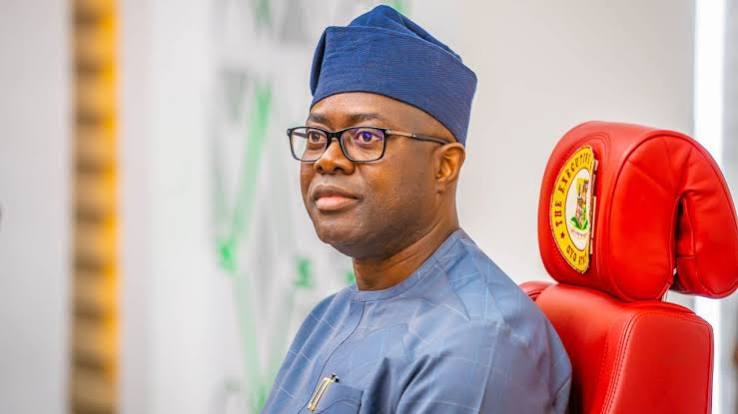
Oyo State Governor and Allied Peoples Movement presidential candidate, Seyi Makinde, has voiced strong opposition to the practice of political office holders allowing their children to work around government offices.Speaking in an 87-second video clip from an interview on The Rooftop, which he shared on his X account on Monday, Makinde insisted that children of people in power should pursue independent paths rather than riding on their parents’ political influence.During the conversation, the governor explained that his own children have deliberately chosen to live private lives and make their own distinct contributions to society. He stressed that they have no connection to the daily operations of his administration.”Of course I am. That’s why you can’t see any of my children, you know, around the government offices,” Makinde said when asked about his stance on the issue.Pressed further on whether he views it as inappropriate for the children of serving officials to occupy positions or linger around government corridors, his response was unequivocal. “No, I am totally, totally opposed to it,” he stated.A Culture of IndependenceTo underscore his commitment to keeping family separate from state affairs, the governor issued a lighthearted challenge to the public, stating that he would like anyone in Oyo State who can easily identify his children on the streets to come forward. He maintained that his children are focused on carving out their own identities away from the limelight of the governor’s office.”For my children, they are on their own trajectory in life. My own job is to advise them, give them necessary support, and with the way they have been brought up, we know that they will go on to make their own mark in life,” he explained.Despite his firm stance against nepotism and the presence of family members in public offices, Makinde clarified that he would not stand in the way of his children’s personal ambitions—even if those ambitions eventually lead them into the political arena. While he would not actively push them toward public service, he noted that a genuinely independent decision to run for office would earn his backing.”No, I won’t advise them to go into politics, but if they choose politics, I will support them,” he added.The Debate Over Political DynastiesMakinde’s remarks arrive at a time of heightened public scrutiny regarding the growing influence of political dynasties in Nigeria. Ahead of the 2027 general elections, there has been renewed debate over the number of children and close relatives of prominent Nigerian politicians seeking elective offices or occupying key government positions.Data compiled from the Independent National Electoral Commission (INEC) and analyzed by investigative researchers earlier in September highlighted a noticeable trend. Several offspring of former presidents, state governors, and other influential political figures are actively contesting or seeking to retain seats in the National Assembly for the 2027 election cycle.Among the high-profile names appearing on the electoral radar are:Iyabo Obasanjo, daughter of former President Olusegun Obasanjo.Yusuf Buhari, son of the late former President Muhammadu Buhari.Bello El-Rufai, son of former Kaduna State Governor Nasir El-Rufai.Erhiatake Ibori-Suenu, daughter of former Delta State Governor James Ibori.Analysts and civil society groups have frequently pointed to this pattern as evidence of entrenched political privilege, sparking ongoing conversations about equal opportunity, meritocracy, and the concentration of power within a small circle of elite families. By distancing his administration and family from this culture, Makinde appears to be positioning himself as a proponent of institutional boundaries and self-reliance as he campaigns for the presidency.Looking to History for GuidanceBeyond the subject of family and governance, the interview also touched on Nigeria’s political history and leadership lessons. When asked which Nigerian leader, living or dead, he would most like to seek counsel from, Makinde named the nation’s first President, the late Dr Nnamdi Azikiwe.The governor explained that he is deeply interested in understanding how Azikiwe navigated the complex political terrain of Nigeria’s early independence era. According to Makinde, many of the foundational choices made by the late nationalist continue to shape—and challenge—the country decades later.”Dr Nnamdi Azikiwe. Dr Nnamdi Azikiwe was there, just at the centre, and he took a decision that we’re battling with six years after,” Makinde remarked during the exchange.He noted that if given the opportunity to speak with the elder statesman, his primary goal would be to interrogate the thought process behind those critical historical moments. Understanding what informed Azikiwe’s actions, Makinde suggested, would offer valuable perspective for modern leaders grappling with Nigeria’s persistent structural and political questions.As the 2027 presidential race gathers momentum, Makinde’s candid reflections on governance ethics, family boundaries, and historical accountability offer a glimpse into the values he intends to champion on the national stage.