
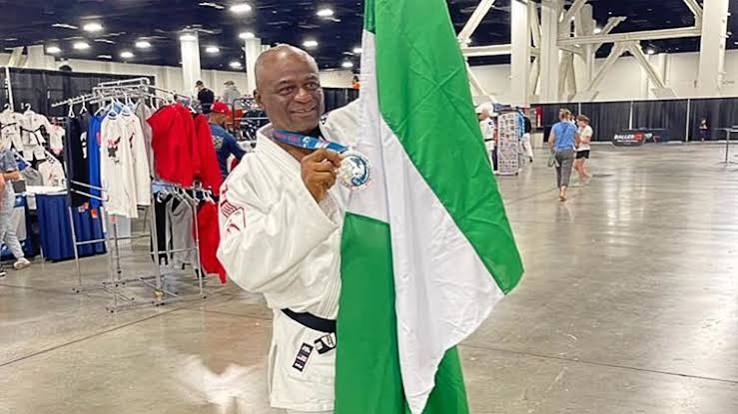
Nigeria’s sports sector has recorded a new development following the election of the Inspector-General of Police, Olatunji Disu, as the president of the Nigeria Judo Federation (NJF). Disu emerged as the new president after receiving all 13 votes cast at the federation’s National Elective Congress held in Abuja on Thursday, November 19, 2026. He was elected unopposed, showing that the voters supported his leadership.
The new appointment has attracted attention because Disu is not only a senior police officer but also a person with a strong background in judo. He has been involved in the sport for many years and has won medals in different competitions.
After his election, Disu made his first major move by declaring open the inaugural IGP Olatunji Disu Inter-Club Judo Championship in Lagos. The competition has attracted 20 teams and is expected to give judokas an opportunity to compete and show their abilities.
The new federation president has promised to work towards unity, reconciliation and the development of judo in Nigeria. His emergence also comes at a time when sports stakeholders are calling for better management, stronger competitions and more opportunities for Nigerian athletes.
Disu Wins All 13 Votes
The election took place during the National Elective Congress of the Nigeria Judo Federation in Abuja.
According to reports by Premium Times, The Guardian and The PUNCH, all 13 eligible voters supported Disu, making him the new president of the federation.
The election was organised by the caretaker committee led by Sheriff Hammed. The committee was responsible for helping the federation return to elected leadership.
Disu’s emergence is important because the Nigeria Judo Federation needs leadership that can bring different people together and create better opportunities for athletes.
In his acceptance speech, the new president expressed appreciation to those who supported him. He also called on members of the judo community to forget their differences and work together.
He explained that no individual should see the election as a personal victory because the main winner should be the sport itself.
His message focused on bringing back people who had become separated from the federation and creating an environment where everyone could contribute to the future of Nigerian judo.
The new president also promised to reach out to Nigerian judokas both inside and outside the country.
This is important because athletes who compete abroad can share their experience and help improve the standard of the sport at home.
Who Is Olatunji Disu?
Olatunji Disu is the Inspector-General of Police and a Nigerian who has a long history with judo.
Unlike people who enter sports administration without having experience in the sport, Disu has participated in judo competitions and understands some of the challenges athletes face.
Reports say he began his judo career in 1986. Since then, he has won several medals, including a gold medal at the 1990 National Sports Festival.
He has also won medals at the Nigerian Police Games and different veterans’ competitions.
In July 2022, Disu won a silver medal in the veterans’ under-100kg category at the 33rd United States Open Judo Championship.
He is a third-dan black belt holder, which shows his experience and level of training in the sport.
Before becoming president of the Nigeria Judo Federation, Disu also served as chairman of the Lagos State Judo Association. He is currently the patron of the Nigerian Police Judo Association.
These experiences give him a connection to both the sporting and administrative sides of judo.
His election has therefore raised expectations among people who want to see the sport grow beyond its present level.
New President Opens Championship With 20 Teams
One of the first activities following Disu’s election was the opening of the inaugural IGP Olatunji Disu Inter-Club Judo Championship in Lagos.
The competition has attracted 20 teams, making it an opportunity for athletes and clubs to take part in an organised event.
The championship is also important because it gives the new federation president an opportunity to begin his work with an activity that brings judokas together.
Judo is a sport that requires discipline, strength, balance and good technique. Competitors must understand how to control their opponents, use the correct movements and follow the rules of the competition.
Events like this can help young athletes gain experience and prepare for bigger competitions.
They also allow coaches to assess the performance of their athletes and identify areas where they need improvement.
The involvement of 20 teams is a positive development, although the long-term success of Nigerian judo will depend on whether competitions can continue regularly across the country.
A single championship cannot solve every problem facing the sport. However, it can provide a starting point for stronger competitions and better organisation.
During the opening of the championship, Disu spoke about the history of judo in Nigeria. He explained that the Nigeria Police Force played an important role in introducing the sport to the country. According to him, three police officers travelled to Japan many years ago to learn judo. After returning to Nigeria, they introduced the sport.
He also noted that the place hosting the championship had a connection with the early development of judo in the country. For Disu, opening the competition at a place connected to the sport’s history was a way of bringing judo back to its roots.
His comments show why he believes the police and other security agencies can contribute to the development of the sport.
During the championship, he welcomed the participation of other security organisations, including the Nigerian Army, Nigerian Navy, Immigration Service, Federal Road Safety Corps and the Nigeria Security and Civil Defence Corps.
He urged the organisations to put aside their differences and use sports to promote friendship and cooperation.
This approach could help bring more institutions into Nigerian judo and provide additional opportunities for athletes.
Security agencies have organised sports activities for many years, and their participation can help create more competitions and training opportunities.
One of the major issues the new president wants to address is unity within the judo community.
Like other sports federations, the Nigeria Judo Federation needs cooperation among athletes, coaches, clubs, administrators and other stakeholders.
When people within a federation disagree for a long time, the sport can suffer. Competitions may become difficult to organise, athletes may lose opportunities, and the development of the sport can slow down.
Disu has therefore made reconciliation one of the main priorities of his administration.
He said the federation would reach out to judokas who are currently in Nigeria and those living abroad.
This could help bring experienced athletes and former competitors back into the development of the sport.
The new president also wants people to understand that the success of the federation should be more important than personal interests.
His message is that everyone involved in judo must work together if Nigeria wants to become stronger in the sport.
However, the success of this plan will depend on the actions taken by the new board after the election.
Stakeholders will want to see regular communication, fair opportunities for athletes and a clear plan for developing judo across the country.
Another important issue raised by Disu is the need to improve the technical standard of judo in Nigeria. He said discussions had already started on coaches’ development and securing technical assistance for the sport. This is important because coaches have a major role in preparing athletes for competitions.
A good coach helps athletes understand techniques, improve their fitness, develop discipline and prepare mentally for difficult matches.
Without proper training, even talented athletes may find it difficult to compete against judokas from countries with stronger sports programmes. Technical assistance can also help Nigerian coaches learn new training methods and improve the way athletes are prepared.
Disu said Nigeria needed to return to regular participation in international competitions.This is one of the challenges the new leadership will have to address.
Taking part in international events allows athletes to compete against different opponents and understand the level of preparation required to succeed.
It also gives coaches an opportunity to study other countries’ training systems.
If Nigeria wants to become more competitive in judo, athletes need regular competitions, proper coaching and access to modern training facilities.
Before his election, Disu had also spoken about expanding judo to secondary schools, universities and polytechnics. This is an important area because sports development should not begin only when athletes are already adults. Schools can help introduce young people to different sports and allow talented students to discover their abilities at an early age.
Judo can also teach values such as respect, self-control, discipline and confidence. With proper coaching and supervision, school programmes could help identify young athletes who may later represent Nigeria in national and international competitions.
Universities and polytechnics can also provide opportunities for students to train and compete.
However, the success of school-based programmes will require cooperation between the federation, educational institutions, sports authorities and trained coaches.
There must also be proper equipment, safe training environments and organised competitions.
If these plans are carried out successfully, Nigeria could have a larger number of young judokas in the coming years.
Disu will not be working alone. Other officials were also elected into the leadership of the Nigeria Judo Federation. Nwaobilor Ananaba emerged as vice president, while Emmanuel Ghahabo was elected second vice president.
Other members of the board include Catherine Ewa-Ekuta, Bassey Ekanem Ekwere, Ika Bassey Odo, Ezeri Agahata, Chijioke Okechukwu and David Jesuorobo Osaghae.
The board also includes representatives from different parts of the country and sporting groups.
These include South-East representative Lawrence Ezeudu, South-South representative Osahon Eke, South-West representative Tokunbo Ajanaku, North-West representative Salisu Mahmuda and North-East representative Sunday Ewa.
Rosa Collins represents the National Association of Women in Sports, while other members represent athletes, technical interests and paramilitary organisations.
Two additional members are expected to be co-opted into the board.
The different positions are important because a sports federation needs people who can represent the interests of athletes, coaches and other stakeholders.
Disu’s election comes at a time when Nigeria’s sports sector is facing several challenges.
Although Nigerian athletes have achieved success in different competitions, sports development still requires better facilities, regular competitions, strong administration and more support for young talents.
Football receives much of the attention in Nigeria, but other sports also have the ability to bring international recognition to the country.
Judo is one of the sports that could provide more opportunities for Nigerian athletes if it receives the right support.
The country needs to develop athletes who can compete at African championships, Commonwealth events, world championships and the Olympic Games.
For this to happen, the federation must create a clear development plan.
It must also ensure that athletes are selected fairly, competitions are properly organised and coaches receive the training they need.
The National Sports Commission and other relevant organisations will also have an important role in supporting the development of the sport.
The new president’s experience in judo could be useful, but Nigerians will ultimately judge his administration by the improvements it delivers.
The election of Inspector-General of Police Olatunji Disu as president of the Nigeria Judo Federation marks a new chapter for the sport.
His victory with all 13 votes, together with his background as a judoka, gives him an opportunity to lead the federation and work towards improving its activities.
His first major assignment was the opening of the IGP Olatunji Disu Inter-Club Judo Championship in Lagos, which attracted 20 teams.
He has promised to promote unity, bring experienced judokas back into the sport, improve coaching and technical training, and increase Nigeria’s participation in international competitions.
These are important plans, but they will require proper organisation and support from everyone involved.
For Nigerian judo to grow, athletes need more than promises. They need regular competitions, good training facilities, qualified coaches and opportunities to represent the country.
The coming months will show how the new leadership turns its plans into real progress.
For now, Disu’s election has created fresh expectations among people who want to see Nigerian judo become stronger and more competitive.