
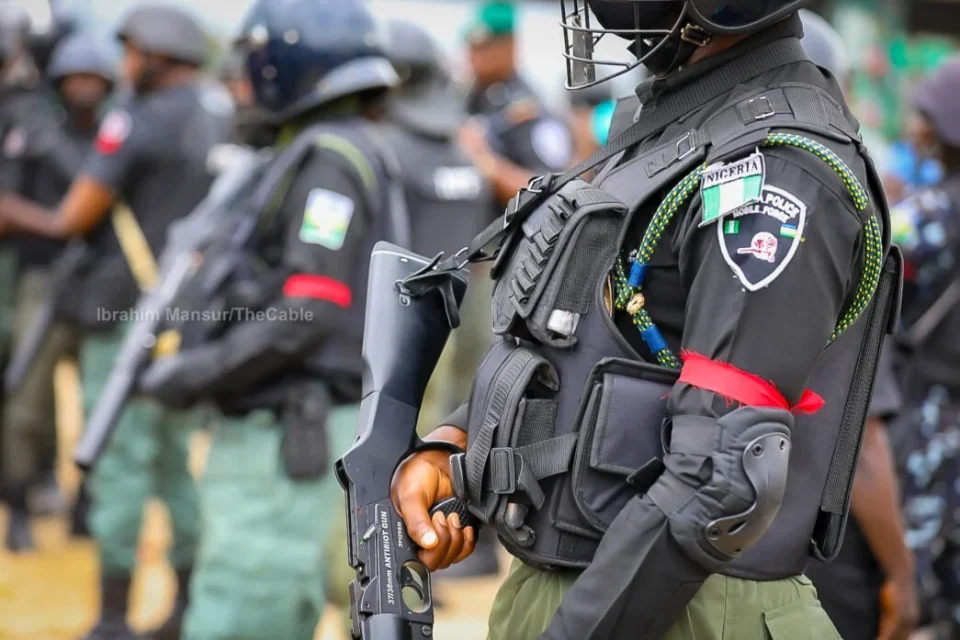
 Nigeria’s plan to establish state police has reached another important stage after President Bola Ahmed Tinubu received the constitutional amendment bill seeking to introduce a decentralised policing system across the country.
The development represents a major step in the Federal Government’s efforts to change the country’s existing security structure and improve the ability of security agencies to respond to crimes and other threats within different communities. The proposed reform received approval from all 36 State Houses of Assembly, exceeding the constitutional requirement of at least 24 states for an amendment of this nature.
The development means that the constitutional approval process involving the state legislatures has been completed. The bill has now been transmitted to the President for consideration and possible assent.
However, the establishment of state police is not yet complete. Another important step is the development and passage of the National Policing Bill, which is expected to provide the operational framework for the new system.
The Chief of Staff to the President, Femi Gbajabiamila, has explained that the President will review the constitutional amendment in consultation with the Attorney-General of the Federation before proceeding with the signing process. The Presidential Working Group on State Police has also been involved in developing the arrangements required to make the new policing structure work
The proposed reform is important because insecurity has remained a major challenge in Nigeria.
Different parts of the country have experienced kidnapping, armed robbery, banditry, terrorism, communal violence and other security problems. Many communities have complained about the difficulty of getting quick security assistance when criminal activities occur.
Supporters of state police believe that allowing states to establish their own police institutions could improve security operations because officers would be closer to the communities they serve. However, the proposal has also raised concerns about possible political interference, human rights violations and the misuse of security agencies by powerful individuals. These concerns have made the operational details of the proposed system particularly important.
How Nigeria’s current policing system works
Nigeria currently operates a centralised national police structure through the Nigeria Police Force.
The force is responsible for maintaining law and order, preventing crime, investigating criminal activities and protecting lives and property across the country.
Although police commands operate in different states, the overall structure is controlled through the national police system. This means that state governments do not independently operate their own regular police forces.
Over the years, some governors and security experts have argued that the existing structure should be reviewed because Nigeria has a large population and different communities face different security challenges. For example, security problems in some rural communities may be different from those experienced in major cities.
Areas affected by kidnapping and banditry may require different responses from urban communities dealing with robbery, cybercrime and organised criminal activities.
Supporters of state police argue that local security institutions could help address these differences. They believe state authorities would be better positioned to understand local communities, identify security threats and work with traditional rulers and community leaders.
One of the most important developments in the process is the approval received from all 36 State Houses of Assembly.
Under Section 9(2) of the 1999 Constitution, certain constitutional amendments require approval from at least two-thirds of the state legislatures.
Nigeria has 36 states, meaning that at least 24 state assemblies were required for this constitutional process.
The approval from all 36 assemblies therefore exceeds the required number.
The National Assembly had earlier completed its part of the process.
The Senate passed the proposed amendment on June 24, 2026, while the House of Representatives approved it on July 23, 2026.
After the approval by the National Assembly, the proposal was transmitted to the state legislatures for consideration. The states subsequently completed their approval process. The Senate then considered the next stage and directed the Clerk of the National Assembly, Kamoru Ogunlana, to transmit the bill to the President. Senate Leader Opeyemi Bamidele sponsored the motion concerning the completion of the constitutional amendment process.
The development was welcomed by lawmakers who described it as an important achievement in the effort to reform Nigeria’s security structure.
Following the approval by the state legislatures, the President received the constitutional amendment bill through his Special Advisers on Senate and House of Representatives Matters.
These include Senator Basheer Lado and Dr Wasiu Olanrewaju-Smart.
The Chief of Staff to the President said Tinubu would review the bill in consultation with the Attorney-General of the Federation, Lateef Fagbemi.
The consultation is important because constitutional amendments must follow the appropriate legal procedures. The President is expected to consider the bill before a formal signing ceremony.
However, Nigerians should understand that the President’s receipt of the bill does not mean that state police are already operating. The constitutional amendment and the operational legislation are separate parts of the process. The first provides the constitutional basis for establishing state police services, while the second is expected to explain how those services will operate.
Insecurity has affected many parts of Nigeria, creating concerns among residents, businesses and investors. Kidnapping has affected travellers, farmers, students and other members of the public.
Banditry has also created difficulties for communities, particularly in areas where residents depend on farming and other local economic activities. In some locations, residents have complained about the inability of security agencies to respond quickly when emergencies occur. The problem is not only about the number of police officers available. It also involves intelligence gathering, equipment, transportation, communication systems, training and cooperation between different security organisations.
Supporters of state police believe that local police formations could improve the collection of intelligence.
Officers who understand a community may find it easier to identify suspicious activities and develop relationships with residents. They may also be able to work more closely with traditional institutions and community organisations. This could help security agencies understand local problems before they become serious.
For example, if residents notice suspicious movements in their community, a properly organised local police structure could provide a direct channel for reporting the information. However, local knowledge alone will not solve insecurity. State police formations will still need proper training, modern equipment, professional leadership and sufficient funding.
The National Policing Bill remains important
One of the most important issues surrounding the reform is the National Policing Bill.
This proposed legislation is expected to establish the rules and arrangements required for the operation of state police services.
The draft bill has been submitted to the Federal Ministry of Justice for legislative drafting validation.
The Presidential Working Group is expected to review the validated document before presenting it, alongside its report, to President Tinubu.
The National Policing Bill will be important because Nigeria needs clear rules governing the relationship between state police services and the existing Nigeria Police Force.
For example, authorities must determine which police organisation will handle crimes that cross state boundaries. There must also be clear procedures for sharing intelligence, investigating serious offences and responding to emergencies involving different states.
Another important issue is the responsibility of state governments in funding and managing their police formations. The legislation will need to explain how officers will be recruited, trained, promoted and disciplined. Without these arrangements, the country could experience confusion between different security organisations.
Concerns about political interference
Although many Nigerians support the idea of decentralised policing, concerns about political interference remain. One major argument against state police is the possibility that governors or other powerful political figures could attempt to use local police officers against their opponents.
This concern is important because police institutions are expected to serve the public rather than protect the political interests of individuals. In a democratic society, security agencies must respect the rights of citizens regardless of their political beliefs.
If state police officers are controlled without proper accountability, there could be cases of intimidation, unlawful arrests and restrictions on peaceful political activities. Opposition parties, civil society organisations and human rights groups will therefore be interested in the safeguards included in the new legislation.
There must be clear procedures for investigating complaints against police officers.
Citizens should also have access to independent institutions where they can report abuse.
The National Policing Bill should establish strong disciplinary procedures and ensure that police officers remain accountable for their actions.
It should also protect the right of citizens to participate in political activities without fear of intimidation.
The importance of judicial oversight
Judicial oversight will be another important part of the proposed security structure.
Courts must remain available to review police actions and protect citizens against unlawful treatment.
Police officers should not be allowed to ignore constitutional rights simply because they belong to a state police organisation.
There should be clear rules concerning arrest, detention, searches and investigations.
These rules must apply regardless of whether an officer works for the federal police or a state police service.
The courts will also play an important role in resolving disputes that may arise between different police organisations.
For example, disagreements could occur over which institution has authority to investigate a particular criminal case.
A clear legal framework will help reduce these problems.
The country will also need independent monitoring systems that can examine the activities of state police institutions.
This will help ensure that the proposed reform improves security without weakening democratic institutions.
Security is closely connected to economic development.
When people feel unsafe, they may find it difficult to carry out normal business activities.
Farmers may avoid certain locations because of attacks.
Transport operators may reduce services in dangerous areas.
Businesses may also hesitate to invest in communities where kidnapping, robbery and other crimes are common.
Improving security could therefore support economic activities.
If state police formations become effective, they may help improve security in rural and urban communities.
Farmers could have greater confidence in travelling to their farms, while traders and transport operators could operate with fewer security concerns.
Investors may also become more willing to establish businesses in areas where the security environment is stable.
However, the economic benefits will depend on how effectively the system is managed.
Simply establishing additional police institutions will not automatically reduce crime.
There must be proper funding, modern equipment, training and accountability.
State governments will also need to consider the financial cost of maintaining their police formations.
Recruiting officers, providing vehicles, building police stations and maintaining communication equipment will require significant resources.
States with limited revenue may face difficulties meeting these responsibilities.
This is why the financial structure of the proposed system will be important.
What the proposed reform means for governors
If the constitutional amendment becomes law and the operational legislation is passed, state governments will have an important role in establishing and managing their police services.
This could change the relationship between state governments and security institutions.
Governors may have greater responsibility for responding to security problems within their territories.
However, this responsibility must come with legal restrictions.
State governors should not have unrestricted authority to use police officers for personal or political purposes.
There must be national standards to ensure that police services in different states follow professional rules.
The federal government will also need to maintain coordination between the different security organisations.
Nigeria must avoid creating a situation where state police formations operate without communication or cooperation.
A well-organised structure could allow local police officers to respond to community-level problems while the federal police maintain responsibilities that require national coordination.
Can state police solve 70 per cent of insecurity?
During discussions about the proposed reform, Senate President Godswill Akpabio expressed the view that state police could reduce security challenges across the states by as much as 70 per cent.
This statement reflects the optimism of some lawmakers about the potential benefits of decentralised policing.
However, it should be understood as a political projection rather than a verified forecast.
There is no guarantee that the establishment of state police will automatically reduce insecurity by that percentage.
The actual result will depend on several factors.
These include the quality of recruitment, the training provided to officers, the amount of funding available and the strength of accountability arrangements.
The government must also address other factors that contribute to insecurity, including unemployment, organised criminal networks, illegal weapons and weak intelligence systems.
State police may become an important part of the solution, but it cannot replace the need for wider security and economic reforms.
What Nigerians should expect next
The next major development will be the President’s decision on the constitutional amendment bill.
Nigerians will also be watching for the completion of the National Policing Bill and its presentation to the National Assembly.
After that, lawmakers will need to consider the operational arrangements and determine how the new police structure will function.
State governments may also need to begin preparing the financial and administrative plans required for establishing their police services.
Important questions will include the number of officers to be recruited, the cost of running the services, the training standards and the arrangements for cooperation with federal police formations.
Civil society organisations and professional security experts will also need opportunities to contribute to the process. Their participation could help ensure that the final system protects human rights and supports democratic accountability.
The proposed reform could change the country’s security structure by giving states a greater role in managing policing activities within their territories.
Supporters believe that local police institutions could improve intelligence gathering, strengthen community relationships and help security agencies respond more quickly to criminal activities.
However, several important issues still need attention.
The National Policing Bill must provide clear operational rules, while strong safeguards must protect citizens against political interference and abuse of authority.
The government must also consider funding, recruitment, training and cooperation between federal and state security organisations.
For Nigerians, the most important issue is not simply the creation of another police institution. It is whether the new arrangement will make communities safer and improve the protection of lives and property.
The coming months will therefore be important in determining whether the constitutional reform can become an effective security system that delivers real results across the country.