
 Nigeria is seeking to transform its rapidly expanding digital economy into a major investment opportunity for data centres, cloud computing and other critical digital infrastructure, as the Federal Government moves to create the policy and security environment needed to attract the next generation of technology capital.
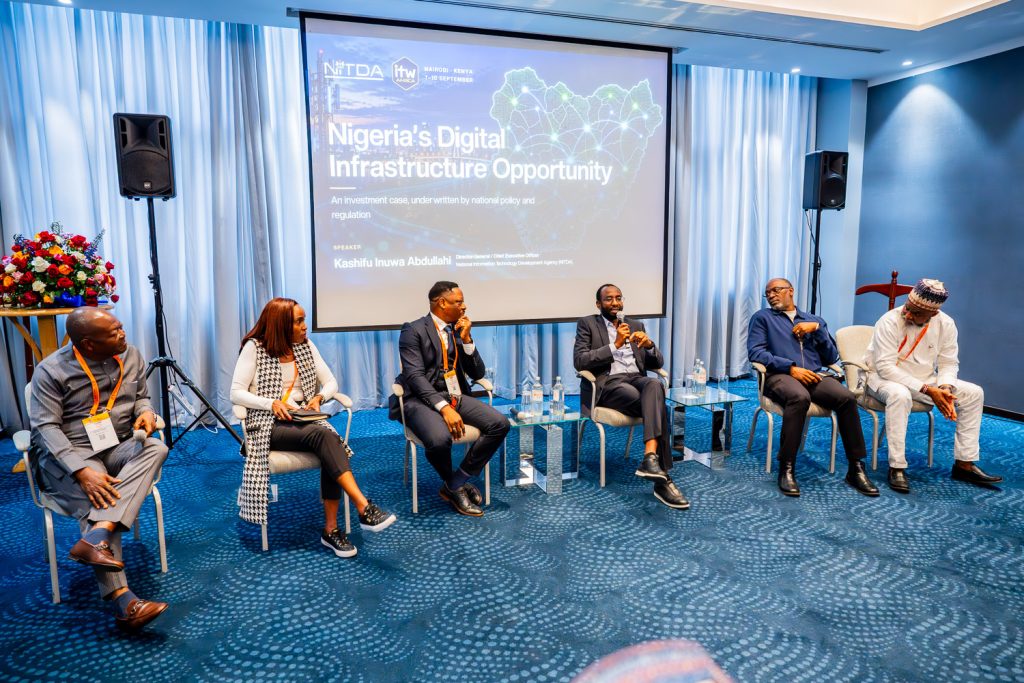
The Director-General of the National Information Technology Development Agency (NITDA), Kashifu Inuwa Abdullahi, outlined the government’s strategy during a high-level industry panel on “Converting Digital Demand into Data Centre Investment” at the recently concluded ITW Data Cloud Africa 2026.
The panel brought together key players in the global and African data-centre ecosystem, including Ike Nnamani of Digital Realty Nigeria, Wole Abu of Equinix, Temitope Osunrinde of Africa Hyperscalers and Cherotich Kiereini of Oracle.
Speaking on how Nigeria can convert its growing digital consumption into sustainable infrastructure investment, Abdullahi said the country requires a deliberate combination of clear government direction, regulatory certainty, strong digital security and an enabling investment environment.

He explained that government’s responsibility goes beyond creating policies. According to him, the government must provide sufficient clarity about its strategic direction so that investors and infrastructure operators can make long-term decisions with confidence.
For data-centre investors, he noted, policy predictability is particularly important because the infrastructure requires significant capital and long-term planning. Clear rules around how digital infrastructure will be deployed, governed and consumed can therefore provide the certainty required to unlock investment.
Abdullahi also highlighted Nigeria’s enormous digital market as one of its greatest competitive advantages. He noted that the country’s opportunity extends beyond its large population, pointing to the increasing localisation of digital workloads and Nigeria’s strategic geographical position as a potential connectivity and transit hub for West and Central Africa.
The country’s growing pool of technology talent further strengthens its position, creating the capacity to develop innovative digital services and solutions on top of modern infrastructure.
However, the NITDA Director-General stressed that infrastructure growth must be supported by digital trust and cybersecurity. He explained that the Federal Government is embedding security into the development of the digital ecosystem through initiatives including the Digital Assurance Framework, the Cybercrime Act and the National Cybersecurity Architecture.
These measures, he said, are designed to strengthen security across the digital value chain, from individual devices and end-user systems to critical national infrastructure.
Abdullahi further disclosed that government technology projects are increasingly being subjected to cybersecurity-by-design requirements, ensuring that security considerations are incorporated from the earliest stages of infrastructure and systems development rather than being treated as an afterthought.
The emphasis on cybersecurity is expected to become increasingly important as Nigeria attracts greater investment into data centres, cloud computing and artificial intelligence infrastructure. As more businesses, government institutions and digital platforms depend on locally hosted infrastructure, protecting the integrity and availability of those systems will become critical to the country’s digital economy.
The NITDA boss maintained that Nigeria’s ability to provide a predictable regulatory environment, secure digital infrastructure and a growing market for digital services could position the country as a major destination for data-centre investment.
For investors, the opportunity is no longer simply about building physical facilities. It is about participating in the development of the digital backbone that will support Nigeria and the wider African market for years to come.
The government’s emerging strategy therefore seeks to align policy, infrastructure, cybersecurity, connectivity and investment around a common objective: turning Nigeria’s growing digital demand into a sustainable domestic infrastructure ecosystem.
With data consumption, cloud adoption and artificial intelligence accelerating across Africa, Nigeria is positioning itself not merely as a large technology market, but as a potential digital infrastructure powerhouse capable of powering the next phase of Africa’s digital transformation.