
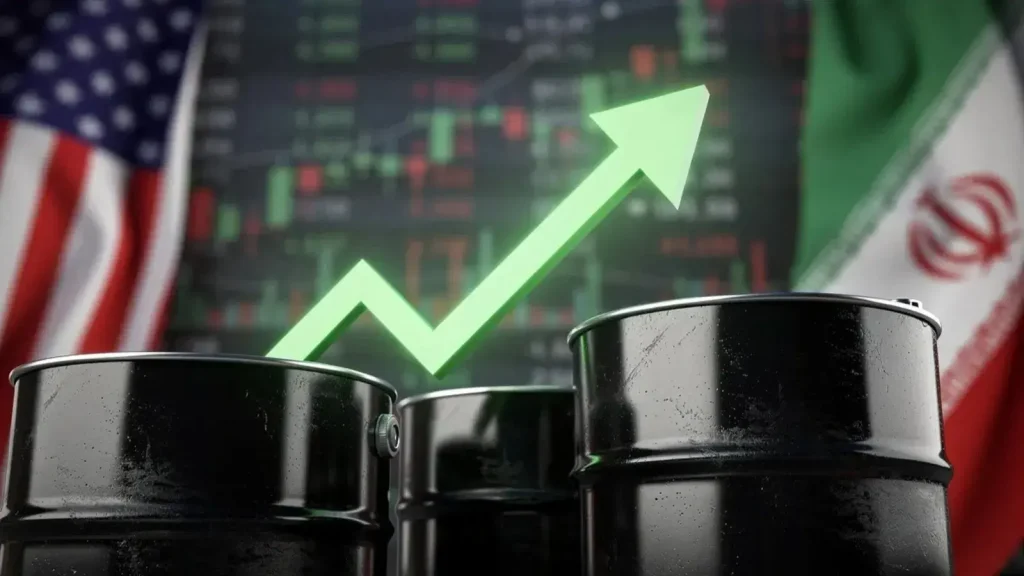
Global crude oil prices jumped sharply on Tuesday because of growing fighting and military strikes between the United States and Iran. Investors, traders, and energy companies across the world are deeply worried that these dangerous fights in the Middle East could disrupt oil supplies and lead to fuel shortages across global markets.
The price of Brent crude, which is the global price benchmark used to set the cost of oil around the world, went up by 5.38 percent. This increase pushed the price of Brent oil up to $95.36 for a single barrel.
At the same time, the main United States oil benchmark, known as US West Texas Intermediate (WTI), also recorded a big rise. WTI crude price increased by 5.95 percent, bringing the cost of a barrel to $90.86.
These new numbers mean both oil benchmarks closed at their highest prices in over a month. For Brent crude, this was the highest price recorded since July 24, while for WTI crude, it was the highest price seen since July 23.
The main reason for this sudden rise in crude oil prices is the direct military attacks between American and Iranian forces. According to international news reports from Reuters, oil traders are scared that if the conflict gets bigger, key shipping lanes and oil fields in the Middle East could be blocked or damaged, making it very difficult to ship oil to buying countries.
On Tuesday, the United States military carried out fresh airstrikes against Iranian military targets. This heavy bomb attack has renewed fears that a broader war could break out in the region, continuing a dangerous conflict that has already lasted for six months.
One day before the latest strikes, US President Donald Trump warned that the United States would launch more military attacks against Iran. This warning came after both countries launched direct missile and air attacks at each other, breaking a one-month period of quiet between them.
President Trump also publicly stated that American air defense systems successfully shot down all incoming Iranian missiles before they could cause any major damage to military facilities. Furthermore, Trump claimed that the strong economic sanctions imposed by the US government against Iran are working effectively and causing severe financial pressure on the Iranian government.
The sudden military back-and-forth started when Iran fired missiles overnight targeting two US air bases located in Jordan. Iran launched those missiles to retaliate against an earlier US military raid on Iran’s Larak Island.
Giving reasons for the strike on Larak Island, the US government explained that its military targeted Iranian missile launchers stationed on the island. American officials claimed those specific launchers were being used by Iranian forces to drop marine explosives and mines into the Strait of Hormuz—the most critical water passage in the world for global crude oil shipments.
This is oil extracted from the North Sea near Europe. It serves as the primary price benchmark for two-thirds of the world’s internationally traded crude oil, including oil exported from Africa and the Middle East.
West Texas Intermediate WTI This is high-quality crude oil extracted from fields inside the United States. It serves as the primary price standard for oil traded in North America.
Crude oil is measured and sold in standardized barrels. One single barrel of oil equals 42 US gallons or approximately 159 liters.
Oil Type Indicator Previous Trading Level New Price Tuesday Total Percentage Rise Highest Level Since
Brent Crude ; ~$90.49 per barrel $95.36 per barrel + 5.38% July 24
US WTI Crude ; ~$85.75 per barrel $90.86 per barrel + 5.95% July 23
The military tension around Larak Island and the Strait of Hormuz is the biggest reason behind rising fuel prices worldwide.
The Strait of Hormuz is a narrow waterway located between Oman and Iran that connects the Persian Gulf with the Arabian Sea.
When international crude oil prices jump to nearly $100 per barrel, the economic effects are felt worldwide by businesses and regular consumers
Transportation Costs Refineries have to pay more for raw crude oil, which drives up the cost of petrol, diesel, and aviation fuel at gas stations and airports.
Increased Price of Everyday Goods Because trucks, ships, and trains pay more for diesel to transport food, building materials, and electronics, market sellers raise the prices of household goods to cover transport costs.
Inflationary Pressure High energy prices lead to broader inflation, making everyday living expenses higher for families around the globe.