
President Bola Ahmed Tinubu’s sudden directive ordering the Economic and Financial Crimes Commission to vacate an order freezing a primary statutory allocation account of the Osun State Government has triggered a intense political and legal controversy across the nation. The presidential intervention came mere days ahead of the highly anticipated August 15 Osun State gubernatorial election, pitting federal executive oversight against the statutory anti-corruption mandate of the commission and reigniting broader debates on federalism, electoral fairness, and institutional independence.
The controversy began when the anti-graft agency directed a commercial banking institution, First Bank of Nigeria Limited, to restrict transactions on the Osun State Government’s statutory allocation account. In an official communication defending its decision, the commission explained that the action was part of an ongoing, proactive investigation into the alleged fraudulent movement and diversion of approximately 11 billion Naira in Ecological Funds, Intervention Funds, and Federal Account Allocation Committee disbursements.
According to the Commission’s Director of Public Affairs, Wilson Uwujaren, the agency acted squarely within the provisions of Section 34 of the Economic and Financial Crimes Commission Act alongside Section 7(6) of the Money Laundering (Prevention and Prohibition) Act, 2022. These statutory frameworks empower the agency to place a temporary administrative restriction on accounts suspected of handling illicit financial flows for up to 72 hours prior to securing a formal judicial freeze order. Uwujaren emphasized that the restriction was neither total nor politically motivated, revealing that intelligence gathered in early August necessitated urgent preventative action to forestall the potential dissipation of public funds, echoing similar operational measures previously deployed in Edo State.
However, in a personally signed public statement titled ‘President Tinubu Directs EFCC To Vacate The Court Order Freezing Osun Government Account’, President Tinubu instructed the commission to immediately approach the court to reverse the freeze and discontinue the related proceedings. Expressing deep embarrassment over the timing of the agency’s enforcement action, the President asserted that no federal institution should take measures capable of creating a public impression that the Federal Government is attempting to unfairly tilt the scales of an imminent election.
“Osun State is only a few days away from its gubernatorial election,” President Tinubu noted in the statement. “Therefore, nothing ought to be done to give an impression that the EFCC or indeed any other agency of the Federal Government is being used to interfere with the election.” While maintaining that anti-corruption bodies must operate with independence, the President emphasized that preserving public trust in the credibility, neutrality, and fundamental fairness of the electoral process remained an overriding national priority.
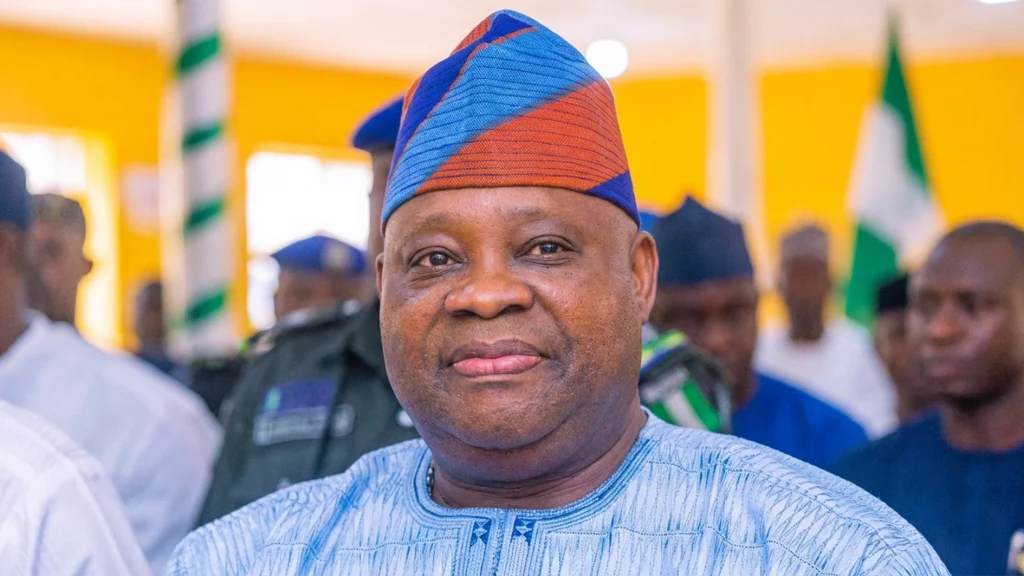
The Federal Government’s sudden about-face followed swift and aggressive legal retaliation by the Osun State Government. In a suit filed before the Federal High Court in Abuja, marked FHC/ABJ/CS/1762/2026, Osun State Governor Ademola Adeleke—who is seeking re-election for a second term under the platform of the Accord Party—alongside the state’s Attorney-General and Accountant-General, dragged the anti-graft agency, its Executive Chairman Ola Olukoyede, and First Bank to court. The plaintiffs are asking the judiciary to declare the administrative account restriction an act of executive lawlessness, a direct violation of state financial autonomy, and an unconstitutional infringement on democratic governance, while demanding 2 billion Naira in exemplary and aggravated damages.
Describing the 11 billion Naira fraud allegation as a baseless afterthought, the Osun State Commissioner for Information and Public Enlightenment, Kolapo Alimi, alleged that the account freeze was engineered by opposition figures to disrupt the state’s planned payment of worker palliatives. Governor Adeleke further challenged the commission’s chairman to justify freezing public operational accounts by administrative fiat without a pre-existing court order, characterizing the action as an assault on constitutional democracy.
The opposition African Democratic Congress quickly weighed in on the unfolding saga, welcoming the reversal while criticizing the President’s public narrative. In a press briefing delivered by its National Publicity Secretary, Bolaji Abdullahi, the party noted that President Tinubu’s repeated references to a “court order” contradicted the commission’s own public declarations, which cited administrative powers rather than judicial authorization.
As public debates intensify—with legal experts, civil society organizations, and citizens expressing sharp divisions over the balance between anti-corruption enforcement and electoral integrity—the Osun State governorship race remains firmly in the national spotlight. The legal resolution of the Federal High Court suit is expected to establish crucial judicial precedents regarding the limits of administrative account restrictions on federating units in Nigeria.